Politics & Government
Food Composting at Home
City holds a free workshop, encouraging residents to compost at home.
Recycled plastic vermi-composters lined Grand Park's amphitheater Saturday for the workshop "Composting at Home." I was one of the 60-plus people who registered to attend the event. About half showed, according to Rae Beimer, who presented the workshop on behalf of the city of Aliso Viejo.
Beimer first spoke about the importance of recycling and the city's goals to reduce the amount of trash that enters our local landfill. Recycling for multi-family residences, which makes up 70 percent of the housing in Aliso Viejo, is sorted off-site in something called a Material Recovery Facility, or MRF. A dirty MRF means all trash—recyclable or not—gets placed into the same bins and is later sorted. Clean MRF recycling is gathered from the trash we pre-sort in bins that are provided by CR&R.
I agree with what Beimer said when she discussed her favorite "R's," which are reduce and reuse. Her tips for reducing were amazingly helpful—from buying in bulk to not buying at all. Ditch the bottled water for filtered tap! The alternatives at home are growing, from lunch packing options that include sandwich bags that are reusable to produce bags you use at the market. The last "R" should always be recycle, and that's where composting comes in.
Find out what's happening in Aliso Viejofor free with the latest updates from Patch.
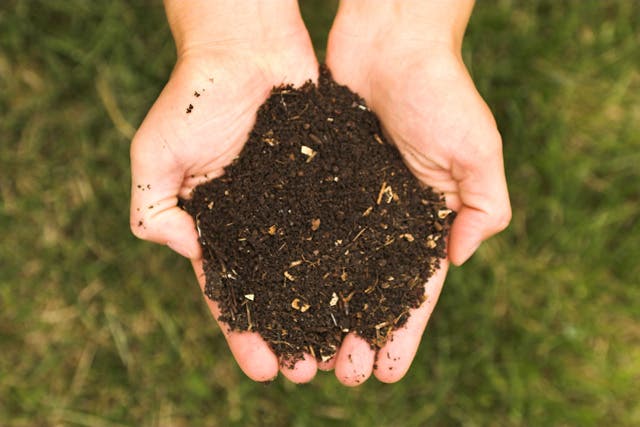
Beimer talked about the nifty little vermi-compsters the city helped subsidize for residents. Vermi-composting occurs when earthworms eat your kitchen's leftovers and create a byproduct that is considered the best soil amendment you can get. The composter, provided by the city, is made from recycled plastic. The worms were also included in the package deal. I ordered our worms this weekend and can't wait to set up our composter—my daughter can't wait to hold a worm!
The city has been utilizing the composters for two months now, and it is said to be working great, with no smell and no mess. The worms turn leftover scraps of organic material (except dairy and meat) into something called castings, amazingly nutrient rich fertilizer that can be used for your household garden and lawn needs. Not only does this divert food away from the landfill, but it also gives residents great free fertilizer for their home gardening. It's a win-win.
Find out what's happening in Aliso Viejofor free with the latest updates from Patch.
Of course, it begs the question—what's the big deal about having organic materials in a landfill? Aren't those are the items that break down the quickest? The point is that organic matter also lets off methane as it breaks down, and methane is an even more powerful greenhouse gas than CO2. Even though many landfills use the excess methane as a means to generate power, lowering the amount of methane emanating from a landfill is the best option.
I spoke to residents at the workshop, and their reasons for attending were varied. One woman said she had tried conventional composting, but her husband had an issue with the constant supply of bugs—this really shouldn't be an issue if you are composting properly. A mother and her daughter in attendance wanted to learn more about how they could help the city go green and participate in environmental programs. That I can relate to—it's why I write this column and why I try to share the information I learn.
Don't forget: April 28 is the city's fifth Green City Initiative Public Workshop, which will cover land-use and adaptation strategies. It will be held at the City Council chambers from 7 to 9 p.m.