Community Corner
Learning Letters—Play Games, Sing Songs
Find alphabet games to play to help your child succeed.
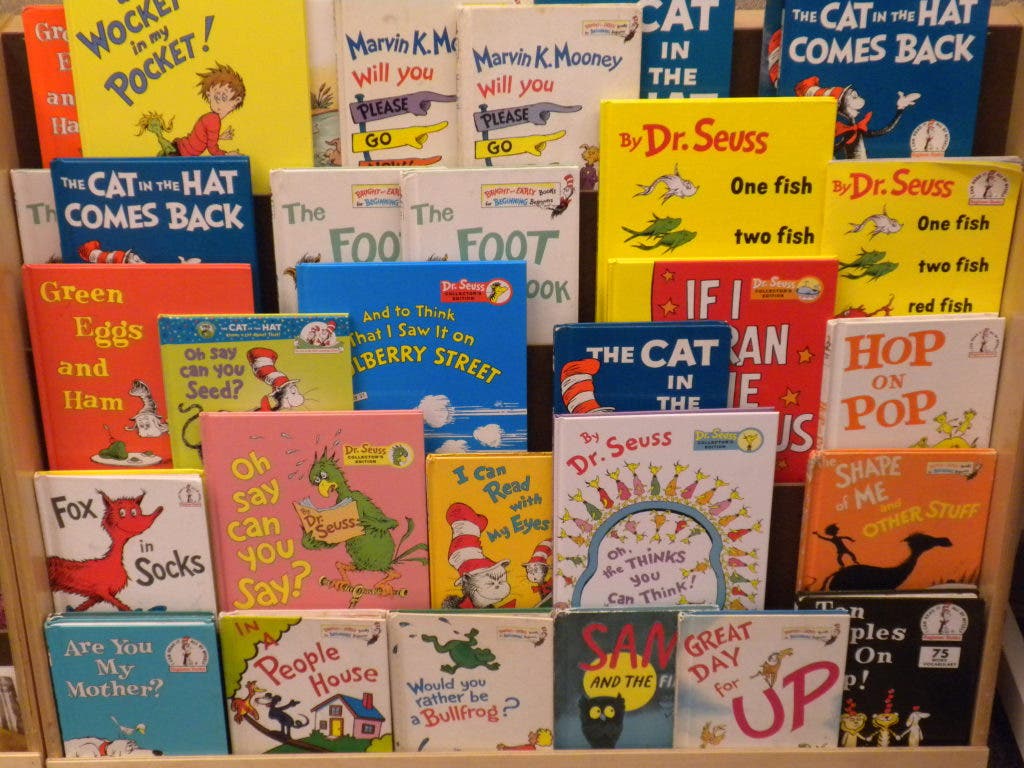


Last week, I wrote about the 10 things your child should be able to know and do before kindergarten. This week’s article covers how to help your child learn ABCs and understand the correlation between alphabet letters and initial sounds.
If you are eager to help your preschooler learn letters, the first thing to do is to expose him or her to the alphabet. If they attend preschool, they are probably hearing all about this, but supplementation at home is a huge plus. Read picture books about alphabet letters. Many wonderful books are available on this subject, including Dr. Seuss’s ABC and Chicka Chicka ABC.
Educators have learned from research by Howard Gardner that children learn by utilizing various modalities. Therefore, it is more than just looking at a letter. Singing alphabet songs, feeling alphabet letters (“tracing” letters with little fingers and shaping letters out of Play Doh) and hearing stories about letters are a few of the many ways to assist children with this skill.
Find out what's happening in Aliso Viejofor free with the latest updates from Patch.
Give your child an old magazine and see if he or she can “hunt” for letters in print. Give your child a shape comparison of whatever letter you are focusing on. For example, uppercase A is like a triangle, B has two half circles, and C is almost a circle. Point out lines that are curvy, straight or slanted. These are just a few of the many ways to help children make connections and remember letters.
It is best to start with the uppercase letters and add in the lowercase (“partner” letters) later. Do not expect your child to learn the entire alphabet all at once. Use flash cards and highlight your practice with just a few letters at a time. As I mentioned in my previous article, children do not need to “master” letter sounds before the start of school. Many books about letters also highlight the letter-sound connection.
Find out what's happening in Aliso Viejofor free with the latest updates from Patch.
Your child may begin to naturally associate some of the letters with their sounds. However, young children may not quite understand why “A is for apple” or, “B is for ball.” You can periodically point out a letter’s sound and ask your child to practice it. Encourage your little one to think of words that might have the same beginning sound. Make a game out of the activity. Keep in mind that both C and K have the same sound so if your child thinks that “kitten” starts with a “c,” that is fine when studying letter sounds.
If you find that your preschooler is not enjoying the letter or sound interaction, take a break for a while. Find an alphabet game to play. Lakeshore in Laguna Hills has many of letter games. Or go online to Starfall, a very fun website for children. Academic success in kindergarten does have a direct correlation to letter and sound recognition. Starting early with these concepts will give your child a huge advantage when starting elementary school.