Politics & Government
Surviving the Holocaust: Germany Invades Poland
Fears are realized in the fall of 1939.


Writer's note: Sam Silberberg spoke at Soka University on April 14. His story was extraordinary, and I was given the chance to interview him at his home in Laguna Woods. His story of survival and tragedy will be told through a multi-part series on Aliso Viejo Patch. View the previous story here.
Silberberg and his cousin, Janek, ran furiously through the dulag as the other children distracted the S.S. guards with their cries. Suddenly, an S.S. guard turned around and saw the two sprinting away from the truck that was to take them to their deaths.
"I ran diagonally across the street in order to get away," said Silberburg. "Then I turned right at an intersection to escape the view of the S.S. guards."
Find out what's happening in Aliso Viejofor free with the latest updates from Patch.
Out of sight of the S.S., Silberberg needed to find a hiding spot or face certain death. He tried unlocking the gates of the other buildings, and none of them would budge. His heart raced; he knew he had to do something. He looked over his shoulder and saw a large trash bin. Silberberg jumped inside and covered himself in garbage, hoping the S.S. guards wouldn't find him. One question ran through his mind: "Where was Janek?"
***
Find out what's happening in Aliso Viejofor free with the latest updates from Patch.
Sept. 1, 1939
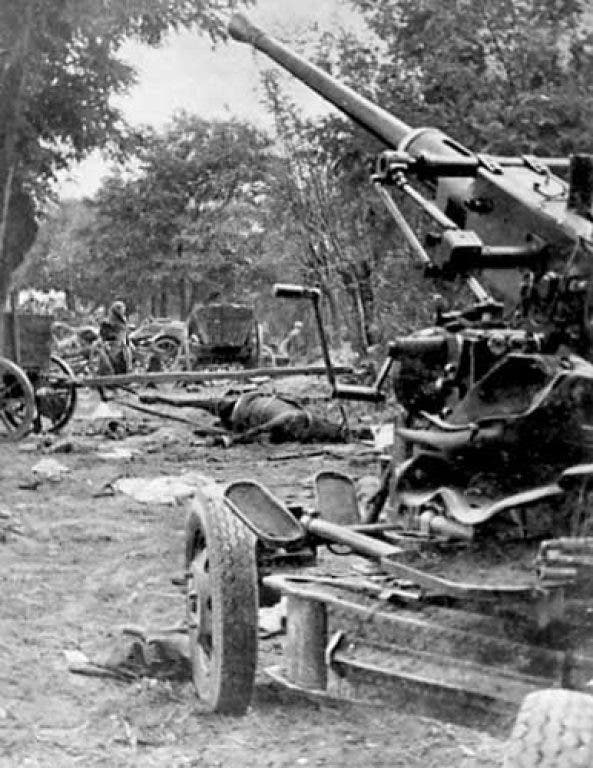
Artillery shells exploded outside the Silberberg house. The children of the family marveled at them.
"We could hear the whizzing noises of the shells as they passed by us and exploded," said Silberberg. "To us children it was like fireworks, but we didn't realize how dangerous it was until my father told us to get away from the windows."
Silberberg's father ordered a horse and carriage to take the family east to Krakow. They thought the city would be safe.
"The Vistula river runs through the middle of the city and has many historical sites and royal palaces," Silberberg said. "My father assured us that the Polish army would take a stand and defend the city."
The carriage stopped by the family home, and everyone, except Silberberg's father, gathered their belongings to head to Krakow. The trip wouldn't be easy, and the fighting was still ferocious.
"We could see the artillery glowing in the sky as it whizzed overhead," said Silberberg. "It was the day of the Sabbath, too, and we stopped in a village on the way to Krakow to rest. My family was observant of Orthodox Judaism, so we had to stop. We were exhausted and terrified."
The next morning the Silberberg family heard dreadful news—Krakow was lost to the Germans. Poland was shocked at how fast Germany was able to decimate the country's defenses. Now Poland belonged to the Third Reich.
"As we rode the horse and wagon back to Jaworzno, I heard the humming of German vehicles pass by," Silberberg said. "I remember the Nazis screaming 'Heute gehört uns Deutschland, morgen die ganze Welt!' which translated to "Today we own Germany, tomorrow the world!' "
***
As the Nazis began to tighten their grip on Poland, their sinister plans toward the Jews would soon unfold.
"There were fliers that were handed out throughout the city by the Germans," said Silberberg. "For every German that was hurt or killed, 10 Poles would be executed."
The Nazi's grip on Poland grew tighter, and the Silberberg family could feel it. A curfew kept them off the streets from dusk until dawn. The family was hit with two tragedies, one after the other.
"When the Nazis kept adding more restrictions to us, we learned that my uncle Maniek was killed by the Nazis because of gunshots that were taken at an outpost," Silberberg said. "During our mourning period, my father was also kidnapped."
The family lost its first member to the Holocaust, reducing the family count from 108 to 107. Luck found them, as they were able to find Silberberg's father, thanks to the vast business connections they had. However, his treatment while under the hands of the Nazis was unclear.
"My father looked different when he came home," Silberberg said. "He was subject to torture and deprivation. His beard was shaven, and he wouldn't tell me the price it took to get him home."
Soon the family business was taken over by the Germans and run by a Gauleiter (a German supervisor.) It caused devastating loss to the family financially.
***
Spring 1942
Life became increasingly difficult for the Silberbergs, with new restrictions barring Jews from worship and education. They were also now forced to wear a yellow Star of David on their shirts. But the Jews in the ghetto would find resourceful ways to keep their traditions alive amid the Nazi occupation.
"It was amazing how people got around the restrictions," said Silberberg. "We would rotate whose house we would use for school or worship. We learned to cope with the restrictions."
Then the Nazis began the first steps of their "final solution" of the Jews. They began raiding homes for able-bodied men to enslave for the German war effort.
"My older brother, Moses David, was caught during one of the raids," he said. "After the war, we learned that he was sent to the Markstadt concentration camp, then later shipped off to Buchenwald, where he died of starvation and dysentery. It left a big void in the family when he was kidnapped."
The family was reduced again—to 106 members.
They were determined to survive the Nazi occupation. This is when Silberberg, as a young boy, learned to trade on the black market.
***
Check back Wednesday for more of Silberberg's story.