Sports
50 Years Later, Boy Scouts' Paths Cross Again
Patch reporter attends reunion for a 102-mile High Sierras hike he was part of in 1961. A highlight was climbing Mount Whitney from the West side.


In 1961, John Fitzgerald Kennedy was inaugurated as the 35th president of the United States. Gasoline cost 27 cents a gallon. The average price of a home was $12,500. High school dances featured such songs as the Shirelles’ “Will You Love Me Tomorrow?” “West Side Story” and “The Parent Trap” were popular movies.
Hardly anyone had heard of a country named Vietnam. The Beatles had yet to make a splash in the U.S. The Beach Boys were the hot group.
It was in the summer of 1961 that 13 Boy Scouts from a small troop in the central San Joaquin Valley made a trek through the High Sierras, covering 102 miles in two weeks. The troop was from Strathmore, a tiny farming community just north of Porterville.
Find out what's happening in Arcadiafor free with the latest updates from Patch.
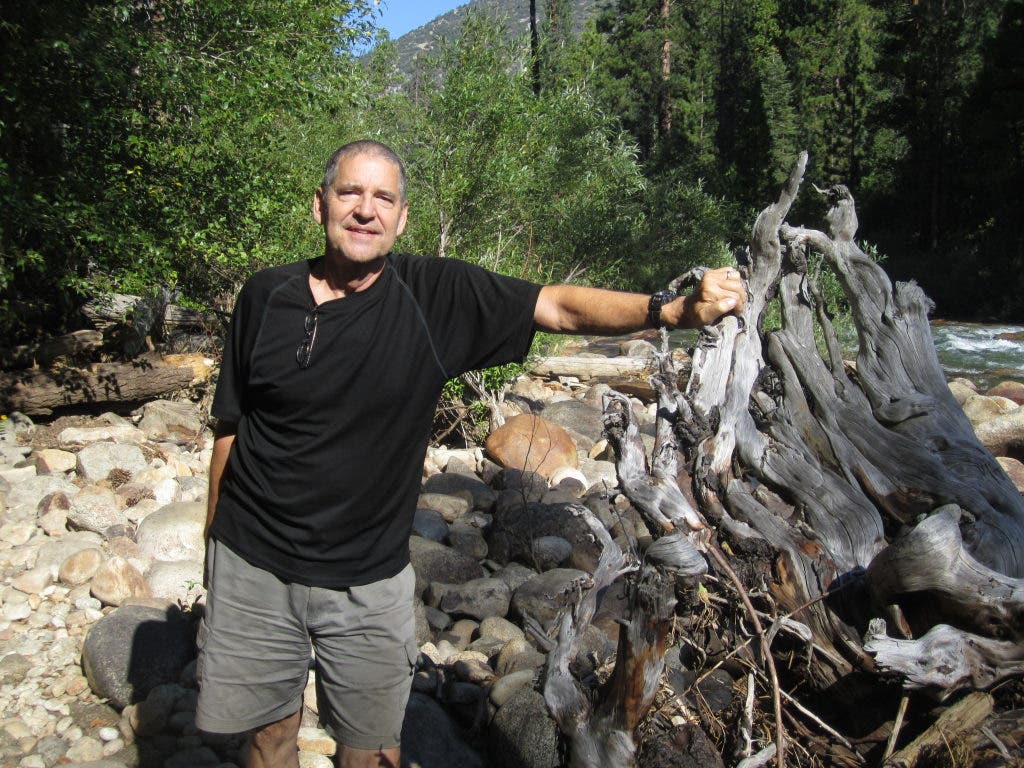
I write about this now because I was one of those 13 Boy Scouts who made that memorable hike, and recently we had a 50-year reunion at Cedar Grove in Kings Canyon National Park, near the site where our hike ended.
The reunion was arranged by Bill Finch of Fresno, who had recently retired as a high school and middle school science teacher. As a student at Strathmore High School, he was Bill Fink. He wisely figured out at some point that Fink is not a good name for a teacher dealing with teenagers and changed it to Finch.
Find out what's happening in Arcadiafor free with the latest updates from Patch.
In high school, Bill Fink was a stud. He was a year ahead of me and I looked up to him. He was the starting center on the high school basketball team, was an outstanding student and dated a girl, Karen Pursell, who, in 1967, was named Miss California.
Bill also came from a prominent family. His mother Mildred was a cousin of Richard Nixon. Now keep in mind that my high school years were long before Watergate. Nixon himself had lived in Strathmore as a seventh-grader, coming there from his home in Whittier to take piano lessons from an aunt.
Fast forward to earlier this year when I started getting emails from Bill about the proposed reunion. His first batch of emails asked if any of us would like to do a mini-version of our 1961 hike – 56 miles in six days. Not surprisingly, he had no takers. However, I did give it some thought. During the hike in 1961, I lost 20 pounds, going from 135 to 115. The thought of losing 20 pounds now did appeal to me.
At first, I was apprehensive about the reunion. Having lived in Southern California since 1969 and Arcadia since 1978, I had lost touch with most of the guys that made the hike.
But my wife Norma and I decided it might be a fun and worthwhile trip, particularly since we were able to get a reservation at a nearby lodge. Camping is not our thing. As things turned out, I was really glad we decided to make the six-hour trip to the reunion.
It was an uplifting experience for me.
It was great getting reacquainted with my fellow hikers, hearing how their lives had gone and realizing that being a Boy Scout and making that hike seemingly had helped all of us on the pathway of life.
It was our scoutmaster, Rev. Luke Fritz, the longtime minister at the Strathmore Presbyterian Church, who came up with the idea of doing the hike. Several years prior to 1961, he told all of us in Troop 152 that if we worked hard and made Life or Eagle Scout, the two highest rankings in the Boy Scouts, our reward would be a backpack trip through the High Sierras that we would never forget.
The ploy worked. It seemed nearly half the troop reached the level of Life or Eagle Scout. And we stayed with the Boy Scouts longer than most kids. Three of the hikers in 1961 were headed into their junior years of high school. I was between my freshman and sophomore year, turning 15 during the hike.
Planning the trip took at least a year and included doing several weekend training hikes. Finally, the day arrived in July 1961. I was so anxious and excited that I don’t think I slept a wink the night before.
We started out at Mineral King, located in the southern part of Sequoia National Park. We went over Franklin Pass (elevation 11,800 feet) our first day, a tough hike to say the least. Our journey took us along Rattlesnake Creek, then north up along the Kern River and I believe it was our third day when we reached Wallace Creek.
At our campsite there, we left our backpacks behind and around 7 a.m. we headed toward Mount Whitney (elevation 14,494 and the highest point in the continental U.S.). Many hikers have conquered Mount Whitney from the East side. We came in from the West side. It was 13 miles up and 13 miles back.
Without a 30-to-40-pound backpack to carry, we started out the day feeling like we were walking on air. However, as we approached the top of Mount Whitney in mid-afternoon, it was a different story. I can still remember being able to walk only a few hundred yards in that thin air before having to stop and catch my breath.
But it was all worthwhile. The view from the top of Mount Whitney is something I’ll never forget. And going down the mountain was a lot easier than going up. I believe we made it in about three hours.
Besides climbing Mount Whitney, another highlight of the trek was spending four days and three nights at the headwaters of the Kern River. As a group we caught a lot of Golden Trout, more than 100 one day. They were a welcomed dinner addition after living mostly on dry foods.
On one of those days at the headwaters of the Kern, a particularly hot one, several of us thought about swimming in one of the lakes. Since no one thought to pack a swimsuit, we'd have to swim in the nude. We were in the wilderness and there was no one else around.
After swimming grew tiresome, someone suggested floating around on the air mattresses we put under our sleeping bags. Since we were still in the raw, we ended up with sun-burned butts. My good friend, Bryan Jessup, now a Unitarian minister in Fresno, started calling them “SBBs” for short. I remember not being able to sit down for several days.
I also remember that during the last few days of the hike, I developed blisters on my feet. One was the mother of all blisters, and it was one of the hot topics at the reunion.
I remembered barely being able to walk in my hiking boots. What I didn’t remember, but was reminded of, was that someone in our group found an old pair of tennis shoes that had been discarded by someone in another group. I guess they fit because I wore them on the last day of our hike, making the trek down the mountain to our final destination near Cedar Grove a bit easier.
My father was among the parents who met us at our campsite with watermelons and all kinds of fresh food, making the last night of our adventure a most pleasant one.
Now I have another memory of Cedar Grove, one I will treasure the rest of my life.
Only three of the 13 who made the hike in 1961 failed to make it to the reunion. One had passed away, one was in North Carolina dealing with Hurricane Irene and no one was quite sure why the other one didn’t make it.
In all, 20 people were at the reunion, including five wives and one girlfriend. A few guys who made Luke Fritz-organized Boy Scout hikes in future years were also there. So was Larry Fritz, 60, one of Luke’s two sons.
Everyone brought so much food and beverages, we probably had enough to last us a week. But the reunion lasted only two days, two wonderful days.
Thank you, Bill Finch. And thanks to all those who came.