Crime & Safety
20 Years Later, Riverside County's Deadly Esperanza Fire Remembered
Five federal firefighters were killed battling the blaze. The man convicted of igniting the fire was sentenced to death.


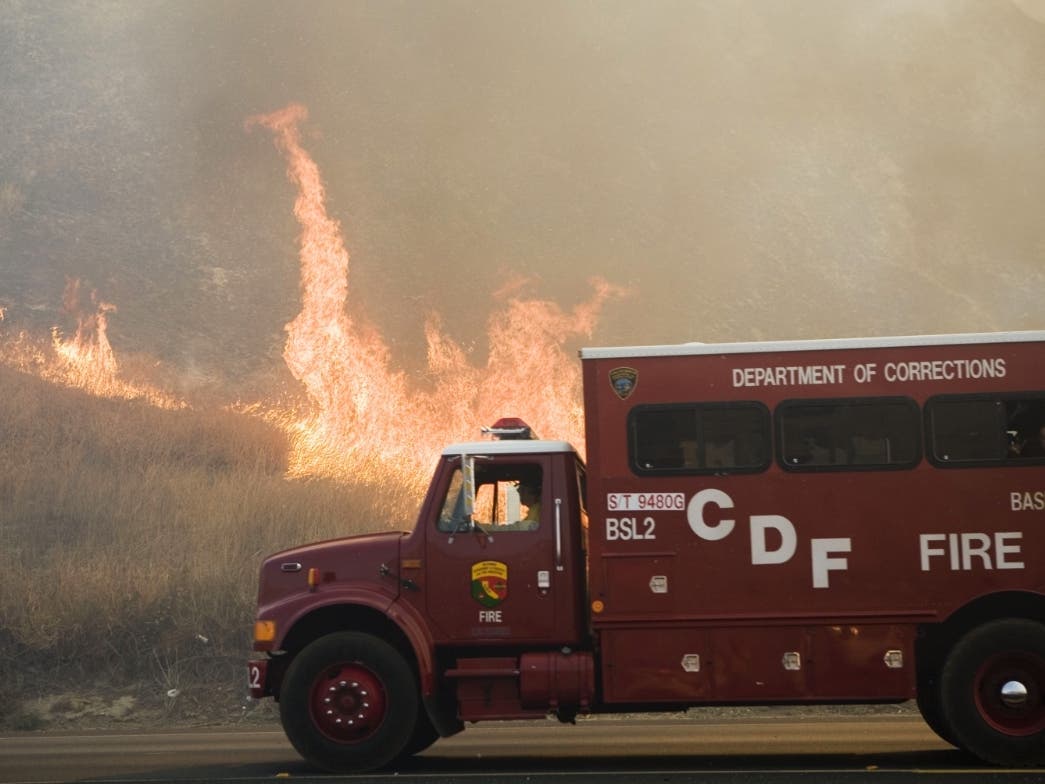
BANNING, CA — Monday marks the 20th anniversary of a massive arson wildfire near Banning that killed five federal firefighters — and ultimately led to a death sentence for the man convicted of igniting the blaze.
The deadly incident also changed firefighting protocols in California.
The Esperanza Fire was reported at 1:11 a.m. on Oct. 26, 2006, in Cabazon. By 7:15 a.m., five wildland firefighters from San Bernardino National Forest Engine 57 were overrun by the blaze while they were positioned near an isolated residential structure known as the Octagon House.
Find out what's happening in Banning-Beaumontfor free with the latest updates from Patch.
All five firefighters were fatally burned by a sudden, intense fire run up a steep drainage below their location. They were identified as Capt. Mark Allen Loutzenhiser, 43, and firefighters Pablo Cerda, 24, Daniel Hoover-Najera, 20, Jason Robert McKay, 27, and Jess Edward McLean, 27.
The 41,000-acre fire was ignited by Raymond Lee Oyler, now 56, near the intersection of Esperanza Avenue and Almond Way amid a Santa Ana windstorm.
Find out what's happening in Banning-Beaumontfor free with the latest updates from Patch.
It took about a week to stop the blaze, which burned into the San Bernardino National Forest, destroyed 39 homes and other buildings, damaged a highway, and killed a large number of livestock.
At its peak, the wildfire traveled at 30 mph, with flames reaching up to 70 feet and burning at 1,300 degrees Fahrenheit.
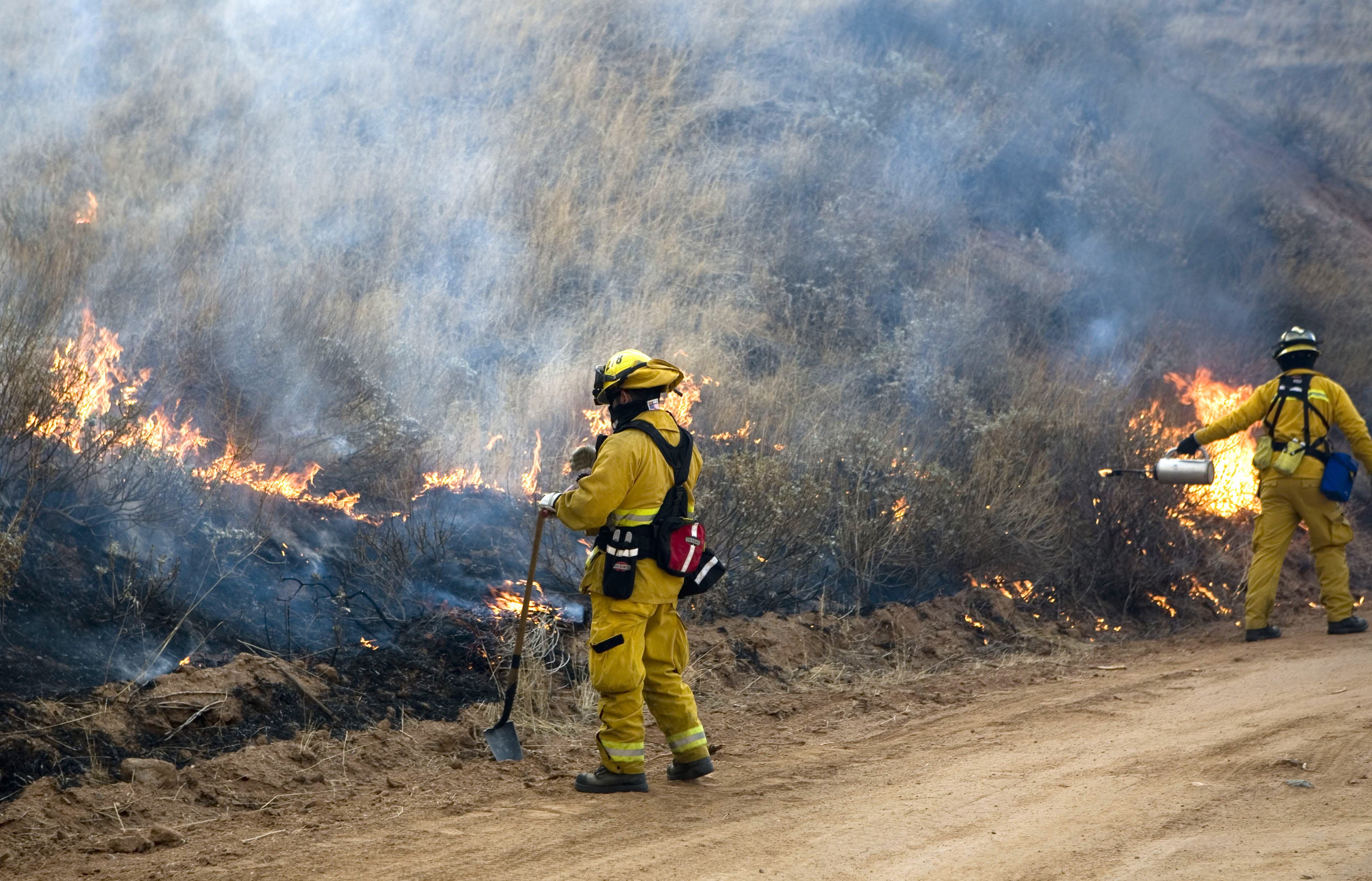
The crew of USFS Engine 57 was decimated by the Esperanza blaze.
McKay, McLean, and Hoover-Najera died within minutes of the fiery tidal wave crashing into them as they scrambled to establish defensive positions on Gorgonio View Road in Twin Pines, where a house with a pool provided a ready source from which to draw water.
Engine 57 was alone, with county and other USFS crews remaining a safe distance from the flame wall, which trial evidence showed gained speed through an uphill "chimney" effect as it blew toward the victims.
Loutzenhiser, who, like his men, had been gravely burned and suffered from "inhalation of superheated air," clung to life for several hours after being transported off the hillside. Cerda, whose body was 90% scorched, was kept on life support for five days, during which he was able to acknowledge the presence of others, according to testimony.
McLean's remains were in the worst condition, covered inside and out with fourth-degree burns, according to the Supreme Court's citation of trial court testimony.
Early in his career, current Riverside County District Attorney Mike Hestrin prosecuted Oyler.
"Twenty years later, the courage and selflessness of the Esperanza firefighters, and the lives of the families forever changed by their loss, remain close to my heart," District Attorney Mike Hestrin told City News Service. "It was an honor to pursue justice for these brave men and their loved ones. Their sacrifice will never be forgotten."
Oyler, a serial arsonist who lit several fires in the Banning Pass area, was apprehended in the days following the blaze's start. In 2009, he was convicted of 20 counts of arson, 17 counts of possession of an incendiary device, and five counts of first-degree murder.
He was sentenced to death, and his conviction and sentence were upheld by the Supreme Court of California.
Oyler remains incarcerated at the California Institution for Men in Chino.
Hestrin described Oyler at the time of the trial as "obsessed with fire and fascinated by starting fires and watching them burn."
Testimony showed the defendant had developed a technique of creating so-called "layover" incendiary devices, binding stick and paper matches together with rubber bands, affixing debris to them, then flinging them into brushy areas to trigger fires.
Hestrin said Oyler wanted to "see that mountain burn" when he lit the Esperanza blaze.
"You can go back and find the incendiary device left there by Ray Oyler, and it leads to the death of those men — directly," Hestrin told jurors.
In the aftermath of the fire, operational protocols changed, placing emphasis on seamless communication between state and federal fire crews during mutual-aid emergencies, enhanced planning before initiating a fire attack, and improved mapping of fire hazard zones.
—City News Service contributed to this report.
Get more local news delivered straight to your inbox. Sign up for free Patch newsletters and alerts.