Schools
Trustee Talk...
Banning Unified students recognize and manage their emotions to do better in school and in life
Grades, test scores, and graduation rates are important. But we believe in educating the whole child.
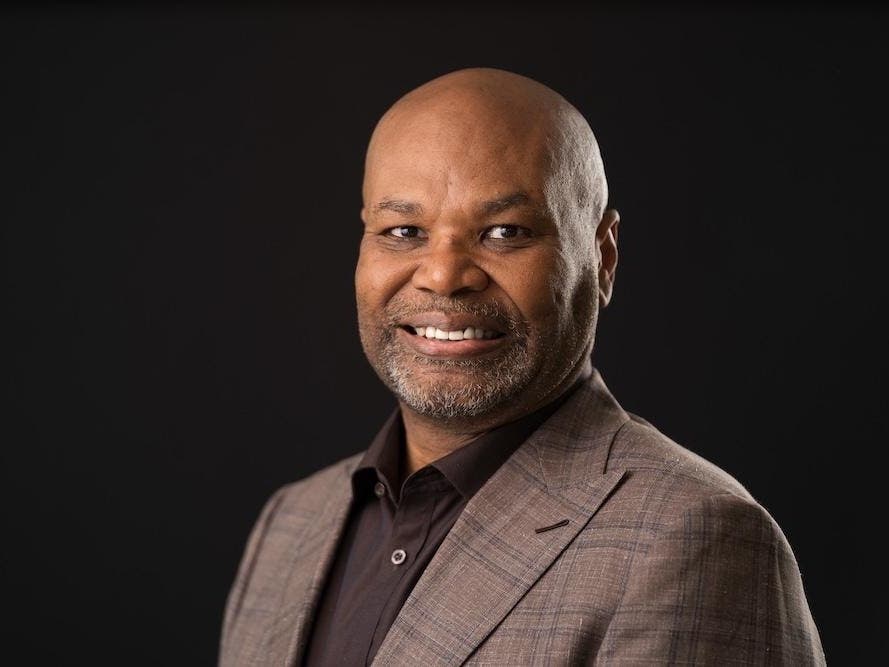
By Clerk Jason Smith, Banning Unified School District, Trustee Area 5
For the last five years, we’ve offered a District-wide program in social and emotional learning (SEL.) With help from teachers, school counselors, psychologists, and marriage and family therapists, students in the Banning Unified School District are learning to recognize and manage their emotions. In turn, youngsters are doing better in school and in life.
Find out what's happening in Banning-Beaumontfor free with the latest updates from Patch.
Neuroscience and the latest educational research shows that schools can improve the emotional health of our youngsters.
As a school board member, I strongly support social and emotional learning to give full voice to the potential of every student. Each year, Banning Unified spends about $1 million on social and emotional learning, with about half of the cost covered by grants.
Find out what's happening in Banning-Beaumontfor free with the latest updates from Patch.
The value of Social and Emotional learning
For my part, it’s been about a quarter century since I graduated from Banning High School as a C+ student more interested in football than academics. And candidly, I wish social and emotional learning had been part of our curriculum. http://www.banning.k12.ca.us/District-Administration/School-Board/Jason-Smith-Clerk/index.html
In this era, we’re clearly recognizing the value of social and emotional learning. The Aspen Institute, an international think tank, recently found such programs:
- Increase grade point averages and test scores by 11 percent.
- Increase graduation rates for high school and college and also lifetime earnings.
- Decrease dropout rates, behavior issues at school, drug use, teen pregnancy, mental health problems, and criminal behavior.
Meanwhile, we’re seeing tremendous benefits to society by merging social and emotional learning with classroom instruction. The Institute calculated that rate of return at $11 for every dollar spent on social and emotional learning.
Playing a leading role
Banning Unified is at the forefront of this educational movement that touches every student from kindergarten to high school.
Here’s a quick overview of how everything works:
Parents must agree to allow their children to receive therapy at school. Students can have unlimited therapy sessions which can run as long as necessary. The District also offers after-school parenting classes that include childcare and Spanish interpreters.
Helping every student
Our program has three distinct levels:
- Level 1: Social and emotional learning for the entire class.
- Level 2: Group therapy.
- Level 3: Individual therapy.
In addition to therapy sessions, we also use other strategies to help youngsters manage their emotions. For example, some classes begin with 15-minutes of mindfulness exercises. Some classes teach practical social skills like listening to others, making an apology, and taking “no” for an answer during a discussion. There are also daily “check-ins” in the morning before class starts. Students sit in a circle and a teacher calls on every child asking about their emotions and what’s going on in their life.
We have more than two dozen mental health specialists and countless classroom teachers involved in this District-wide effort.
Here is more detail about the three counseling levels:
Level 1: Entire classes are taught about cyber-bullying, conflict resolution, peer mediation and other topics. About 70 percent of our students’ emotional needs are met by Level 1, according to Dr. Barbara Wolford, Director of Student Services.
Level 2: Group therapy sessions are held for emotional problems such as anger management, relationship issues among students, and bullying. About 20 percent of our students receive group therapy.
Level 3: Individual therapy sessions are offered for situations like the death of a family member, depression, suicidal thoughts, and sexual identity issues. About 10 percent of our students receive individual therapy.
So, if you want to improve your child’s social and emotional well-being and see them do better in school and life, Banning Unified offers a time-tested program. Please contact your child’s school for more information when classes start on Aug. 7!