Health & Fitness
It's Crafty: How do I Make Myself a Maker?
My introduction to Don Schmidt's Steam Funk character at the LB comicon led to an interest in Steampunk and Maker culture. I want to be a maker too!

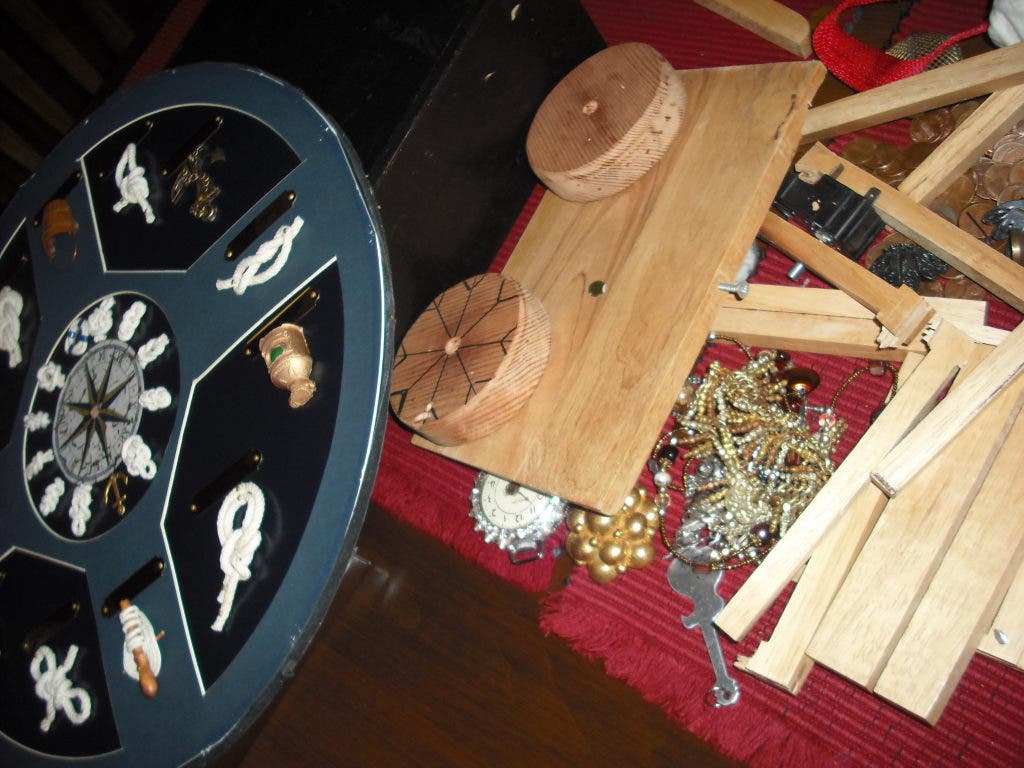


Before you ask the question "How do I make myself a maker?" you will need to ask the question "What is a maker?" And before I answer the question, I will need to add that this is, simply put, my perspective on the subject at this time of my edification.
A maker is, simply put, one who makes. We are all makers in a sense. We've all made something, created something out of other things. Baking is a step in making a cake.
More recently, the term maker is being used in a much more creative sense. It is being evolved to include a special kind of Do It Yourselfer (DIYer). When you buy "How to" books at the book store, you are exhibiting maker characteristics.
Find out what's happening in Belmont Shore-Naplesfor free with the latest updates from Patch.
The more specific use of the term maker goes well with the word 'contraption'. A famous maker? Rube Goldberg! We've all laughed at his many contraptions and how many steps it takes to open a window or roll an egg into a bowl so that you can then take it and cook it! Rube Goldberg contraptions have been the subject matter of many a college-level competion and middle or high school teachers' science class.
The 'maker sub-culture' is a term that refers to the combination of creative instincts and a sense of humor with technology (circuits, breadboards, robotics) and traditional crafting methods (especially those in wood, copper, brass). Make magazine (http://www.makezine.com) is a central source of ideas for makers. The Maker Faire brings makers together to demonstrate their creations, view creations of others and to find interesting parts and methods to use in their creations.
Find out what's happening in Belmont Shore-Naplesfor free with the latest updates from Patch.
in a similar mode, Steam punk is a style that brings fantasy and science-fiction together. Think Jules Verne and time machines. Leather, wood, copper, brass work. Wooden gears and mechanics. Images of gear-embellished steam punk boxes and time machines abound on the internet. One interesting steam punk site is http://www.steampunkworkshop.com.
So... Back to the question: "How do I Make Myself a Maker?"
It seems that there is no short answer. Being a maker involves a huge knowledge base that can only come through exposure over time and learning through doing.
My Step 1? Find some good books.
I've found two that I'd like to recommend:
Making Things Move (DYI Mechanisms for Inventors, hobbyists and Artists) by Dustyn Roberts - 2011. Dustyn is a robotics engineer who also has taught artists at NYU. The book is a good introduction for the interested but untrained and starts with a basic set of tools that are needed and safety precautions for using them.
507 Mechanical Movements by Henry T. Brown - 1908. This 1908 book has been re-published many times, and I recently picked up some extra copies at just around $4.00. It's a great book for ideas, and if you're willing to even think about creating your own metal or wood pieces, it has lots of promise. (Making Things Move has some good information on how to make your own parts). I've spent a fair amount of time looking at the pictures, and a little bit trying to model them in LEGO.