Schools
Tonight's Shark Week Premier Stars LB Prof, Students
Christoper Lowe studies great white sharks, hikes in pollutants in their pups, and what these trends mean for local residents.
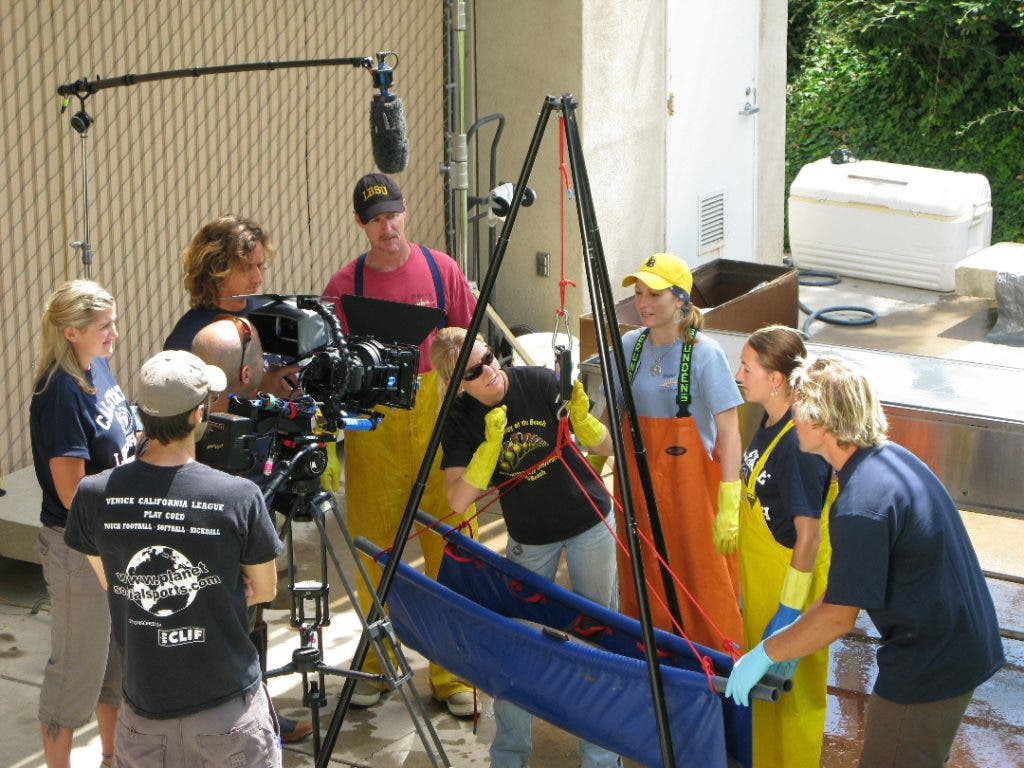
Discovery Channel’s popular "Shark Week" series returns Sunday with Saturday Night Live's Andy Samberg hosting, and starring Cal State Long Beach's own Shark Lab director and students in the premier.
The series opens with the “Great White Invasion,” following California State University, Long Beach Marine Biology professor and Shark Lab director Christopher Lowe, and his students. The Long Beach team, along with researchers in South Africa and Australia, will “seek to learn more about great white shark populations.”
Lowe’s main focus is the behavioral habits of the great white shark.
Find out what's happening in Belmont Shore-Naplesfor free with the latest updates from Patch.
But his research is becoming increasingly relevant because of recent findings of contaminants affecting baby Great Whites.
On the show, in its 25th year, Lowe's team attempts to discover the implications behind record-breaking levels of contaminants in baby sharks caught off the Southern California coast.
Find out what's happening in Belmont Shore-Naplesfor free with the latest updates from Patch.
The show will also explore what these findings of contaminants in the infant shark population could mean for humans.
Lowe grew up in a family of whalers and commercial fishers in Martha’s Vineyard, according to a press release. Lowe earned his masters degree in marine biology at Cal State Long Beach, where h
CSULB’s rapid response team has collaborated closely with the Monterey Bay Aquarium for the past eight years through a research program that devotes millions of dollars to analyzing the west coast great white shark population.
“It’s exciting to be on the rapid response team,” said team leader and CSULB graduate student Kady Lyons, “we associate with fisherman throughout Southern California, and it’s a nice deal because when they catch sharks we get to take measurements and samples and tag them to get more information about where they’re going.”
In addition to focusing on behavioral habits, Lowe and his team were interested in what was already known about the Southern California shark population. They began digging through catch records, local museums, and aquariums to find information about caught sharks dating back to as early as 1936.
Lowe is already focused on the future. “Our next step is to try to figure out what effects these contaminants have on sharks. If it’s the same as in mammals, it’s bad. If it isn’t, then how can we use this? If sharks are the apex predator of the ocean, and we eat many of the same things that they eat, we’re also acquiring these contaminants. We have a new problem to deal with that’s more insidious… and it’s not going to be easy or cheap.”