Business & Tech
Developer: We Won't do City's Version of 2nd + PCH
David Malmuth tells Patch project will stop if city staff sticks to recommendation of one-third less retail/residences, and six vs. 12 stories.
David Malmuth, developer for the proposed 2nd and PCH project, said the group cannot move forward with the development if the city staff recommendations stick.
The city staff recommendation would limit onsite building height to six stories. Malmuth said that taking away six stories is not feasible.
“It isn’t economically feasible,” he said. “Reducing the retail by 35 percent, and reducing residential by 33 percent and lowering the height would take away all economic feasibility of the project and it would never get financed."
Find out what's happening in Belmont Shore-Naplesfor free with the latest updates from Patch.
Malmuth said the staff’s recommendation would not bring in a level of return that could attract equity.
The group has made no formal decision on whether or not to move forward with the project, and it remains eager to get in front of the Planning Commission on Oct. 12 to find out why the reduction and what the thought process behind it is.
Find out what's happening in Belmont Shore-Naplesfor free with the latest updates from Patch.
“We certainly will be going before the Planning Commission to discuss the issue,” he said. “We haven’t seen the entire staff report, only parts of it, and we want to fully understand the reasoning behind their recommendations.”
Malmuth said a letter (see attached) was provided to the Planning Commission four months ago explaining economic viability “in great detail,” and why it is important.
Though the full staff report hasn’t been made available, here is the city website link for what is public:
http://www.lbds.info/planning/environmental_planning/environmental_reports.asp
The amendment to SEADIP, the 30-year-old local coastal plan, or zoning law, for southeast Long Beach, is proposed by the city to be changed. It would be required in order for the project to be considered at all viable when it goes before the California Coastal Commission. It is contained in Part 1, pages 86-92 (of the 336-page PDF document).
And here are the primary changes from page RTC-7 of the Second + PCH Final Environmental Impact Report (FEIR) which states that, “City staff are recommending approval of Alternative 4 (Reduced Intensity Alternative B), which would limit onsite building height to 6 stories.”
Project components of this alternative are as follows (RDEIR p.V-4):
- 215 Residential Units (a 33% reduction)
- 125,000 s.f. Commercial/Retail (a 35% reduction)
- 100 room hotel (same as proposed action)
- 4,368 s.f. hotel restaurant (same as proposed action)
- 20,000 s.f. restaurant (1,092 s.f. less than proposed action)
- 4,175 s.f. science center (same as proposed action)
- 3,510 s.f. meeting space (same as proposed action)
- no theater (the proposed action included a 99-seat theater)
- 219,134 s.f. open space (same as proposed action, Note: this number is inflated as it includes "open space" that should not be counted under SEADIP)
- 82 feet maximum height* (a 68 ft. reduction from proposed action)
Councilman Gary DeLong said he had not seen the Sept. 29 posted staff report and does not know what the recommendations for the proposed project are.
He said he would “love to see a development at 2nd and PCH,” but would not state whether he supported the proposed project.
“At this time I don’t know what type of development is the best for the area and the community,” he said. “I don’t know what I want to see there, I need to represent my constituents. I am waiting to see what the Planning Commissions recommends, and then I will talk to my constituents and fight for what they want.”
The project proposed by Malmuth and land owners would be the biggest development to affect Belmont Shore in its history, DeLong said, although he noted that it is not in the Shore, but at its flanks.
But he was unwilling to state a position on the project.
Though the project has been in the making for three years, this is the first time the city has formally stated a recommendation--two weeks before the Planning Commission considers the project--to the proposal. Skeptics suspect there would be more communication between DeLong, the city and a developer of the largest development in the Southeast part of the city's history--one that would require changing coastal zoning to allow higher buildings that may impact other developments' size. DeLong said the city has been abiding by the process.
“It would have been inappropriate to come out six months ago and say this is what they want — there is a process and it needs to be followed,” he said.
Heather Altman, a panelist with the developer at a community forum at Naples Elementary earlier this year, is an environmental consultant and writes a blog called EgretsNotRegrets about Long Beach coastal issues. News of the city's reccomendation first broke on her blog. She is among opponents of the project. Besides the Belmont Shore Homeowners Assn., other opposing organizations include the Los Cerritos Wetlands Land Trust, which paid for a study to find alternative developments that would cause less traffic and environmental impacts.
There are vocal supporters of the project, who see it as a potential job generator and better-looking gateway to the city. There has been a well-funded marketing campaign behind the project. It includes a privately-conducted survey by the developer claiming 70% of all voters in the city support the project, however, that was not an election nor official poll. And there are many residents who have been watching this years-long process but waiting for final plans. The City of Seal Beach often has representatives at public meeting to track the development, which sits at its border.
Traffic is perhaps the biggest of community concern about the current plan, as the developer's EIR concluded 25 intersections including the worst in the city (PCH and 2nd) would be impacted greatly enough that further traffic studies would be required for the project to be environmentally viable. Air quality was another point that the draft EIR (DEIR) flagged as requiring further study for the project to move forward.
The intersection is already rated E, and F is the worst, meaning near gridlock at peak times and delaying drivers who would not be able to get through the intersection in one light change. Malmuth has previously pointed out in public forums that the property owners walking in are faced with the traffic situation; almost any building would add to what the existing hotel contributes.
"Any type of development there is going to create additional traffic because the existing use doesn't create much traffic," Malmuth said. "Traffic will be an issue, though most people in most situations aren't going to experience differences. And there will certainly be no difference in commutes from the project proposed by us the developer, and the project proposed by the city staffers."
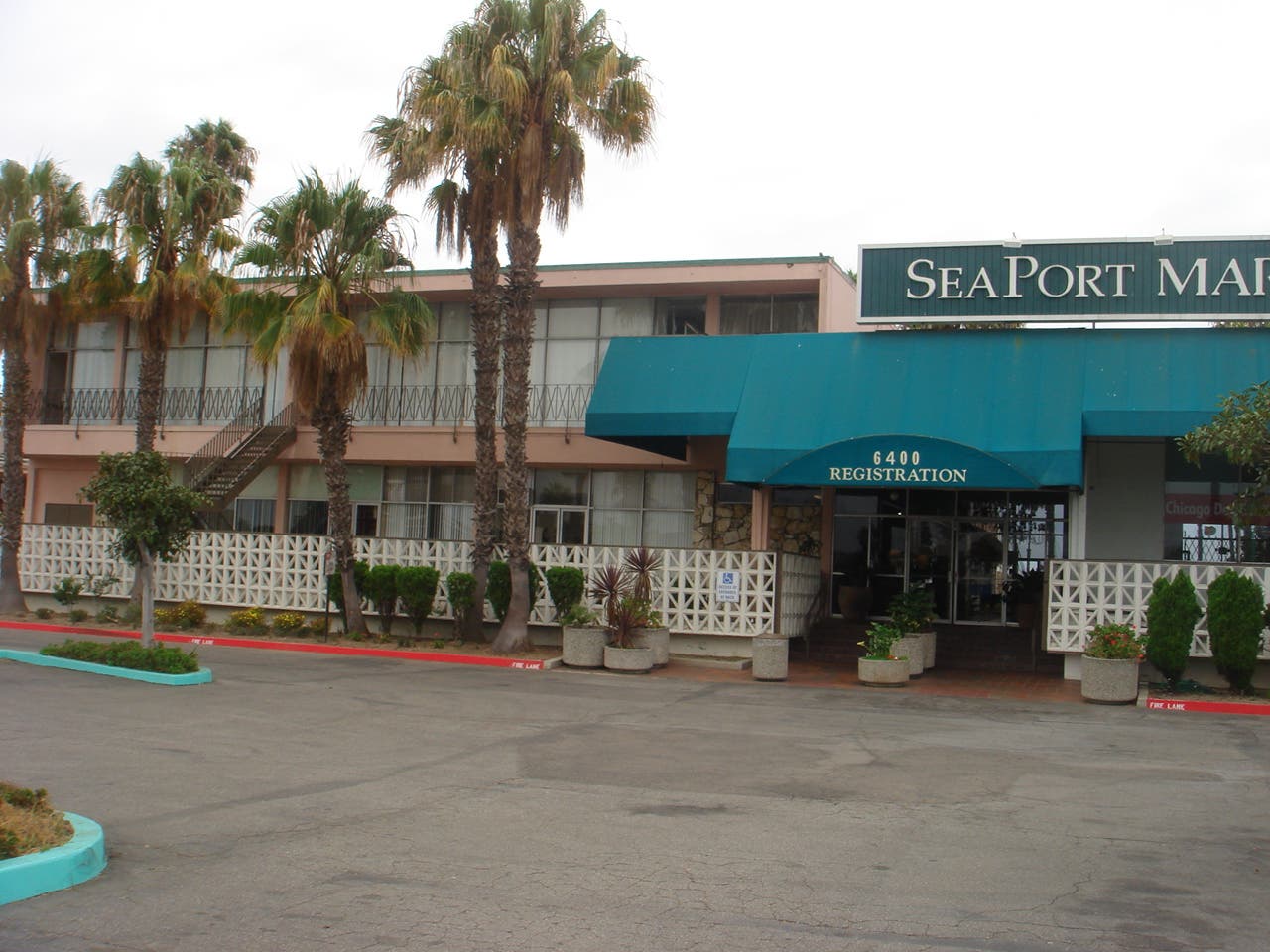
Malmuth, along with owners of the project proposed on the site of the SeaPort Marina Hotel, asked last week to delay the Environmental Impact Report certification hearing to give them time to go over the planning commission's concerns.
“We are totally committed to doing this project, but we won't compromise on the quality of the project,” he said. “If we don't have the economic ability to do the project right, we won't do it.”
The current proposal includes around 230 residential units, a 100-room hotel, 220,000 square feet of commercial space, a 99-seat theater, a science center and retail space equal to a few stacked football fields, which opponents view as a traffic deal-breaker.