

Previously I wrote about my first experience of . I had it going for almost a year before flies discovered it and I opened the lid one fall day to be greeted by a mass of fly larva squirming around the top of the worm bedding. If you have never seen a mass of fly larva take my word for it, it is gross. I emptied the whole bin into the compost pile and thought I was done with vermiculture (cultivation of worms for compost).
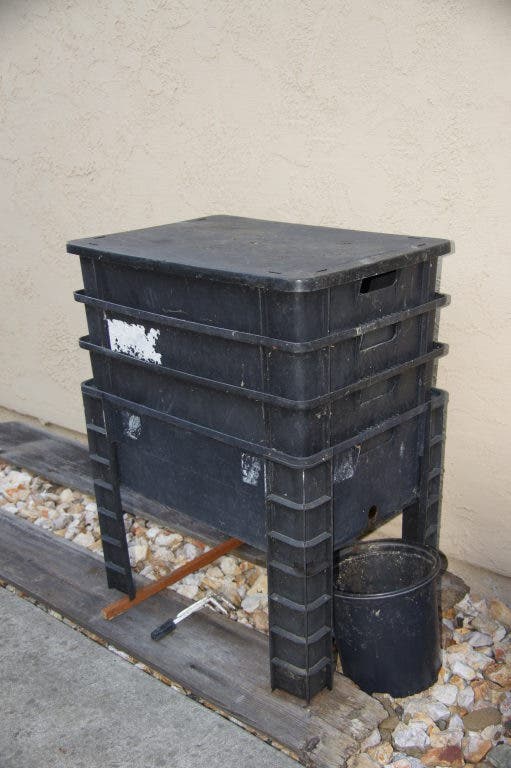
About a year later a friend offered me her worm composting farm complete with worms. It was commercially made with four stackable trays, and a runoff spout at the bottom for excess moisture. It was on legs, and came with a digging tool, so I didn’t have to put on gloves every time I buried kitchen scraps. I decided to give vermiculture a second try.
I set it up on the north side of the house. The location gets a little afternoon sun, which is not ideal, so I put a board over the top to provide shade. I added fresh shredded newspaper to the top tray and moistened it down. Because I had read worms will consume more if their food is finely chopped, I put kitchen scraps through the blender, buried the slurry under a layer of bedding and topped the tray off with a cover of damp newspaper and then a piece of landscape weed-barrier cloth to help keep out flies. Soon the worms were coming up from the bottom trays for the food.
Find out what's happening in Beniciafor free with the latest updates from Patch.
When I took over the worm farm from my friend, the bottom tray held a dark mass of worm castings (worm poop). It was ready to be harvested but still had lots of worms in it so I piled it in a cone shape on a tarp in full sun. The worms receded to the bottom center to get away from the light. Every hour or so I tuned the pile over and with gloves on, picked out the worms from the bottom, placing them back in the tray. When I finished, I added the castings to my vegetable garden and houseplants. There was not a huge amount but it is considered a high-quality soil amendment.
Another way to harvest the worm poop and keep most of the worms in the bin is to move the old bedding and castings to one side and put fresh shredded newspaper bedding and food on the other side as shown in the photo (attached). Eventually the worms will finish all the food left in the old bedding and even eat the bedding itself and then move to the side with the new bedding and food. It takes quite a while but then you can harvest the castings. Keep in mind, no matter which method you use to harvest the castings it is impossible to keep all the worms in the bin. But, don’t worry; any worms you have missed will be a good addition along with the castings to the garden soil.
Find out what's happening in Beniciafor free with the latest updates from Patch.
Besides worm castings, the bin produces a nutrient-rich liquid (call it a slurry), ideal for feeding plants and thought to suppress plant diseases and pests. The moisture drips through the trays into a container at the bottom and whenever I need a liquid nutrient boost for transplants or other vegetables, I use the run-off. Depending on how concentrated it is I dilute it to rate of one part slurry to about ten parts water.
My only problem with the bin has been fruit flies in the spring, which I solved with a cup of vinegar in the corner of the top tray. The fruit flies come to the vinegar and drown. Just recently in the fall I had one bout of fly larva squirming just under the layer of damp newspaper on top of the shredded bedding. I pulled them out by hand (gloved of course) and tossed them on the compost pile. I have recently heard a tip on how to keep the flies and fruit flies out by gluing landscape cloth along the bottom and sides of the bins and anywhere the flies might get in. The landscape cloth allows moisture and air through but blocks the flies.
Each worm bin or farm is a little different depending the size, the number of worms housed, the location of the bin, the warmth of the location, and the amount of kitchen scraps fed. I have found the commercial farm much easier to manage than my homemade bin. It has taken a bit of experimenting but I now find vermiculture very easy and rewarding for my garden.