Neighbor News
The Ownership Alternative
Why Worker Cooperatives and ESOP's are the antidote to VC's Inequality machine

The Ownership Alternative: Why Worker Cooperatives and ESOPs Are the Antidote to Venture Capital's Inequality Machine
Every year, billions of dollars flow into venture capital funds clustered along the US-101 corridor between San Francisco and San Jose. This capital chases the next unicorn, generating eye-popping returns for a tiny sliver of investors while leaving most workers with nothing more than a paycheck. Meanwhile, a quieter revolution is unfolding in places like Oakland, Boston, and Minneapolis—one that puts ownership directly into the hands of the people who do the work. Worker cooperatives and Employee Stock Ownership Plans (ESOPs) represent the most promising, yet chronically underfunded, solution to America's staggering income inequality. It is time we paid them the attention they deserve.
The scale of America's wealth gap is almost incomprehensible. In the United States, the income disparity between the highest- and lowest-paid employees in a typical corporation stands at a staggering ratio of 344-to-1. This isn't just an abstract statistic; it represents a fundamental breakdown in the social contract between workers and the companies they build.
Find out what's happening in Beniciafor free with the latest updates from Patch.
Worker-owned enterprises offer a radical departure from this model. Consider the Mondragon Corporation in Spain's Basque Country, the world's largest federation of worker cooperatives with approximately 70,000 worker-owners. There, the income disparity between the highest- and lowest-paid workers is capped at a ratio between 6-to-1 and 9-to-1. The result? The province that houses most of Mondragon's cooperatives has a lower Gini coefficient—the standard measure of inequality—than Finland and Norway. Worker-owners in Mondragon earn around 30 percent above the market average for rank-and-file workers, while top managers earn about 30 percent less than their counterparts in conventional firms.
This is not a European anomaly. Research on U.S. worker ownership tells a similar story. ESOP participants hold an average of $180,292 in their accounts, and employee-owners enjoy significantly higher median household wealth, better wages, and superior benefits compared to non-ownership workers. A National Bureau of Economic Research analysis shows that ESOPs help promote greater equality in the U.S. wealth distribution. Perhaps most tellingly, a first national survey of the worker cooperative sector found no evidence of wage gaps by gender, race, or immigration status within these firms. In an economy where systemic discrimination remains endemic, this is nothing short of revolutionary.
Find out what's happening in Beniciafor free with the latest updates from Patch.
## The Financing Gap: Venture Capital vs. Worker Ownership
If worker ownership is so effective, why isn't it everywhere? The answer lies in how we finance business creation and expansion. Venture capital—the dominant engine of American entrepreneurship—is geographically and ideologically concentrated. It clusters along the Silicon Valley US-101 corridor, funding a specific model of rapid, high-risk growth that prioritizes exit events over long-term stability and worker welfare.
The financing ecosystem for worker cooperatives and ESOPs could not be more different—and more disadvantaged. Instead of well-funded venture firms, these models rely on Community Development Financial Institutions (CDFIs), cooperative banks, and specialized advisory firms. CDFIs are privately-owned institutions that promote locally-oriented financial inclusion and economic development, emphasizing social responsibility over pure profit motives. Yet even these mission-aligned lenders rarely invest in cooperatives, despite the clear alignment with their stated goals.
The result is a chronic shortage of affordable debt to make conversion deals work and support a healthy startup ecosystem for worker-owned businesses. While a venture-backed startup can raise millions in a single funding round, a group of workers seeking to buy out their retiring employer must cobble together financing from CDFI loan funds, seller financing arrangements, and the occasional socially responsible investor. The Cooperative Fund of New England, for example, serves as a bridge between socially responsible investors and cooperatives—a noble mission, but one that operates on a fraction of the capital available to traditional venture firms.
This financing disparity is not merely a matter of scale; it reflects a deeper cultural bias. We have normalized the idea that entrepreneurs deserve to capture the vast majority of value they create, while workers are mere inputs to be compensated at market rates. Worker ownership challenges this assumption by asserting that labor, not just capital, deserves a stake in the fruits of production.
## Where Worker Ownership Thrives—And Where It Could
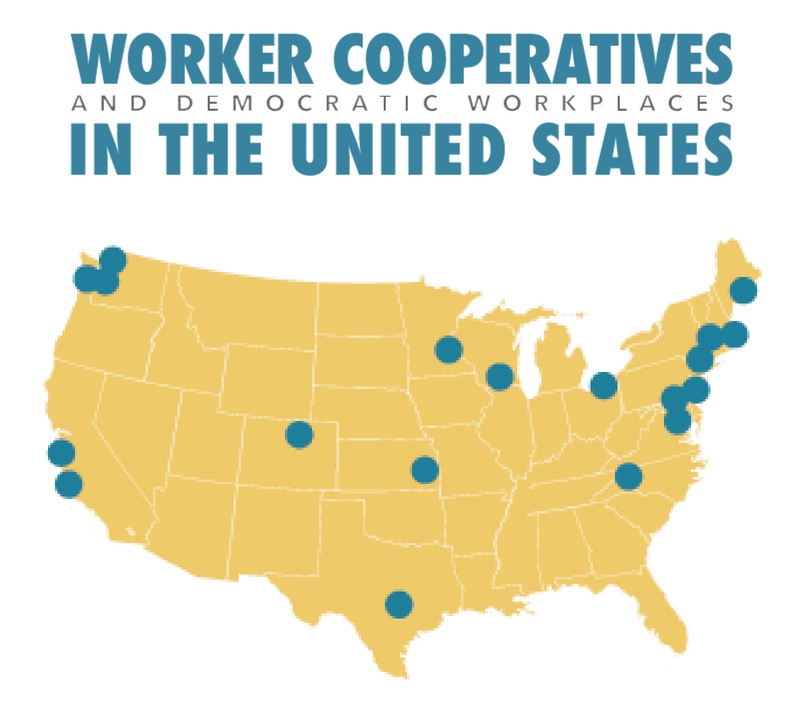
Despite these obstacles, worker ownership is growing in distinct regional clusters across the United States. The San Francisco Bay Area and New York City lead the nation, with cooperative development organizations driving efforts to use worker cooperatives as a strategy to create jobs and build community wealth. Boston ranks third nationally with 19 worker cooperatives. Other hubs include Minneapolis-St. Paul, Colorado, and cities like Cleveland, Albuquerque, Milwaukee, Newark, Rochester, and Madison.
These are not random concentrations. They represent the emergence of alternative financing ecosystems—networks of CDFIs, cooperative banks, and advisory firms that understand the unique needs of worker-owned businesses. New York City's government has spent $3.6 million developing worker cooperatives since 2015. Project Equity, a national organization, guides businesses through ownership transitions and advocates for supportive policies to scale employee ownership nationwide.
Yet even with this growth, the numbers remain modest. The Democracy at Work Institute estimates that the total number of worker cooperatives in the U.S. is between 900 and 1,000, employing approximately 8,000 to 10,000 workers. By contrast, there are more than 6,600 ESOPs across the country with $1.4 trillion in assets. While ESOPs are more numerous, they still represent a tiny fraction of American businesses. Worker cooperatives account for no more than 4 percent of private sector workers in any country.
The question is not whether worker ownership works—the evidence is clear that it does. The question is why we aren't doing more to scale it.
## The Path Forward
To move worker ownership from the margins to the mainstream, we need a fundamental shift in how we think about business financing and economic development. This means:
**First, expand access to capital.** CDFIs and cooperative banks need significantly more resources to provide the affordable, patient capital that worker buyouts and startups require. The federal CDFI Fund should prioritize worker ownership conversions, and states should create their own loan funds modeled on successful programs in New York and Massachusetts.
**Second, create tax incentives for ownership transitions.** The bipartisan SHARE Plan Act, which incentivizes companies to distribute at least 5 percent of their stock to the lowest-paid 80 percent of employees, is a step in the right direction. The National Worker Cooperative Development and Support Act would remove major obstacles that inhibit wider adoption of worker ownership. These bills deserve bipartisan support—not because they are partisan, but because they work.
**Third, change the narrative.** We have been told that venture capital is the only path to innovation and growth. This is a lie. Worker-owned firms are at least as productive as conventional firms, demonstrate greater resilience during economic downturns, and provide better jobs with more stability. They represent not a rejection of capitalism, but a better version of it—one where prosperity is shared rather than hoarded.
The Mondragon model offers a compelling vision: a network of cooperative businesses spanning manufacturing, finance, and retail, with its own schools, university, and welfare institutions. When one cooperative faces difficulties, others step in with common funds and job reallocations. This is capitalism with a conscience—and it works.
## Conclusion
America faces a choice. We can continue funneling capital to the same narrow corridor, enriching the few while leaving the many behind. Or we can build a new infrastructure for worker ownership—one that spreads wealth, strengthens communities, and restores faith in the possibility of economic justice.
Worker cooperatives and ESOPs are not utopian fantasies. They are proven models that reduce inequality, improve worker wellbeing, and build resilient businesses. They flourish in places where we choose to invest in them—in New York, the Bay Area, Boston, and beyond. The financing exists, the expertise exists, and the demand exists. What we lack is the political will and the cultural imagination to see worker ownership as the solution it so clearly is.
The next time you hear about another billion-dollar venture round, ask yourself: who is really getting rich? And then ask: what would it look like if the workers who built that company shared in its success? The answer is not a mystery. It's already happening—just not nearly enough.