Community Corner
Prime Pickin' Time
Knowing when to pick the edible garden makes for more flavor in your meals and improved production.


As I harvested bags of Bartlett pears from my family’s farm last weekend to share with neighbors and friends, I thought about the importance of knowing when to harvest the edible garden.
I grew up in the delta, where there were acres and acres of pears. You couldn’t tell where one ranch stopped and the next began. I remember riding my horse through the orchard long after the harvest and spotting what looked to me like the perfect pear, still hanging on a tree. It was large, beautifully shaped and just the right shade of yellow but when I bit into it, yuck. It was gritty, mushy and nothing like the perfect pear, which should be silky-smooth, sweet and juicy.
Bartlett pears are tricky to harvest at just the right time because they ripen from the inside out and if you wait until they look ripe on the outside they will be mealy, mushy and overripe on inside.
Find out what's happening in Beniciafor free with the latest updates from Patch.
They need to be harvested just after the fruit turns from dark green to lighter green, but is still firm. Commercially harvested pears are so hard that they are dumped into huge bins, loaded onto trucks, taken to canneries and dumped out again without bruising.
After I pick pears, I either wrap each one in newspaper and store them in a cool dark place or put them together in a closed brown paper bag in a cool place for a week or so and check them every few days. When they just start to turn from green to yellow I eat some and refrigerate the rest.They hold their smooth, juicy texture for a week or two while continuing to ripen slowly in the refrigerator.
Find out what's happening in Beniciafor free with the latest updates from Patch.
The Asian pear is different from the Bartlett, which is a European pear. The Asian pear should be harvested straight from the tree when the fruit can be pulled from the branch easily and either consumed or refrigerated for best flavor. They should be firm and sweet.
There are secrets to harvesting prime edibles. The first is to harvest in the morning when the produce is cool so it will stay crisp and store longer. And, for many vegetables such as beans, cucumbers and summer squash, the more you harvest them the more productive the plants will be.
When harvesting tomatoes, be sure to look for a deep rich color with no trace of green. Store them at room temperature, never in the refrigerator, which changes their texture and taste. This year, because the crop has been so late I jumped the gun a few times, picking the fruit before it had ripened completely. But, because I leave the tomatoes out on the counter, they continued to ripen and reward me with the luscious fresh tomato taste.
My green pole beans are producing like mad right now. I like to harvest them while they are still flat and the bean inside the pod has developed to about one forth its mature size. If the pod is limp, it is too young and if the pod is lumpy, bumpy with large seeds, it is too mature and the pods are tougher. My beans need to be picked every day. I pick the prime sized ones and the over mature ones, too, because the plant will produce more if it is not allowed to grow mature pods with seeds. I wait until the harvest has slowed down and leave the mature beans to grow big and lumpy so I have seed for the next year.
I like corn on the young side so I harvest it just as the ears become rounded at the base and the silks at the top are turning brown. Another way to tell if they are ready is to peel back the ear to expose the kernels and pierce one with your fingernail. If it is fat and releases a white, milky juice the corn is ready. Many varieties lose their sweetness very quickly so they need to be eaten soon after picking. Extra sweet varieties hold their sweetness longer so they store well in the refrigerator for a few days.
Summer squash is another vegetable that should be picked often. If the fruit is allowed to grow into giant clubs it becomes pithy, tough with large seeds and production slows. I pick my zucchini when it reaches seven or eight inches long. The cute little patty pan squash is tasty at two to three inches in diameter and yellow crook neck should be picked at four or five inches long. The younger the fruit the more tender the skin so handle gently.
The grapes on our hill are ready to harvest. The best way to tell is to taste them and I have been doing that right along.
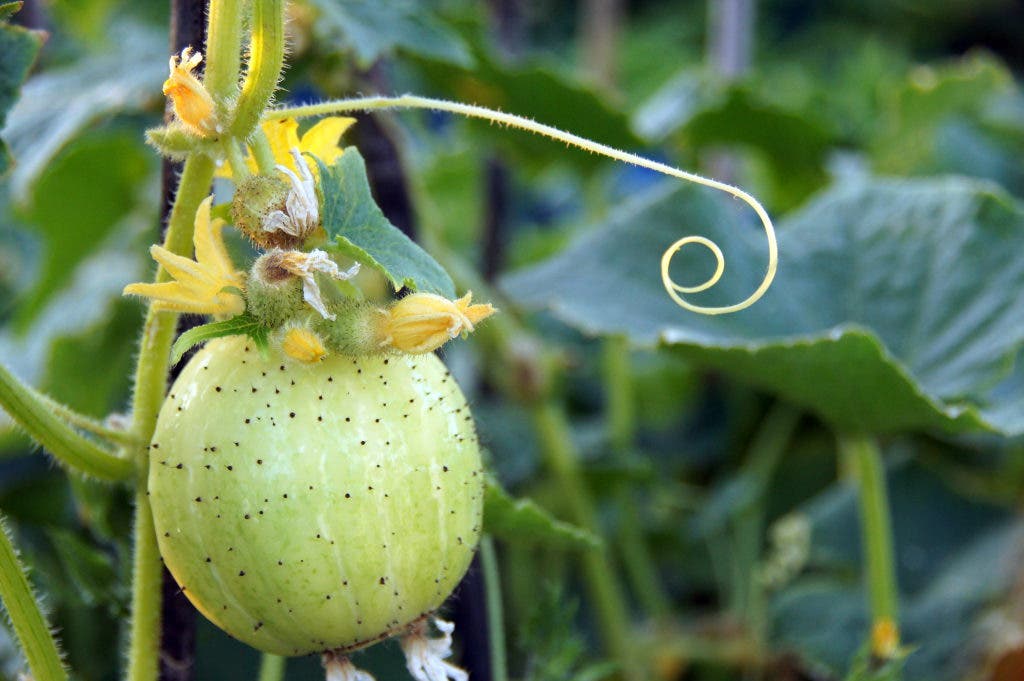
I can’t forget cucumbers. My favorite is the lemon cucumber. One plant produces enough for three families and it is never bitter. I pick them when they are just starting to turn yellow. If I leave them until they are the color of a lemon their seeds have grown too large and they are no longer as crisp. The green slicing cucumbers should have smooth, glossy skin and small seeds inside. There are a number of reasons green cucumbers are bitter and one is a result of growing too big. So pick them every other day.
I like to grow sweet peppers more than hot ones and I allow them to color up completely from green to yellow, orange or red on the plant, depending on the variety. The season is late this year and often it is not until September that mine are ripe.
I’m not harvesting my winter squash or pumpkins yet. I will wait until their shells are so hard they can’t be pierced with my fingernail, which should be in late September or early October. Then I will cut the stems, leaving two three inches from the fruit, and cure them in the warm autumn sun for 10 days or so. When we lived in an area with early frosts, I would bring them inside to finish curing in a warm room then store them at about 50 degrees. Some winter squashes such as butternut and kabocha improve in flavor and texture during storage, but acorn squash should be consumed in the fall because it does not store well.
I can’t say I have been very successful with growing melons. I’m glad I didn’t try it this summer because we have not had enough hot weather. If you are growing cantaloupe, they should be picked when the fruit color changes to beige and it comes off the stem easily. It also may smell sweet. Watermelon is ripe when the white spot on the bottom of the melon changes to yellow. There may be a hollow sound when you thump it with your finger but it is hard to judge. The art of knowing when your edibles are at their peak takes some practice, lots of tasting in the garden, which is the part I enjoy the most, and knowledge of your preferences. One of the benefits of growing your own edibles is that you can taste test as they mature and pick them as you like them. You are in charge!