Business & Tech
Russians, a dollop of poison oak, a smoky ambiance and a massage therapist make honey
James Prescott's Organic Honey is the Bee's Knees
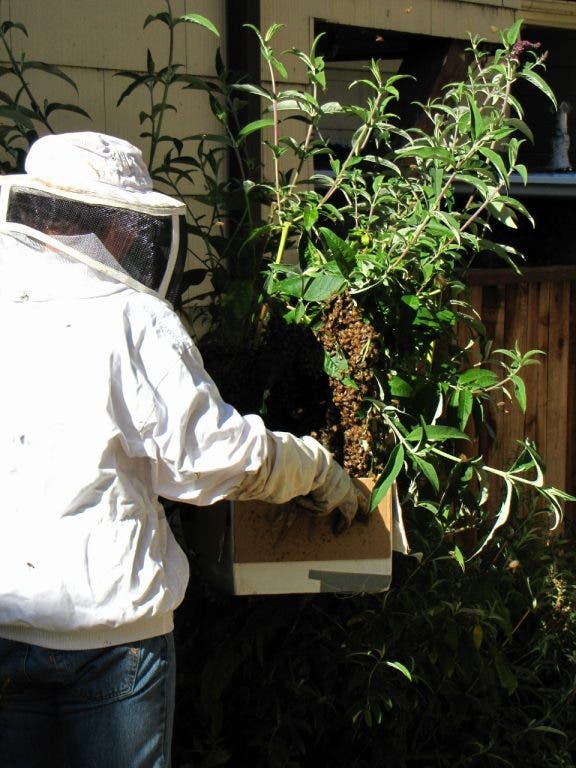


When he’s not kneading the knots out of an aching back, James Prescott is coaxing sweet golden honey from his Russian bees.
Prescott, a massage therapist for 14 years, has had his massage practice at Benicia’s for the last four. His beekeeping began six years ago when his own honey - his ex-wife - declared her love for the bee nectar and decided to begin an adventure in apiculture.
Prescott wasn't enthused.
Find out what's happening in Beniciafor free with the latest updates from Patch.
"First, I said, ‘Are you nuts?’."
He nevertheless bought a book on beekeeping which he ended up reading; they took a class. But it was at the hive that she learned what she really needed to know about her new hobby.
Find out what's happening in Beniciafor free with the latest updates from Patch.
"She quickly found out how strong her sting reaction was and stopped beekeeping within a few months, but I didn't stop," he said. "I have a low sting reaction and I use smoke when working with bees because it relaxes them so they are easier to work with and there’s less stinging. "
Prescott was hooked.
"I also took classes from the San Francisco Beekeeping Association, read books, attended meetings to listen to speakers, and I also had a mentor to do phone consultations with."
Russian bees are preferred, Prescott said, because they thrive in our wet winters.
"The bees produce wild flower honey, which is a mixture of eucalyptus, blackberry, elderberry, California lilac, and as many other weeds and backyard flowers as you can think of," he said.
Then there's the secret ingredient.
"A little known fact is that most wild flower honey, in the Bay Area, has a little poison oak nectar in it," Prescott said. "It won’t make you itch; only the plant’s resins will. The poison oak nectar adds a dark color and a rich taste to the honey. It’s not harmful in any way."
Prescott believes he's lost two hives to Colony Collaspe Disorder (CCD).
"There are a lot of theories out right now," he said. "It’s hard to say what is accurate. I believe we need to restrict pesticide use and take a look at climate change. Something is obviously affecting the bees ability to navigate."
Bay Area bees produce honey about 11 months out of the year. "They don’t hibernate but the colony numbers drop way down to conserve resources."
Currently, Prescott has two hives, “I will be starting several more this spring, and I am looking for volunteer backyards to put them in."
If your home seems right for a hive, Prescott requests you contact him.