Schools
“TTYL (talk to you later)…I’m in class…”
New enforcement of old policy leads to a few disconnected souls.
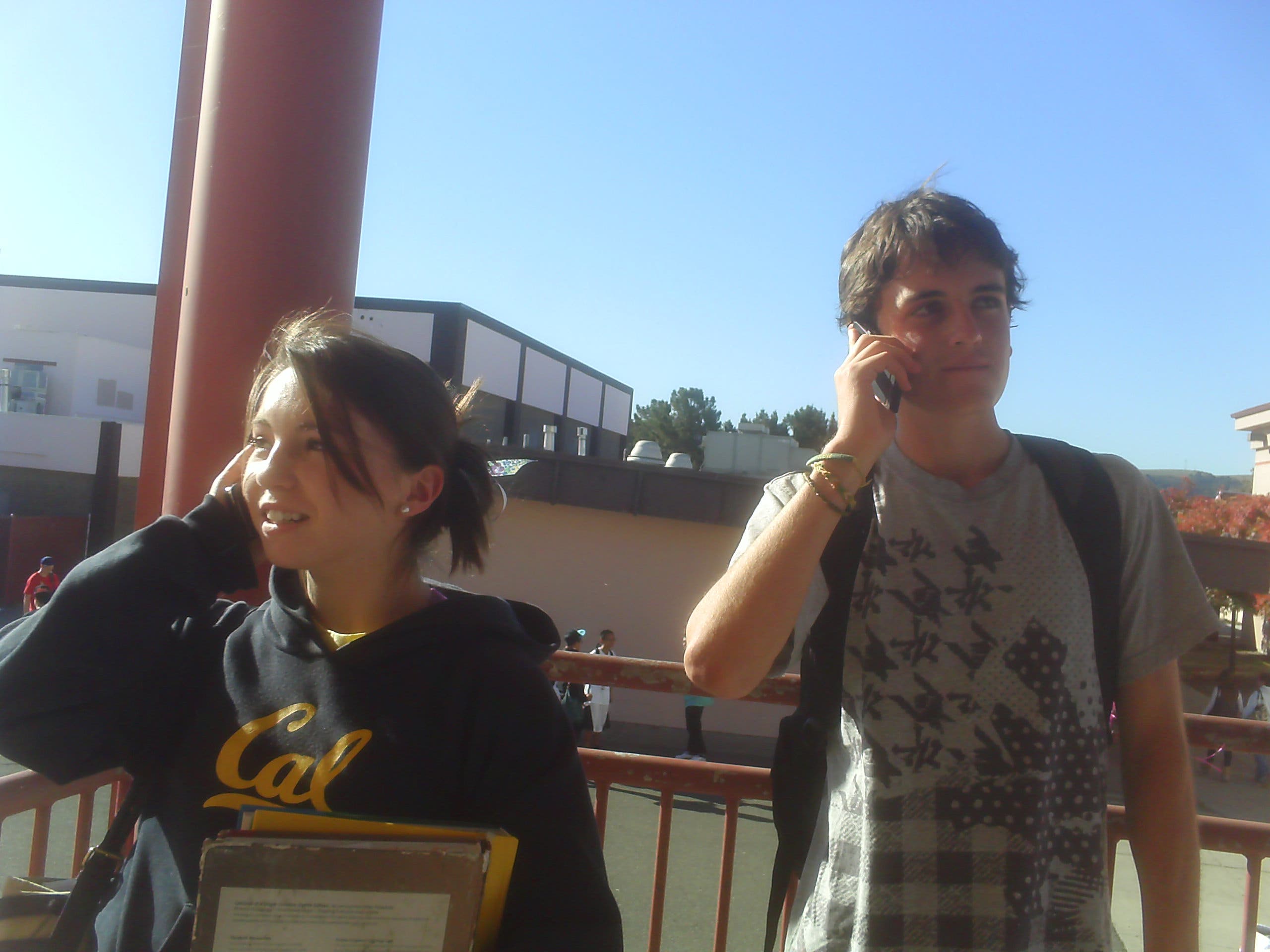
Entering campus during a morning break, one finds no evidence of a cell-phone ban. If not engaged in rapid fire texting, most students have their phones in hand--just in case. Cell phone use became a hot topic Monday after an article appeared in the San Francisco Chronicle.
"Students feel like it's an appendage," says BHS Principal Gary Jensen. "Taking it away is like losing an arm or a leg."
This seemingly vital attachment explains students' aversion to the newly enforced policy prohibiting the use of cell phones during class. This gives district backing to a policy some teachers have wanted to enforce for a long time. However, the "three strike" rule is a hardly a permanent amputation.
Find out what's happening in Beniciafor free with the latest updates from Patch.
The first penalty confiscates the phone for the rest of the school week. At 3 p.m. Friday, the student is reunited with his "phantom limb." A second strike parts cell phone from owner for a semester. At the third offense, the phone becomes a summer vacation present. (The rule does not apply to break time, lunch or passing periods.)
Prior to this rule, teachers used alternative methods to curtail use in class. History teacher Ed Coyne simply deducted class participation points for inappropriate use.
Find out what's happening in Beniciafor free with the latest updates from Patch.
"I'm definitely following the new policy … It works better than my previous one," Coyne notes. "Having their phones actually taken is a stronger incentive to put them away."
Despite current restrictions, teachers and administrators see educational utility in cell phones. Coin and Jensen foresee the use of phones as classroom aids. Coin already has put this into practice by allowing students to take pictures of agendas and conduct research with cell phones.
"I'm not opposed to technology," explains Superintendent Janice Adams. She admits to checking her own cell phone frequently throughout the day.
"But it's common courtesy to turn it off during meetings and in class," says Adams. "If you're attending to a lesson you have to give it your all."
But can technology be stifled by manners? Some students feel that this is not a question of social etiquette, but of personal autonomy. Senior Morgan Graftas feels it is the student's right to focus his/her attention, or not.
"I prefer to use mine. I think it's our choice whether to listen or not," says Graftas.
And there is yet another perspective. Parents—though out of sight on campus—are never far from mind. Most parents view cell phones as essential in the event of schedule changes or bigger emergencies. Tina Thatcher, mother of two BHS graduates and a freshman, suggests that parents and teens form a plan to communicate during a time other than class.
"I tell Christine to check her messages at breaks … or just go to the bathroom!" says Thatcher. "I know she would hate to have her phone taken and will do everything in her capacity to avoid it."
For freshmen, the mere ability to check phones between classes is more leeway than they had last year. At , the rule is no cell phones, period, and is strictly enforced.
Within the past few weeks, Adams said, the principals of BMS and BHS worked together to create a similar enforcement policy for the high school's existing cell phone rules. These new efforts were a result of teacher grievances.
As these devices become progressively more entertaining (and subsequently more distracting), educators are hard-pressed to retain influence over their pupils. While the district administration attempts to navigate these uncharted waters, there are many different currents (students, teachers, parents) attempting to rock the boat.