Neighbor News
How Diversity Awareness Can Make You a Better Leader !
How Diversity Awareness Can Make You a Better Leader ! By Bill Say
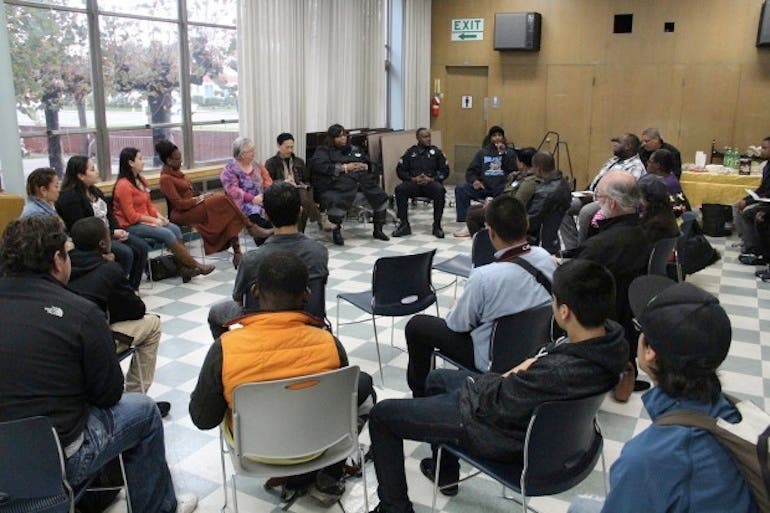
A central leadership task is cultivating and holding relationships and community.
As our world becomes smaller, more mobile and connected we need leaders who can welcome, include
and support the immense diversity that we are. This includes having broad and deep definitions, models
Find out what's happening in Berkeleyfor free with the latest updates from Patch.
and practices concerning diversity. It’s no longer enough to have an acute analysis of social justice and the passion
to address injustice; we need leaders who can facilitate the larger dialogues that exist around differences and inequity,
Find out what's happening in Berkeleyfor free with the latest updates from Patch.
plus hopefully still see the vast creativity and resources associated with the diversity of life!
Today’s leaders need to find ways to go beyond their preferences, biases, and intolerant reactions. The leader
needs ways to become more aware or otherwise change herself or himself internally and in relationship with others. These
of course are tall orders. How do we reconcile conflict? How do we become aware of “others,” those we may find “not me” for
any number of reasons and then marginalize? And what do we do when we have identified an “other” in life, individual or
group?
Reluctantly I have come to realize that it’s sometimes right for an individual or group to stay within a given identity.
“I’m me. You’re you.” Ok. That is an important part of diversity, our sovereignty of self, of identity. Certainly that is what we
agree to consensually. “I’m Bill Say.” Most people would agree to that. But when we face chronic conflict, and polarities, is that
where we have to leave it?
Processwork, founded by Arnold Mindell, suggests different levels of reality. One level is the consensual one of facts and
issues; the stuff that most of us could agree upon. The next level is dreamland or the subjective level of feelings, figures and
dreamlike phenomena that seems to populate most of us in some moment or another. Love and hate, to name just two
prevalent parts of life, are examples of this immeasurable and subjective realm. So are figures such as those that haunt us:
critics that begin as parents and then become part of our psychic landscape; or tyrants that had oppressed our workplace,
were fired but still seem to plague our team dynamics. Finally, there is the level of essence or the most subtle nature of
things. Essence is another subjective level that we can’t necessarily quantify but may be able to discern, for example, in
someone’s message that “rings true” while another’s registers as superficial or insincere, perhaps with no overt difference in
content.
I love dreams and the potentials of dreamland! I love going to sleep at night knowing that anything can happen in my
dreams. I can find solutions to things that seem impossible in my waking life. Importantly, I can be me but I can also become
you, or a little bit like you. Yeah, but this is wierd is it not? Yes, but it also seems to be human nature. If we spend time with
someone we will often find that that person’s quality rubs off on us. Not always in ways we appreciate! Diversity is a fluid and
dynamic process. Some may hate what I’m about to say but to me who has power and privilege and who is marginal is also
fluid. This is not to say that there aren’t terrible equity and inclusion problems because there are but if we watch the actual
dynamics of power, who has power changes and shifts in our interactions. And this I think is a very good thing and is one way
how we actually have a more equitable world than we might if there were only the focus on consensual facts and figures. In
other words, in dreamland, we may have more ability to shift identity, learn from differences, and de-escalate conflicts
immediately, partly because we can become, at least a little bit, who we have momentarily opposed. If I can’t stand you but
then find I am somehow like you, I may be closer to liking or understanding you.
This brings me to my last point for now--intersectionality and complexity. I love that life is so complex and that many of the
central diversity issues such as race, gender, socio-economics cannot be neatly cordoned off. They intersect and influence
one another. And because of this intersectionality, it also seems that there aren’t answers to these issues per se. Or at least
any answer will be temporary and contextual. More what seems to be the case is that we find answers and solutions in
community. Today was a good example. As a team members faced with much complexity, I needed conversation with my
fellow team members to have some sense of direction and clarity. And, any “answer” I have today will likely only last for a
while. But don’t take my word for it! That’s my point. Answers and solutions to our greatest human challenges need diverse
input. We have complex problems that need complex answers from diverse stakeholders and input from diverse disciplines
working together. We need each other.
On October 10 and 17 I’ll be offering Diversity Awareness for Effective Leadership at UC Berkeley Extension. I hope you’ll join in!
http://extension.berkeley.edu/search/publicCourseSearchDetails.do?method=load&courseId=40129
Warm wishes,
Bill