FAQ — Pain When Running / Ankle Mobility
1. Why do I feel pain when I run?
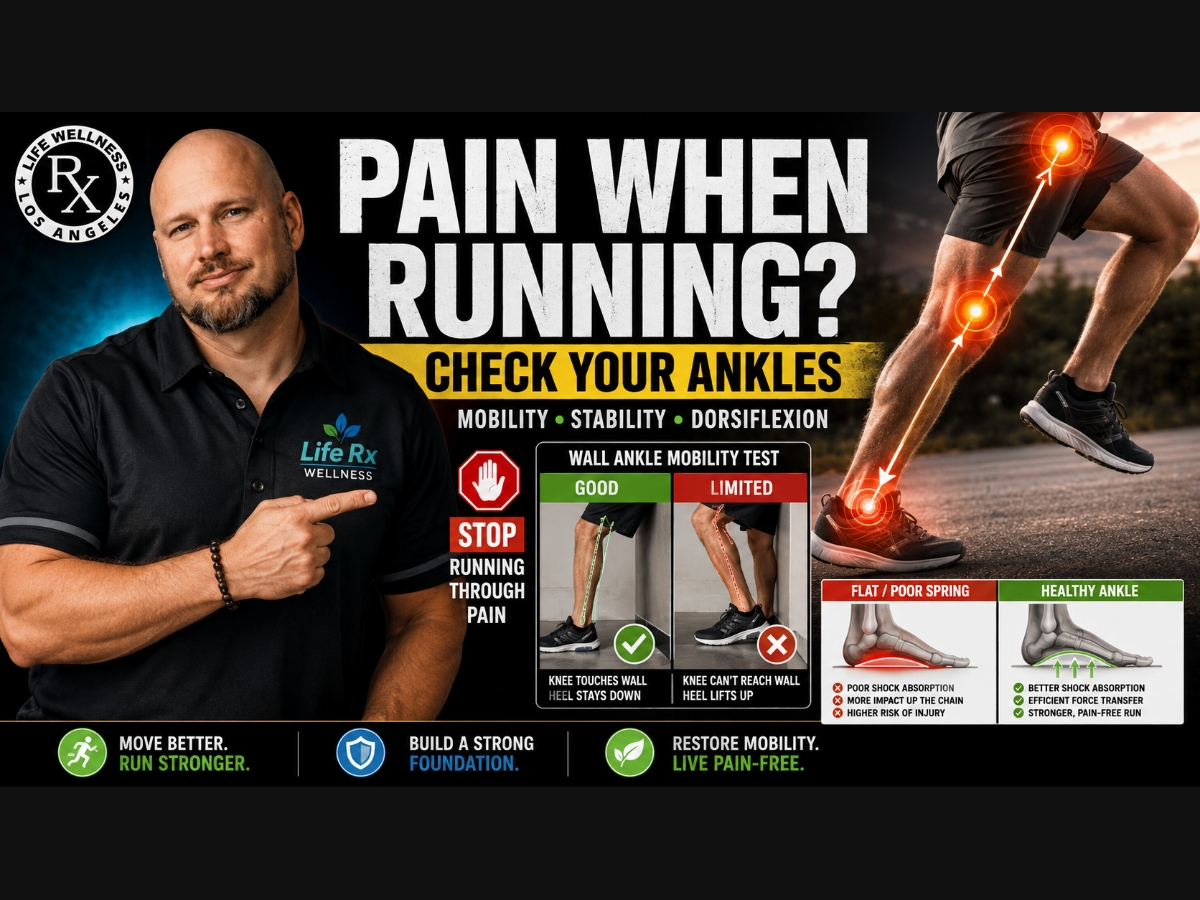
Pain during running can happen when your body is not absorbing impact correctly. Often the problem starts with poor ankle mobility, weak ankle stability, flat feet, poor shock absorption, or compensation from the knees, hips, or lower back.
2. Can ankle problems cause knee or hip pain?
Yes. If your ankle is stiff or unstable, the body has to compensate. That extra stress can travel up into the knee, hip, SI joint, or lower back.
3. What is the ankle wall test?
The ankle wall test checks dorsiflexion. Stand facing a wall, place your foot about 4–5 inches away, keep your heel down, and try to touch your knee to the wall. If your heel lifts or your knee cannot reach, your ankle mobility may be limited.
Find out what's happening in Beverly Hillsfor free with the latest updates from Patch.
4. Should I keep running if I feel pain?
No. If you feel sharp pain, burning, tingling, weakness, swelling, or pain that gets worse while running, stop and get checked. Running through pain can create a bigger injury.
5. Why are flat feet a problem for runners?
Flat feet can reduce the natural “spring system” of the foot and ankle. When the foot does not absorb impact well, more pressure can travel into the ankle, knee, hip, and lower back.
Find out what's happening in Beverly Hillsfor free with the latest updates from Patch.
6. Is running on concrete worse for ankle pain?
Concrete is a hard surface, so the body has to absorb more impact. If your ankle mobility, foot stability, or running mechanics are poor, concrete can make symptoms worse.
7. What should I check before running?
Check ankle mobility, ankle stability, foot arch control, hip stability, knee alignment, and how your body feels during single-leg balance or walking. Pain means your body is giving you a warning.
8. Can PhysioMassage help runners?
PhysioMassage can help by assessing movement, checking ankle and hip function, releasing soft tissue tension, improving mobility, and helping the body move with better balance.
9. When should I see a specialist?
See a specialist if pain continues, comes back every time you run, travels up the leg, causes swelling, affects walking, or feels like burning, tingling, numbness, or weakness.
10. What is the main message for runners?
Do not just run harder. Check your ankles first. Restore mobility, build stability, correct your movement, and then return to running smarter.