Crime & Safety
'Mystery Man Did It,' Claims Attorney in Grim Sleeper Serial Killer Trial
An attorney for a retired sanitation worker accused of killing 10 women told jurors the real killer is a mystery man still out there.

By TERRI VERMEULEN KEITH
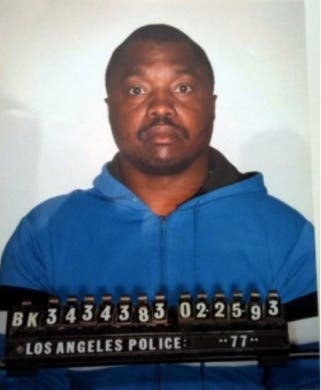
LOS ANGELES, CA - An attorney for the man charged in the "Grim Sleeper" murders of nine women and a teenage girl told jurors today that the killings -- which occurred over a period of two decades -- could have been committed by a "mystery man."
"Each and every murder in this case could have been done by the mystery man with the mystery gun and the mystery DNA," Lonnie David Franklin Jr.'s attorney, Seymour Amster, told the seven-woman, five man panel during his closing argument.
Find out what's happening in Brentwoodfor free with the latest updates from Patch.
Franklin faces a possible death sentence if convicted of killing the nine women, mostly in their 20s, and a 15-year-old girl and dumping their bodies in alleys and trash bins around South Los Angeles, Inglewood and unincorporated Los Angeles County. The murder charges include a special circumstance allegation of multiple murders.
The 63-year-old former city garage attendant and sanitation worker is also charged with the attempted murder of Enietra Washington, who survived being shot in the chest and pushed out of a moving vehicle in November 1988.
Find out what's happening in Brentwoodfor free with the latest updates from Patch.
In testimony before the jury on Feb. 25, she identified Franklin as her assailant and said he took a Polaroid-type photo of her after shooting her.
Franklin's attorney noted that Washington had testified that her assailant told her before the shooting that he had to stop at his uncle's house to pick up money after she agreed to get in his car while walking to a friend's home. Amster questioned whether the assailant may have had a family link to Franklin or known him.
He noted that thousands of dollars were recovered from Franklin's property in a police search in 2010, and suggested that a composite sketch of Washington's assailant looks like a "youngster," and "not the uncle."
"Sometimes you can have a play aunt or a play uncle," Amster said, noting that it doesn't necessarily mean that the person is a blood relative. "We have in this case a mystery man."
The defense attorney said his client "for better or worse is good at picking up women, having sex with them," but questioned why the defendant would "ever kill ... the women of his pleasure." He said someone else may have coveted what Franklin had.
"It's our position that there's a nephew or youngster who's involved that did each and every murder," Amster told the jury.
Amster argued there was "insufficient evidence" that Franklin was involved in the crimes and told the panel that "nothing in this case has evidence that is not questionable."
He questioned why Washington was only shown a photo of Franklin -- and not photos of other men -- when she was asked to identify her assailant. He told jurors that there was an "absence of evidence" as to how a Polaroid-type photo of Washington was stashed behind a wall in Franklin's garage, and said the item had been improperly identified on an evidence envelope after it was seized.
"There's no care and concern to maintain the evidence," Franklin's attorney said of the decision to move a trash bin containing a bag with a woman's body in it without removing the bag first to avoid DNA potentially being transferred from other items in the bin.
A photo of that woman with her breast exposed was found in a garage at Franklin's home, but his attorney said the woman's hair was longer in that photo than when her body was discovered.
In her closing argument Monday, Deputy District Attorney Beth Silverman said Franklin was a "serial killer who was hiding in plain sight."
The killings occurred between 1985 and 1988, and 2002 and 2007, with the assailant dubbed the "Grim Sleeper" because of the apparent 13-year break in the killings.
"Ten young women, all of them cruelly murdered by that man, the defendant, Lonnie Franklin," she said as she showed jurors photos of all of the victims and said an "overwhelming amount of evidence" links Franklin to the "horrendous crimes."
The prosecutor said the 10 victims had distinct similarities, all of them young black females dumped in "filthy alleys" after being killed elsewhere. She said Franklin "dumped his victims like trash in alleys and trash bins." All of them were either shot -- mostly in the chest -- with a .25- caliber firearm or strangled.
Silverman said during the trial that all of the victims were "connected to the same serial killer" either through DNA evidence or firearms evidence.
Franklin's attorney countered, "The government's position of a pattern of one common (DNA) profile is not complete and is subject to question." He cited a number of other unidentified sources of male DNA -- in which Franklin was excluded -- in samples taken from the victims' bodies or clothing.
"In this case, there is DNA evidence of multiple contributors," he said.
Amster also questioned the firearms evidence, saying jurors were being asked to make a "critical decision" about a handgun found at Franklin's residence that the prosecution contends was used in the final killing with which his client is charged.
Amster was expected to wrap up his closing argument this afternoon, with the prosecution expected to give a rebuttal argument before Los Angeles Superior Court Judge Kathleen Kennedy gives jurors final instructions and turns the case over to them.
Franklin is charged with murdering:
-- Debra Jackson, 29, found dead from three gunshot wounds to the chest in an alley on Aug. 10, 1985;
-- Henrietta Wright, 34, shot twice in the chest and found in an alley with a cloth gag stuffed in her mouth on Aug. 12, 1986;
-- Barbara Ware, 23, shot once in the chest and found under a pile of debris and garbage in an alley on Jan. 10, 1987;
-- Bernita Sparks, 26, shot once in the chest and found in a trash bin with her shirt and pants unbuttoned on April 15, 1987;
-- Mary Lowe, 26, shot in the chest and found in an alley with her pants unzipped behind a large shrub on Nov. 1, 1987;
-- Lachrica Jefferson, 22, found dead from two gunshot wounds to the chest -- with a napkin over her face with the handwritten word "AIDS" on it -- in an alley on Jan. 30, 1988;
-- Alicia Alexander, 18, killed by a gunshot wound to the chest and found naked under a blue foam mattress in an alley on Sept. 11, 1988;
-- Princess Berthomieux, 15, strangled and discovered naked and hidden in shrubbery in an alley in Inglewood on March 19, 2002;
-- Valerie McCorvey, 35, strangled and found dead with her clothes pulled down at the entrance to a locked alley on July 11, 2003; and
-- Janecia Peters, 25, shot in the back and found naked inside a sealed plastic trash bag in a trash bin in an alley on Jan. 1, 2007.
City News Service