Arts & Entertainment
Wanted: One Billion Teen Poets Online
Brentwood School teacher Alexander Trivas is connecting teens with like-minded poets through his new site OneBillionPoets.com
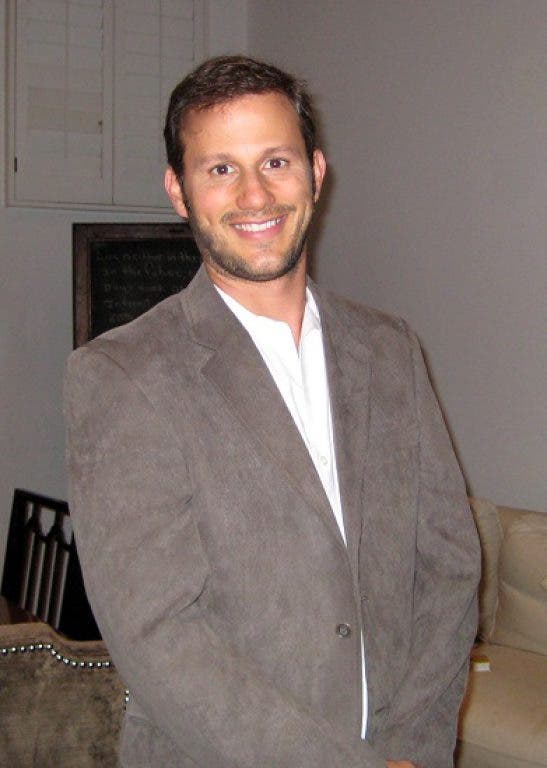


Alexander Trivas teaches seventh grade English, global studies and public speaking at .
He's also looking for one billion additional kids to mentor online.
Trivas recently launched a social networking site designed to help teens connect through poetry.
Find out what's happening in Brentwoodfor free with the latest updates from Patch.
One Billion Poets.com went live for National Poetry Month, which starts today (no foolin'!)
The April celebration of verse was inaugurated by the Academy of American Poets in 1996.
Find out what's happening in Brentwoodfor free with the latest updates from Patch.
One Billion Poets is designed as a destination for teens, a place to post and discuss poetry related to the teenage experience, according to Trivias.
The site focuses on responses to the following four prompts: "Where I'm From," "What I Carry," "Why I Laugh" and "What I Wish."
“I am calling it one billion because there are about one billion teens in the world, so I believe that that means there are potentially one billion teen poets,” Trivas explains.
“I am very excited as it's been only a few days and people from 14 countries and 27 states in the US have been on site. I already have members from South Africa, England, Hong Kong and the Bahamas.”
Brentwood Patch interviewed Trivas, who has been teaching at independent schools in Baltimore and Los Angeles for more than 14 years (he moved to LA in 2002, and currently lives in Santa Monica.)
Brentwood Patch: In addition to teaching, what other activities have you spearheaded at the school?
Alexander Trivas: I am the faculty advisor for the Middle Division’s literary magazine, Inkblots. I organize and produce an annual Night of Spoken Word Coffee House for middle schoolers to showcase their writing and performing talents. I have also spearheaded many of our service learning projects in the past centering on crises in Sub-Saharan Africa such as AIDS in South Africa, corruption in Zimbabwe, the horrific situation in the Democratic Republic of Congo and Darfur. We were blessed one year to have Valentino Deng, a Lost Boy of Sudan and protagonist of Dave Egger’s book, What is the What?, speak to our middle school.
Patch: Why did you start the One Billion Poets site? What's your mission?
Trivas: My favorite unit of the school year has always been poetry, and I am always so excited to see how students respond to each other’s poems. One of my favorite poetry prompts was inspired by Tim O’Brien’s classic story, The Things They Carried.
After we would read the haunting opening pages, I would ask students, “What tangible and intangible things do you carry?”—the responses were some of the most honest, saddest, and funniest to any prompt.
I then began thinking what do teens in other nations carry? And what if kids around the world began sharing these feelings through poetry?
I also thought the site would be a very positive use of social networking—that teens go can on-line and share very meaningful content.
Patch: In what ways does the site help teens?
Trivas: To see that they are not alone in how they feel and that they have a safe, supportive place to express themselves. To make contacts all over the world, based on a common interest of writing and reading poetry.
Patch: What response have you received thus far? Any success stories?
Trivas: So far teens from all over the globe have joined—South Africa, Syria, India, Hong Kong, the Bahamas, Rwanda, Netherlands. They are very excited about the site, posting numerous discussions. My favorite “success” story so far has centered on two poems about divorce and missing fathers. The poems themselves are riveting, but it has been the responses from other teens that have been most powerful, including a response from girl in NYC to a girl in LA commiserating over their losses.
Patch: Any advice for writers and those who want to start writing?
Trivas: Read, read, read and, just like a young athlete models his swing or serve after a professional player, people should practice writing in the voice and style of an accomplished author, modeling sentence structure as well.
Read the best poets, observe the natural world with a keen eye and keep a writer’s notebook.
Patch:Why is poetry so important for kids to do as they develop into adults?
Trivas: Some of the key ingredients for becoming an excellent poet are having an observant eye, appreciative soul, open mind, (and often a dose of humor)—having these makes for a richer life.
Poetry helps kids cut to the essence of things, eliminating the superficial. In a world of over active stimuli and media bombardments, poetry helps to focus on what’s most important—a sense of nature, honest feelings, captured moments, an appreciation of the five senses, love.
§§§