Community Corner
Calabasan Of The Week: Patrick Jordan
Patch is highlighting different Calabasans and learning what makes them tick. Meet Patrick Jordan from the LA County Sheriff's Department.


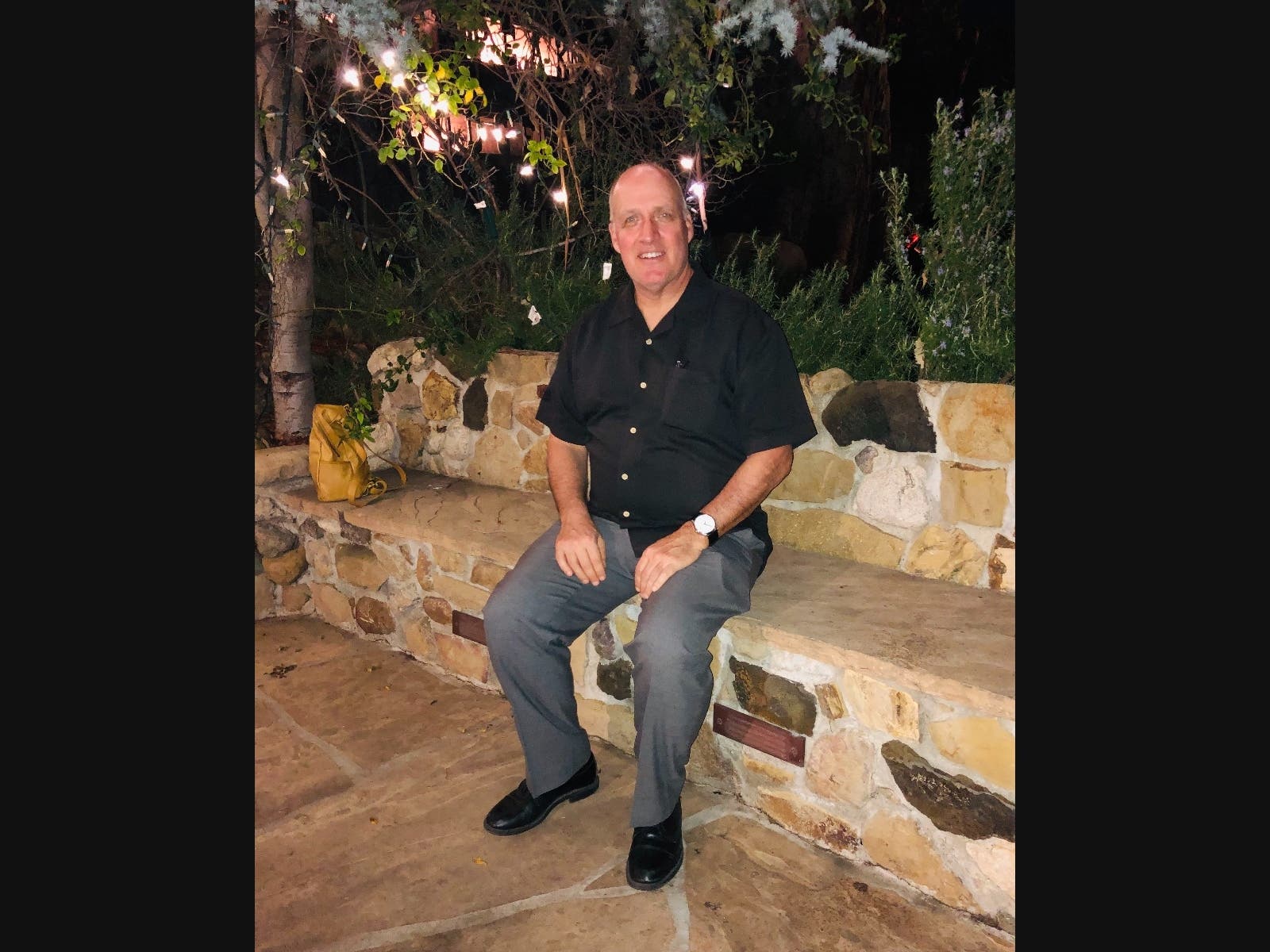
Name: Patrick Jordan
Hometown: Detroit, Michigan
Job: Division Chief, Los Angeles County Sheriff’s Department East Patrol
Find out what's happening in Calabasasfor free with the latest updates from Patch.
Favorite music: I like 60s and 70s type.
Favorite movies/actor: Probably Clint Eastwood in “Unforgiven.” I like a lot of his stuff.
Find out what's happening in Calabasasfor free with the latest updates from Patch.
Favorite books/author: “The Righteous Mind” by Jonathan Haidt – it’s why good people are divided by politics and religion. It’s a really great book.
Favorite TV shows: God, as a kid I would say Westerns.
Favorite travel destination: Europe. The last several years I’ve been traveling a lot to Europe, and just like exploring. I went to the oldest continuing operating pub that opened up in 900 A.D. – Sean’s Bar. I found this bar in Barcelona where Pablo Picasso used to drink at.
Somewhere you’d like to go next: Greece.
Favorite quote: Not necessarily, but if someone asked me, there’s the man in the arena thing with Theodore Roosevelt – I really like him. He essentially talks about, ‘It’s not the critics who are important, it’s the man in the ring trying to solve things.’ We have a lot of guys out there trying to do the best they can, but there’s also a lot of critics who never actually stepped in the arena to do it themselves.
Favorite person: I have a lot. I liked Reagan, but another person I thought was a very interesting guy was Harry Truman. I read his biography and the guy wasn’t rich, working a difficult state where there was corruption, fought in World War I, and he rose to the highest level of our country, and he had to make some really tough decisions, so I like him, I like what he represents.
Favorite food: I’d have to say Italian.
Favorite drink: Jameson at night a couple of times a week, and water with fruit.
Favorite Calabasas spot: I like The Six, it’s a gastropub, a nice place to go in terms of places to eat. I don’t know if it counts as Calabasas, but the Malibu Creek State Park.
What was your childhood like?
I was born in raised in Detroit, Michigan, and I moved to California in 1981. It’s kind of a blue-collar town, and I had five siblings, all girls, which was a motivator to leave. When I graduated high school in 1980, things were pretty bleak in Michigan, so I decided to come to California. I came out with just a few dollars.
What brought you to Calabasas?
I was in all over the San Fernando. In 2010, I moved with my wife at the time to Westlake Village, and I loved the area. Eventually we divorced and I relocated to Calabasas [in 2015.] I went right downtown, because I wanted to be in the sheriff's area but as close to downtown as possible.
What do you like about Calabasas?
I love all the trails. In fact, I walked today on the Las Virgenes Trail, which I do quite often, so that’s the thing I like the most – the open space, the trails, the fact that you’re near the mountains, near Malibu.
What don’t you like about Calabasas?
There’s not a lot not to like. I don’t have anything really negative to say. We could use a few more restaurants on the northwest side.
What has changed since you’ve been here?
I’ve noticed a lot of development, and that’s gonna be a challenge – how to keep up the open space and do smart development. When I moved here, they had multiple construction projects going on Las Virgenes Road, which is near where I live. It was pretty frustrating, but now that it’s done, it looks great, so balancing the residents’ desire to have open space, so it’s consistent with what you moved into, while at the same time, some reasonable growth.
Do you think the local government has done a good job maintaining that balance?
I think they try real hard – I think they do listen to the residents, and my understanding is that property is zoned a certain way, so in reality a person does have some property rights for development, so you try to balance that. I think they are listening, I don’t know if they always get it right, but you can’t please everybody, so that’s why you need balance – that’s the tough part of leading in Calabasas, I imagine.
How did you get into law enforcement?
When I first moved here, I just had a high school education – I did get my bachelor’s degree from Cal State Northridge over the years, but I needed a job that had benefits, my family was in law enforcement, so I made the decision to do that until I figured out what I wanted to do in life, and then I ended up making a career out of it. I’ve been with the Sheriff’s Department for 37 years.
I’m a Division Chief, so I oversee East Patrol Division, so that’s 12 cities in the eastern part of the county. That’s the division that has multiple sheriff’s stations in it, that provide policing for unincorporated areas and contract cities. So the Sheriff’s Department has four patrol divisions – Lost Hills is actually in the north patrol division, so another chief oversees it.
The unincorporated area would be Altadena, one city would be La Cañada Flintridge, you got Temple, Rosemead, South El Monte, Duarte, Walnut, San Dimas – quite a few.
What else have you done in your career?
I’ve done quite a bit of stuff – I worked through the ranks, worked in a lot of different sheriff’s stations, I was a detective for a while. I did oversee the Transit Policing in LA for a while and got involved in Homeland Security stuff, but I also am involved in stuff that’s emerging in law enforcement and reforming criminal justice, and that’s ways to deal with people who are incarcerated or in the justice system to get better outcomes, so inmate education, treatment programs, that kind of stuff – that’s what I did for about five or six years before I moved back to patrol as a chief. And that’s very exciting stuff, because it’s a good direction we’re going in.
What do you think of the recent protests and calls to reform or defund police departments? What reforms do you think need to be made?
The political leaders always had that options. The political leaders passed laws and asked law enforcement to step up and do this. It was incredibly violent in the ‘80s and ‘90s – if you look back at the stats, I think California had in 1993 13.1 murders per 100,000 [people] and I think last year they were at 4.4 murders per 100,000. That’s a huge drop, so the methods we use to reduce crime, you can argue whether they were the right methods given what was going on, and the outcomes, I think that’s a reasonable argument. But what is the right path forward? Given that crime is relatively low, we really need to focus on treatment, education. There’s multiple criminogenic factors, and a lot of them have to do with drug and alcohol education, job skills, and changing how people think and how they interact with people, and that isn’t really the role of law enforcement, but law enforcement and the criminal justice system do have a role to help that happen. I personally got a chance to work on a project with Kamala Harris before she became a senator in which we did wrap-around services for inmates in one of the jail, and it really appeared to be the way to go. Obviously that’s a huge investment, but it still did involve the criminal justice system. So I do look at ‘police reform’ as really the wrong word – it should be ‘system-wide criminal justice reform.’
In your ideal world, what would be different?
I think one of the most challenging things about any reform that you move to is the execution of the new plan. Effectiveness – you want good programs, but you also want programs that will be effective. So anything put forward needs to be something that’s evidence-based, something that’s proven to work before, you stay faithful to those programs that are proven to work before, and you measure the outcomes, and you continue to tweak those programs to get success from those outcomes. A lot of times you’ll get bureaucratic creep on issues and may not necessarily be getting the outcomes you hope to, so in a perfect world, I’d have a smooth integration of these programs to get better outcomes. And that seems to be the path we’re on, but we’ve had a lot of disruption getting there.
What should be done to alleviate racial tensions?
I think engaging with communities of color and that’s where we place a lot of our investment in getting better outcomes, and I think that’s what they’re asking for.
How has your COVID experience been?
I was going to work for the first part of it, so I wasn’t in isolation like everybody else. I was deeply involved in how we addressed it. But personally, it’s just myself and my wife, so we’re careful who we interact with, try to follow all the rules as best we can, but it’s a challenge trying to keep up on all the new rules. You have to actually actively look for all the stuff.
Get more local news delivered straight to your inbox. Sign up for free Patch newsletters and alerts.