Community Corner
Spectacular Wildflower Display Expected After Fires, Storms
Biologists are hoping the Woolsey Fire aftermath and steady storms will be the perfect combination for blooming hillsides.


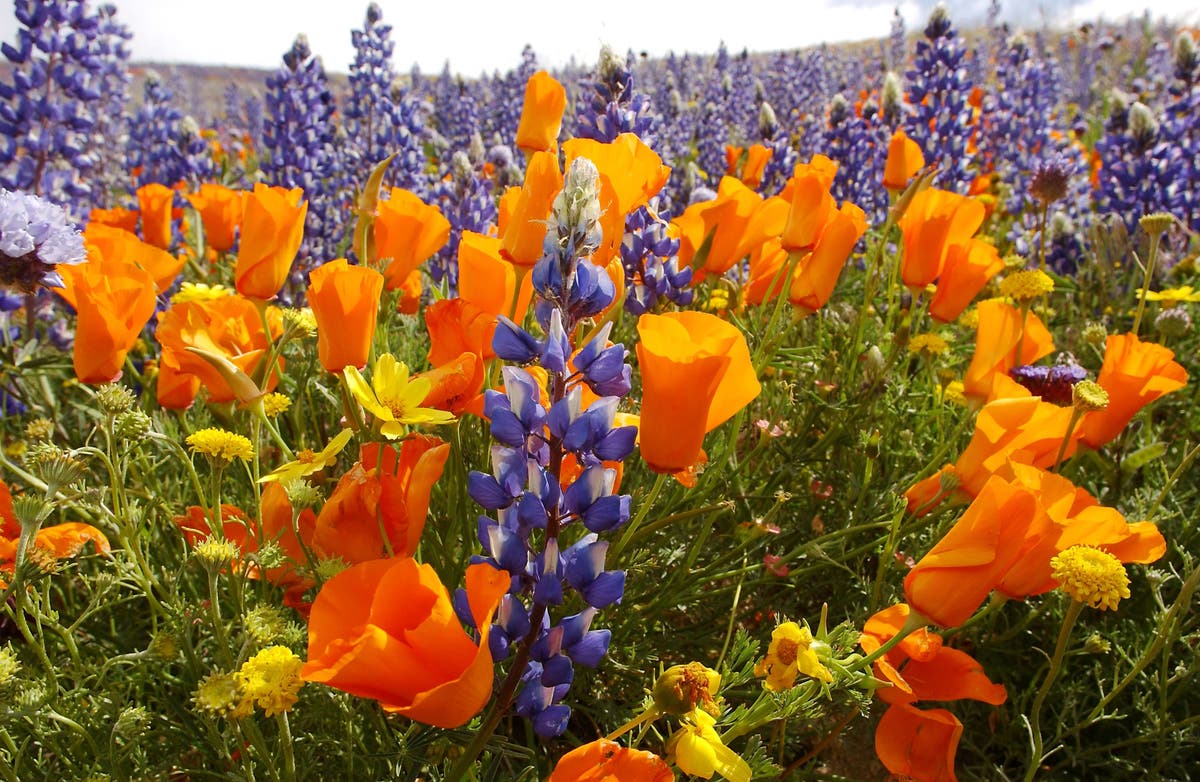
CALABASAS, CA – Biologists hope the combination of the destructive Woolsey Fire and recent steady rains will prove to be the perfect combination for a gorgeous display of spring wildflowers in the Santa Monica Mountains during the peak flowering season that typically occurs in March and April, the SMMNRA press release said.
National Park Service biologist Mark Mendelsohn said "fire follower" herbaceous plants will likely bloom after the destructive Woolsey Fire, because these species normally bloom only after a fire. There are more than one hundred of hese types of plants.
“We are expecting a very good showing because of the fire,” Mendelsohn said.
Find out what's happening in Calabasasfor free with the latest updates from Patch.
Mendelsohn and a team of fellow biologists at the Santa Monica Mountains National Recreation Area are vigilantly watching for new sprouts during #WildflowerWatch2019, the SMMNRA press release said.
The rain storms drenching Southern California also play an important role in the predicted bloom, SMMNRA biologist said.
Find out what's happening in Calabasasfor free with the latest updates from Patch.
At a weather recording station in the Santa Monica Mountains, 1.95 inches of rain were recorded at this time last year. This year, 14.17 inches have been recorded – a stark difference from last year's relatively dry SoCal winter.
Park staff have reported seeing California poppies (Eschscholzia californica), blue dicks (Dichelostemma capitatum), shooting stars (Primula clevelandii), lemonade berry (Rhus integrifolia), lupines, and wild cucumber (Marah macrocarpus) in the Santa Monica Mountains.
"The leaves of deerweed (Acmispon glaber), morning glory (Calystegia macrostegia), and many other species have been spotted, but not the flowers themselves," SMMNRA officials said. "Big-pod ceanothus (Ceanothus megacarpus), one of the most common shrub species, has also been turning entire hillsides white with their flowers."
"Fire follower" flowers that may be seen in coming weeks include several species in the lupine, phacelia, poppy, popcorn-flower, lily, snapdragon, and sunflower groups, as well as virtual carpets of morning glory and wild cucumber. One example of a fire follower is the aptly named fire poppy, which can be a variation between orange and red, and grows below 2,500 feet in recently burned chaparral and woodland.
If you're looking to take the perfect Instagram-worthy photos, head to Paramount Ranch, Cheeseboro/Palo Comado Canyons and Upper Las Virgenes Canyon Open Space Preserve, park officials said. For the best display of flowers, though, check out Malibu Creek State Park – it's expected to rebound nicely after the Woolsey Fire, the press release said.
"We ask that visitors stay on trails and not tread on vegetation so that everyone can enjoy the flowers," SMMNRA officials said. "Regulations prohibit picking of wildflowers, so that they may produce seed for the next wildflower season."
Get more local news delivered straight to your inbox. Sign up for free Patch newsletters and alerts.