Schools
Cyber-Bullying Prevention for Parents
How kids are bullied online, and how parents can help them respond to it, are topics tackled at a local speaker-series talk.
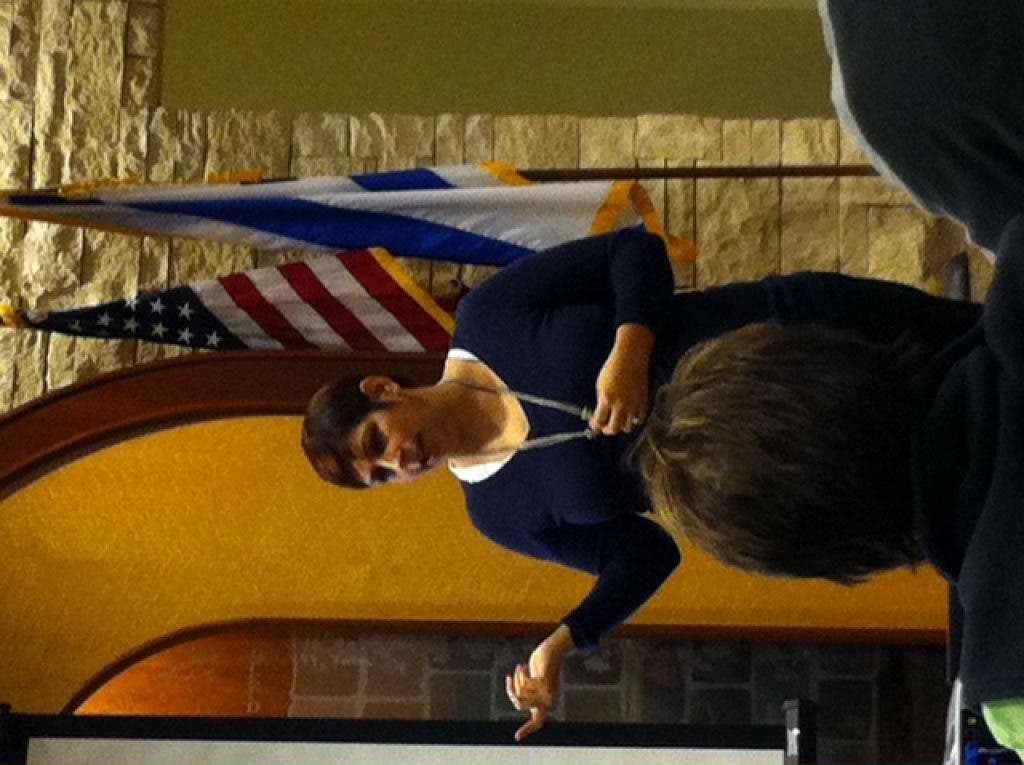

“How many of you have children in middle school and high school?”
“How many of you have children that own smartphones?”
“How many of you have children that have Facebook accounts?”
Find out what's happening in Calabasasfor free with the latest updates from Patch.
These were just some of the questions asked of about 15 parents who attended a talk in Calabasas on Wednesday about youth and cyber bullying. The talk was part of an ongoing speaker series at the Congregation Or Ami.
One of the speakers was Eva Vega-Olds, project director of the Anti-Defamation League’s (ADL) A World of Difference Institute in the Pacific Southwest Region.
Find out what's happening in Calabasasfor free with the latest updates from Patch.
Another speaker was Matt Friedman, associate director of the ADL, who was giving a concurrent workshop with teens.
“Technology is a way to connect,” said Vega-Olds. “There are many things we need to know about it since it’s massive and ever-changing.”
Vega-Olds started off by defining cyber bullying as an “intentional and repeated mistreatment perpetrated through the use of technology.”
Aside from the widely used Facebook, she also cited other social networking sites that parents should be aware of, such as MySpace, YouTube, Friendster, FormSpring, Twitter, MyYearbook and the fairly new Google+.
Aside from social networking sites, kids can also be bullied in chat rooms, gaming sites and blogs, and by email, instant messaging and text messaging.
A parent brought up her concerns about not having access to her child’s text messages and therefore not knowing what may be going on.
“There are apps you can download for that,” said David de Castro of Oak Park.
According to Vega-Olds, most kids will not admit to being cyber bullied, preferring to use the term “drama.” “Admitting to it implies they don’t have power or their power is diminished,” she said.
She said cyber bullying can take many forms, including flaming or online fights, harassment, stalking, denigration, social exclusion, trolling or stirring conflict and trickery.
In more serious cases, some teens even impersonate their peers and create bogus email or Facebook accounts.
“Anonymity intensifies cruelty,” said Vega-Olds. “Unlike in the old days, you don’t need to be big to bully online.”
She said girls are just as involved as boys. While it is more predominant in high school, that is rapidly changing too, with more and more young children being handed smartphones these days, she said.
As a family, Vega-Olds suggested several ways to deal with cyber bullying, such as not divulging personal information and passwords. “Even among best friends and people your children are dating, passwords need not be shared,” she said.
“Tell them there are other ways to show love and trust aside from sharing passwords,” she said, much to the amusement of the parents.
Vega-Olds also suggested monitoring the use of technology and using it for teaching and trust-building moments. “It’s like crossing the street; you go from holding their hand to eventually letting go,” she said.
Teens can respond to cyber bullying by saving evidence, by not replying or by reporting the offense to school authorities or law enforcement officials. The most important thing is to discuss it and let your children know you can handle it together as a family, she said.