Health & Fitness
TMS device helps depressed patients at Kaiser Permanente
TMS is transcranial magnetic stimulation being used at Kaiser Permanente Santa Clara to stimulate neural activity and lift depression.

For Beverley R., life was difficult and daunting until she began a series of depression treatments at Kaiser Permanente Santa Clara called transcranial magnetic stimulation (TMS). “For many of my adult years, I was isolated, paralyzed making decisions, but after a week of TMS treatment, I felt more alert, more awake,” she said.
Another patient, Arnese S., told of hopelessness and a deep sadness until she started TMS at Kaiser Permanente Santa Clara. “I felt irrelevant, but with each of the treatments, I started feeling more hopeful and that I have a purpose in life,” Arnese said.
Beverley and Arnese are two patients who’ve undergone transcranial magnetic stimulation (TMS), an FDA-approved brain stimulation therapy that uses a series of magnetic pulses to activate the depressed brain.
Find out what's happening in Campbellfor free with the latest updates from Patch.
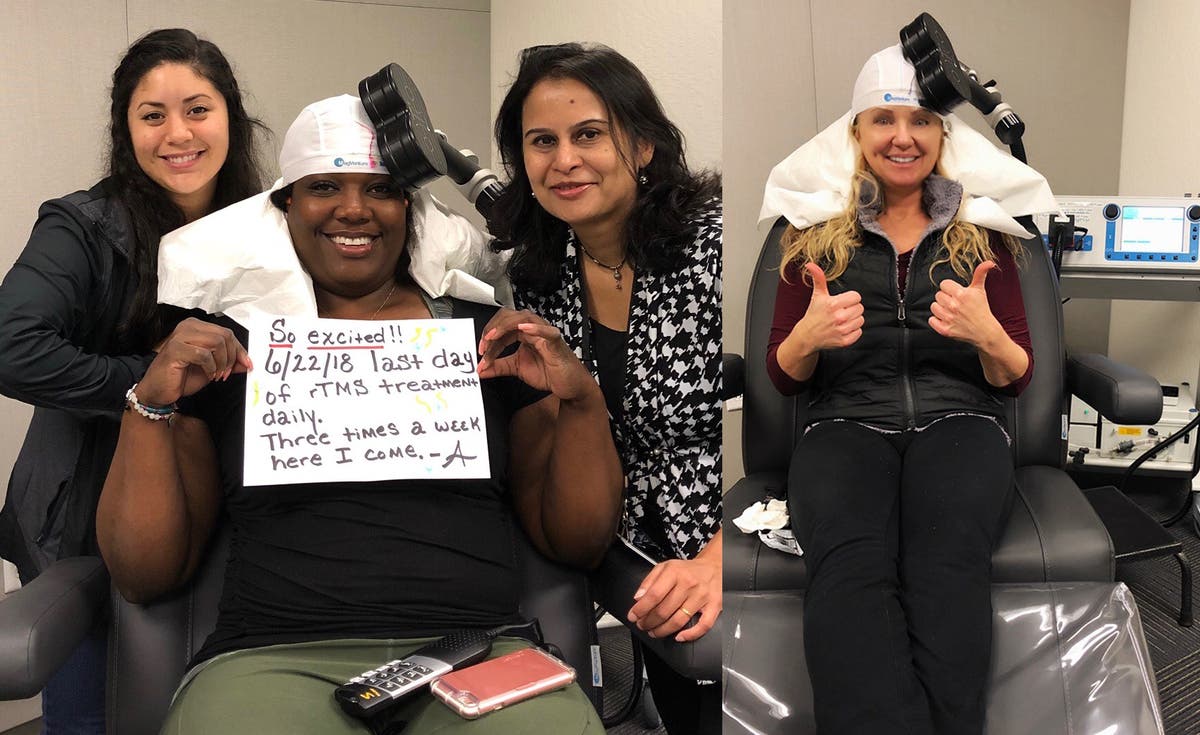
Kaiser Permanente Santa Clara is one of three KP Northern California medical centers now using transcranial magnetic stimulation as a therapy for patients with chronic depression and who haven’t improved with medications and other therapies.
“These are patients who are very sick and have had 3 or more trials of medications of adequate dose and duration, yet just aren’t getting better,” said Dr. Rajshree Bongale, psychiatrist at Kaiser Permanente Santa Clara.
Find out what's happening in Campbellfor free with the latest updates from Patch.
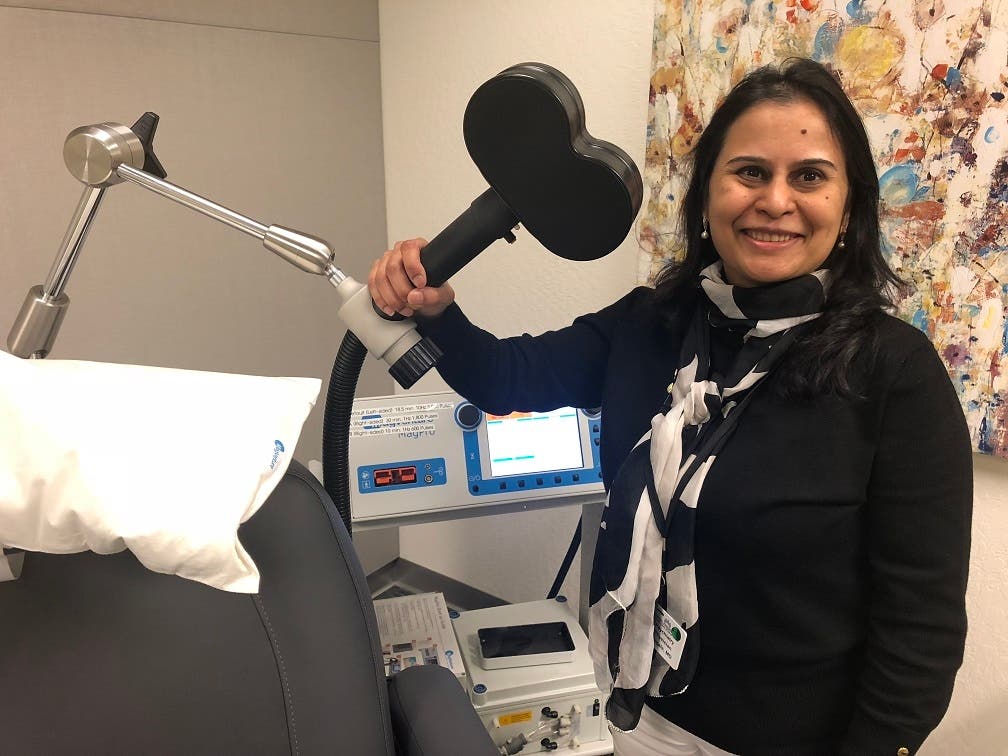
Dr. Bongale oversees the TMS room at Kaiser Permanente Santa Clara. The TMS device looks like a barber’s chair with a jointed metal arm arising from the back. The arm holds a powerful electromagnet, which is then moved into position on the left side of the patient’s head.
“The electromagnet sends brief bursts of magnetic energy to a very specific part of the brain, called the Left Dorsolateral Prefrontal Cortex” explained Dr. Bongale. “The area is understood to be involved in mood regulation and perhaps a center of depression.”
The pulses of magnetic energy cause small neuroelectric currents that stimulate low-functioning nerve cells involved in the constellation of depression symptoms: sadness of mood, loss of memory, reduced appetite, sleep disorders, inability to focus, suicidal thoughts, reduced interest in sex, and more.
“TMS reduces depression symptoms two-thirds of the time, and lifts depression completely one-third of the time” said Dr. Bongale. “And it has almost no side effects -- only a mild discomfort initially while starting treatment -- unlike those often associated with prescription medicines.”
A typical TMS session lasts about 40 minutes. Patients must attend 36 sessions for eight weeks.
Dr. Bongale says the results are durable with most of her patient’s reporting feeling well after six months.
“And if a relapse happens, getting a short ‘booster’ series of treatments often resolves the problem,” she said.
“TMS was very effective for me,” said patient Beverley R. “I’d encourage others with similar struggles to try it.”
Patient Arnese S. agrees. “I want to thank Dr. Bongale and her team at Kaiser Permanente…I feel like they saved my life.”