Politics & Government
A History of Daylight Saving Time
Don't forget to set your clocks one hour ahead Sunday.

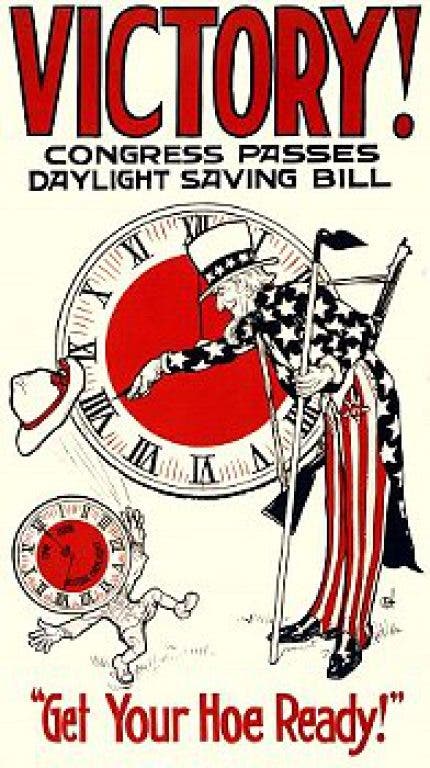
Daylight Saving Time (DST) has gone through many changes since it was started in 1918 to conserve fuel during World War I.
Here is a timeline of the history of Daylight Saving Time:
- 1918: DST became law.
- 1919: When the war ended, the unpopular law was repealed and became a local option. Some states and cities continued the practice.
- 1942-1945: During World War II, year-round DST was started.
- 1945-1966: No federal law existed for DST. Each state or locality not only decided if they would observe DST but when it would be started and stopped. As you can imagine, this caused much confusion for the broadcasting and travel industries.
- 1966: The Uniform Time Act of 1966 established a DST system throughout the U.S. Any state could be exempt from DST by passing a law.
- Jan. 1974: President Richard Nixon signed into law the emergency Daylight Savings Time Energy Conservation Act of 1973.
- Oct. 27, 1974: Congress amended the act and the country returned to standard time.
- February 1975: DST resumed.
- October 1975: Standard Time returned.
- 1986: Legislation established DST to begin at 2 a.m. on the first Sunday of April and end at 2 a.m. on the last Sunday of October.
- 2007: DST was extended to begin at 2 a.m. on the second Sunday of March and end on the first Sunday of November.
Hawaii and Arizona do not observe Daylight Saving Time.