Health & Fitness
What's the Big Deal With Bigger Class Sizes?
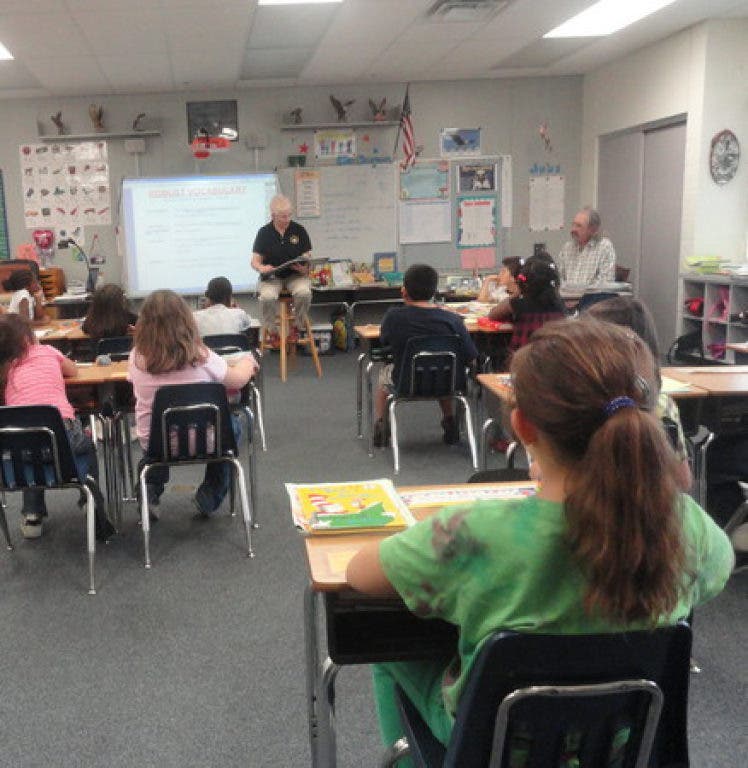
What's the big deal over sticking kids in classes that are 40 percent larger than just two years ago?
By now, you’ve probably heard of the plan to once again
The Board of Trustees' unanimous decision was driven by economics, not student need. Placing 28 children in each class will save $415,000 over the current ratio of 25 children to 1 teacher. (Two years ago, our youngest learners enjoyed a 20 to 1 ratio.)
So what’s the big deal over sticking kids in classes that are 40 percent larger than just two years ago?
Find out what's happening in Castro Valleyfor free with the latest updates from Patch.
Children deserve individual attention every day. My daughter Chloe isn’t a robot, she’s a unique little person who thrives on personal recognition and individuality. I want her first experiences with school to be the most amazing experiences possible — ones that encourage her innate love of learning, human interaction and personal growth.
Even the Founding Fathers enshrined individual liberty repeatedly in the Bill of Rights; the importance of individuals has been a feature of American government for centuries.
Find out what's happening in Castro Valleyfor free with the latest updates from Patch.
Individual attention also matters for academic achievement, because today’s Kindergarten curriculum was everybody else’s first grade experience. Academic standards are much higher than 20 years ago.
“With class sizes at 25 to 1, I already have trouble meeting all of my student’s needs,” says one of my friends, Candice, a first-grade teacher at . “With an additional three students, I know that every student’s needs will not be met. We can only do so much in one day.”
The English language standards for Kindergarten alone are five pages long. Let me give you a sample:
Phonemic Awareness
1.7 Track (move sequentially from sound to sound) and represent the number, sameness/ difference, and order of two and three isolated phonemes (e.g., /f, s, th/, /j, d, j/).
1.8 Track (move sequentially from sound to sound) and represent changes in simple syllables and words with two and three sounds as one sound is added, substituted, omitted, shifted, or repeated (e.g., vowel-consonant, consonant-vowel, or consonant-vowel-consonant).
1.9 Blend vowel-consonant sounds orally to make words or syllables.
1.10 Identify and produce rhyming words in response to an oral prompt.
1.11 Distinguish orally stated one-syllable words and separate into beginning or ending sounds.
1.12 Track auditorily each word in a sentence and each syllable in a word.
1.13 Count the number of sounds in syllables and syllables in words.
Teachers like Candice are already putting in a 110-percent effort every day. So when you add more children to their classes, just working longer hours isn’t an option. Something gets cut: a weekly story on the rug (in order to perform three more individual reading tests), a field trip to the museum (to shift planning time to three more parent conferences) or a more personal connection with every child.
Castro Valley prides itself on excellent schools. Our schools are a testament to the hard work of families, students and educators to develop a culture of success. So it’s a big deal when the School Board votes to further dismantle one of the key programs that benefit every child when they’re just getting their start in public education.