Community Corner
Arguments Wrap Up in Case of Temp Exposing UCLA Medical Record of Romantic Rival
A woman is suing the hospital for $1.25 million after her romantic rival accessed and disseminated her medical records.


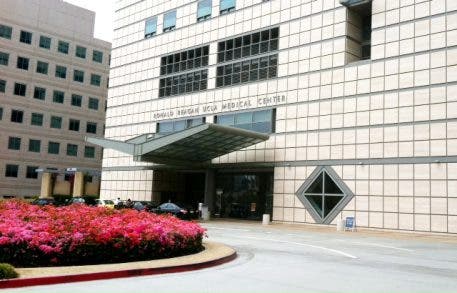
A UCLA medical assistant who also received medical care through the university is entitled to $1.25 million because a faulty system allowed her private health records to be accessed by a romantic rival, an attorney told a jury today.
“Justice is not cheap,” lawyer J. Bernard Alexander said during his final argument in trial of Norma Lozano’s 2013 lawsuit against the University of California Board of Regents and UCLA while estimating the costs of his client’s past and future emotional distress.
But defense attorney Bryan Heckenlively said no hospital has a fail-safe system and that the blame for what happened to Lozano falls squarely on Dr. John Edwards and his former temporary office employee, Alexies Price.
Find out what's happening in Westwood-Century Cityfor free with the latest updates from Patch.
Edwards, who is affiliated with the UCLA’s Geffen School of Medicine, had access to the data system of more than 4.5 million patients, Heckenlively said.
Edwards gave his password to Price, who was competing for the affections of Dedreck Harris, the same man who got Lozano pregnant, Heckenlively said.
Find out what's happening in Westwood-Century Cityfor free with the latest updates from Patch.
“UCLA has two rules,” Heckenlively said. “Access only what you need and never share your password.”
Heckenlively also said the measures taken by UCLA to protect patient confidentiality are comparable to those at other medical facilities, naming some famous institutions to make his point. He said the system allows quick access to patient records by doctors who may be filling in for regular physicians or working in the emergency room.
Lozano’s invasion of privacy suit alleges Price accessed Lozano’s medical records in September 2012, made copies with her cell phone and sent them to Harris and yet another of his former girlfriends, who was the mother of two of his children.
Alexander scoffed at the argument UCLA did nothing wrong by having a patient record security system comparable to other medical centers.
“Just because other hospitals are doing it doesn’t make it reasonable,” he said.
Alexander said most of UCLA’s patients would benefit by the increased protection UCLA now offers only to such people as celebrities and neuropsychiatric patients. That so-called “break” the glass” layer of security requires those attempting to see patient medical records to enter their password a second time and select a reason for viewing the files, and a record is made of who accessed them, Alexander said.
UCLA instead relies on a flawed system for the majority of its patients, according to Alexander.
“You’d expect that if someone is going to protect you, it’s someone as big and strong as UCLA,” Alexander said.
Although distressed about the leak of her private information, Lozano went to work the next day to demand answers, Alexander said.
“I’m really stressed out, what are my rights?,” Lozano asked her employer, according to Alexander.
But Heckenlively said Lozano could have obtained the extra protection for her medical records had she asked and was in fact granted it after the incident. He also said that even if she had the added layer of security at the time, the breach probably would have occurred anyway.
“Alexies Price was determined to do a bad thing,” Heckenlively said.
Edwards, who testified that he did give his staff the password to the UCLA patient data base, settled with Lozano before trial.
Lozano did not sue Price, who is now married to Harris.
City News Service; Photo: Wikimedia Commons
Get more local news delivered straight to your inbox. Sign up for free Patch newsletters and alerts.