Arts & Entertainment
Shot in Century City: 'Double Indemnity'
The glass towers represent power in this weak film.
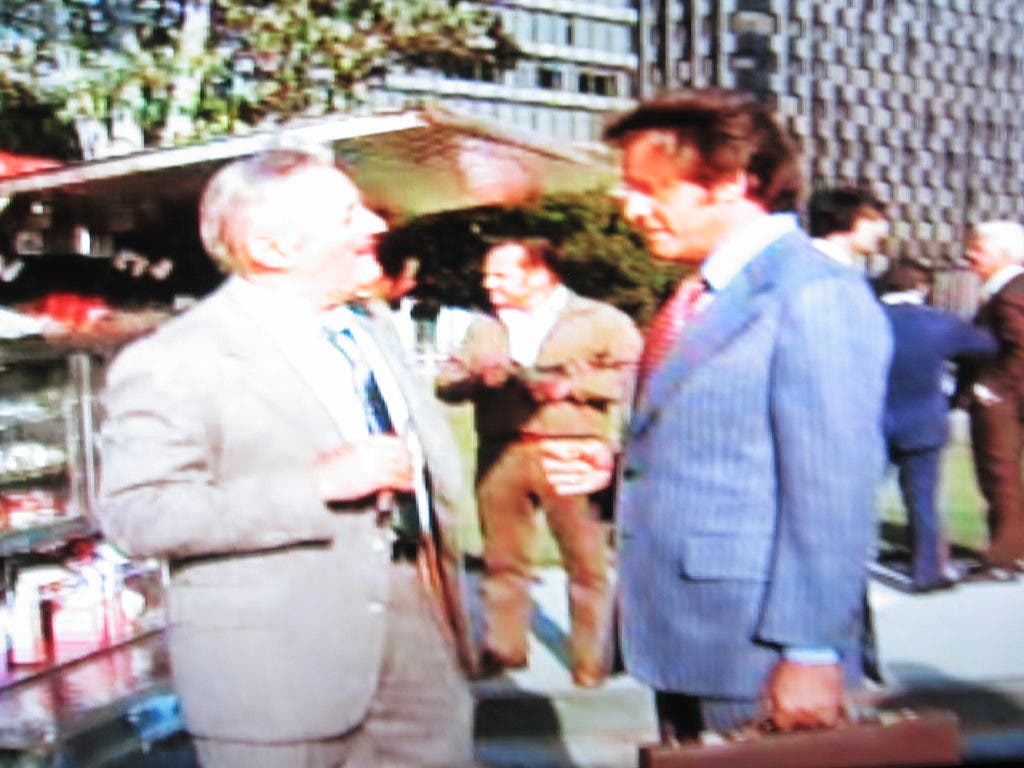


Yes, remaking the 1944 film noir classic, "Double Indemnity," was a bad idea. Yes, the Hollywood of the 1970's, a decade of self-indulgence and excess, was ill-equipped to tackle material from the Hollywood of the 1940's, a decade of isolationism and paranoia. So yes, the attempt to tell that story (with virtually unchanged dialogue) in that later time period was awkward at best, and unwatchable at worse.
However, that said, the 1973 production of "Double Indemnity" did do one thing right. As with the original, it made Los Angeles a main character. In so doing, it captured (on film) a much brighter, grander, and contemporized version of the city than the smaller-scaled, dark, and pessimistic world of the original.
For example, the primary location that starts the film, ends the film, and is sprinkled liberally throughout the film is the headquarters of the Pacific Insurance Co., the company that the main character, Walter Neff, works for and spends the length of the film trying to rip-off to win the unwinnable love of the film's femme fatale.
Just as the actor who plays Neff changed from the 40's to the 70s, from "everyman" Fred Macmurry to "everyman" Richard Crenna, so does the address of the Pacific Insurance Co. change from downtown to Century City (1800 Avenue of the Stars).
In the earlier era, buildings were made of bricks and mortar. They were monuments of stability clustered downtown. The subtext here is that just as you can't win against City Hall, you can't win against this insurance company (a couple of doors down from City Hall). However, times change, and building methods advance. Before you know it, you have the modern day skyscrapers made of steel and glass. Thus, the sense of authority also grows. Railing against one of these monuments that seem to reach into the heavens is akin to going against God.
Two movies. Two time periods. One script. One insurance company. Two very different locations. Each with its own meaning to that generation.
Find out what's happening in Westwood-Century Cityfor free with the latest updates from Patch.
As an interesting side note, when Neff leaves work, there is a skyscraper that can be seen in the background still under construction (1888 Century Park East). The singular man trying to beat the system walks in the shadow of yet another soon-to-be monolith. It's an almost subliminal message that progress never stops, and the corporations just get bigger and bigger, and more unbeatable.
Incidentally, that building today is not only completed, but has been eclipsed by two other finished skyscrapers (The Watt Plaza). This idea of unregulated growth (and this Century City interpretation) would be taken to its natural conclusion in another era's film, 1999's "Fight Club," starring "everyman" Edward Norton, who takes down Century City once and for all.