Health & Fitness
Creating a Positive School Culture Through 'Restorative Justice' at New San Juan High School
Restorative Justice Advocates at New San Juan High School are leading the way in creating a positive school climate where respect and empathy are values shared within the school community.
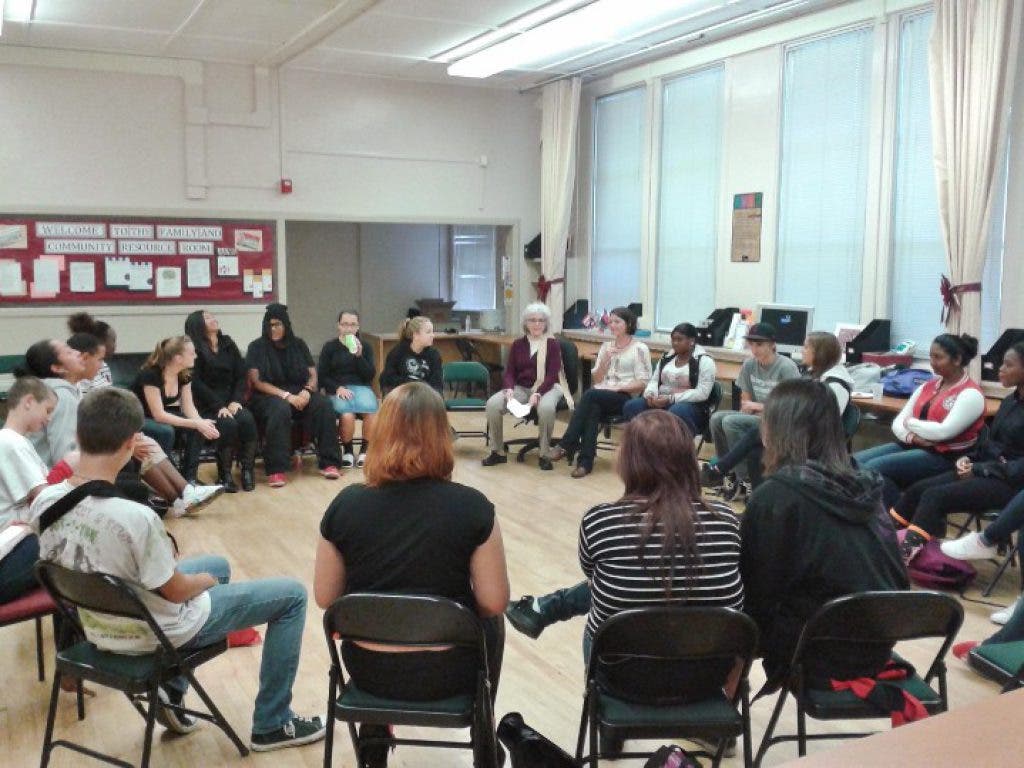
"The problem is the problem, the person is not the problem." These are the words that echoed throughout New San Juan High School's auditorium during the school's open house event. Karena Ware, a sophomore at the school is one of the 15 Restorative Justice Advocates on campus who have been trained in restorative practices and her words represent a philosophy held by the students in New San Juan's Restorative Justice Advocacy program. This philosophy is rooted in restorative practices and promotes the idea that just because people make mistakes, does not make them "bad people." Conversly, mistakes should be embraced as opportunities to learn and make things right.
Restorative Justice is a philosophical approach to justice that has been practiced by ancient civilizations dating back thousands of years and has emerged as common practice within the U.S. criminal justice system as well as in many other countries. Schools have begun to implement "restorative practices" as part of their disciplinary protocol. In a nut shell, restorative justice's primary objective is to address harm experienced between individuals or groups while identifying root causes of the harm. Through a process of developing empathy for both the harmed and the one who caused harm, restorative practice aims to encourage accountability and responsibility through personal reflection within a collaborative planning process.
The foundational component of the restorative process is what experts in the field refer to as "circles." Restorative circles vary in name and purpose, but the underlying goal of all of these cirlces is to build, sustain and in some cases repair relationships. Harm circles, as they are often referred to, address a harm that is committed. When someone is harmed, harm circles create a space where the harmed, the harmer and those who may have been affected by the harm are brought together to participate in a circle. Generally speaking, these circles are facilitated by a "circle keeper" who is trained and qualified in restorative principles. During the cirlce the harmed, harmer, affected parties as well as community members have the opportunity to speak and listen respectfully regarding the incident. One of the key pieces of restorative justice, is that during the harm circles the needs of the harmed AND harmer are addressed. The harmer also becomes an active participant in "making things right" while integrating the harmer back into the community as a valuable, contributing member.
At New San Juan High School, the Restorative Justice Advocacy program led by the student advocates are utilizing harm cirlces or "reconciliation circles" as they are called on campus to repair and sustain relationships between students. All of the Restorative Justice Advocates have received formal training in restorative practices, providing them with skills and strategies to best address harm on campus. Workshops facilitated by The Restorative Justice Training Institute out of Oakland, CA as well as The Restorative Schools Vision Project, a local non-profit have transformed these student leaders into difference makers. When conflicts arise on campus between students, reconciliation circles have proven to be an effective tool to reconcile differences and repair the harm between students while preventing more extensive harm that could potentially take place. Students may be referred to Restorative Justice Advocacy (RJA) by teachers, campus monitors, administrators, as well as other students. The circles consist of the harmed, harmer, other affected members of the school community, three restorative justice advocates and the circle keeper, an adult on campus who has been trained in restorative practices. Nearly 90% of the reconciliation circles have resulted in a resolution between students after the first circle, a number that speaks volumes of the work the RJA students have been doing to create a positive school climate.
In addition to the reconciliaton circles, the restorative justice advocates promote respect and harmony on campus through school media, lunchtime activities, and their day to day interactions within the school community. Through their efforts there has been a promising trend. Students are beginning to address harm and conflict using restorative principles without the assemblance of reconciliation circles. The restorative justice advocates have created a culture shift, where respect and empathy are valued on campus. The RJA program is really not a progam at all, but a movement, a movement that should be recongnized and embraced.