Health & Fitness
Field Guide to Coronado History: Nado’s First European Visitor
Part a regular series of fascinating, intriguing, or thoughtful tales about people and places in Nado history -- presented by your Coronado Historical Association
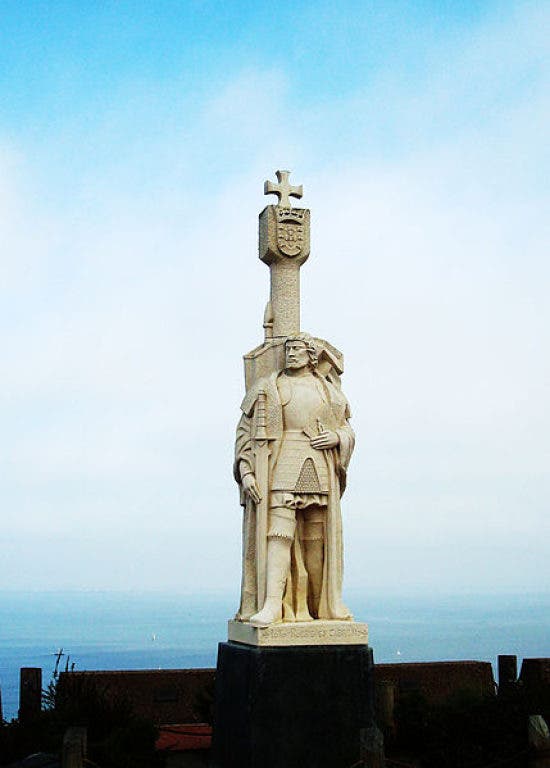

First in a regular series of fascinating,intriguing, or thoughtful tales about people and places in Nado history -- presented by your Coronado Historical Association
If a “tourist” is defined as an overseas visitor to an attractive destination seeking rest, relaxation, and new sights -- then the first “tourist” to Coronado’s shores arrived aboard the Spanish galleon San Salvador in September 1542.
Spanish Explorer Juan Rodriguez Cabrillo’s seagoing expedition was the first to sail the shores of present day California. September was warm and inviting as Cabrillo sailed up California’s coast, first passing the three Coronado Islands (that he called “Islas Desiertas”) and then viewing “high mountains” and haze from the smoke of controlled burns of open land after Indian harvests.
Find out what's happening in Coronadofor free with the latest updates from Patch.
The agreeable curve of the white sands of Silver Strand would have certainly caught his gaze but probably not the bay beyond. More important to
Cabrillo at that moment was the dramatic jut of Point Loma.
As Cabrillo sailed in uncharted seas, he sought a protected anchorage every night so as not to run into unseen dangers in the dark. Approaching from the south, the safety of an anchorage behind Point Loma would have been obvious and it drew San Salvador toward it like a magnet.
Find out what's happening in Coronadofor free with the latest updates from Patch.
Cabrillo anchored snuggly under Point Loma’s heights near present day Ballast Point. His reception by the natives was generally positive helped by Cabrillo’s enlightened aim of friendship rather than conquest. As important, the impressive
expanse of the newly-discovered bay suddenly became clear (“a sheltered port and a very good one,” read the official description of the newly discovered
harbor). Cabrillo named the bay “San Miguel” and quickly ordered a series of land
and bay surveys.
Cabrillo’s priorities always included trading for food from the natives and foraging for all-important water and wood. From the natives, he learned that the best source for water, remarkably, was within a stone’s throw of his anchorage – at a bounteous natural spring located on the flat, scrubby land across the bay’s entrance from San Salvador. As Spanish boats and cutters shuttled to and from the spring near what is today Zuniga Point on North Island, sailors interacted with native families, who themselves came for the convenient water. Soon, Spanish
surveying parties would have walked Coronado’s nearby beach and explored the
open spaces of the two peninsular lands separated by a narrow inlet on the bay,
later to be named Spanish Bight.
Cabrillo would stay five days anchored in the protected harbor before continuing his discoveries northward where he would explore the Channel Islands, the Big Sur coast, Monterey Bay and California all the way up to the Oregon border. San
Salvador would return a second time to San Diego harbor on her return voyage south. Upon the ship’s return to New Spain; Coronado, the Silver Strand and San Miguel Bay began to appear on a hundred different Spanish charts of California and the Pacific.
BL