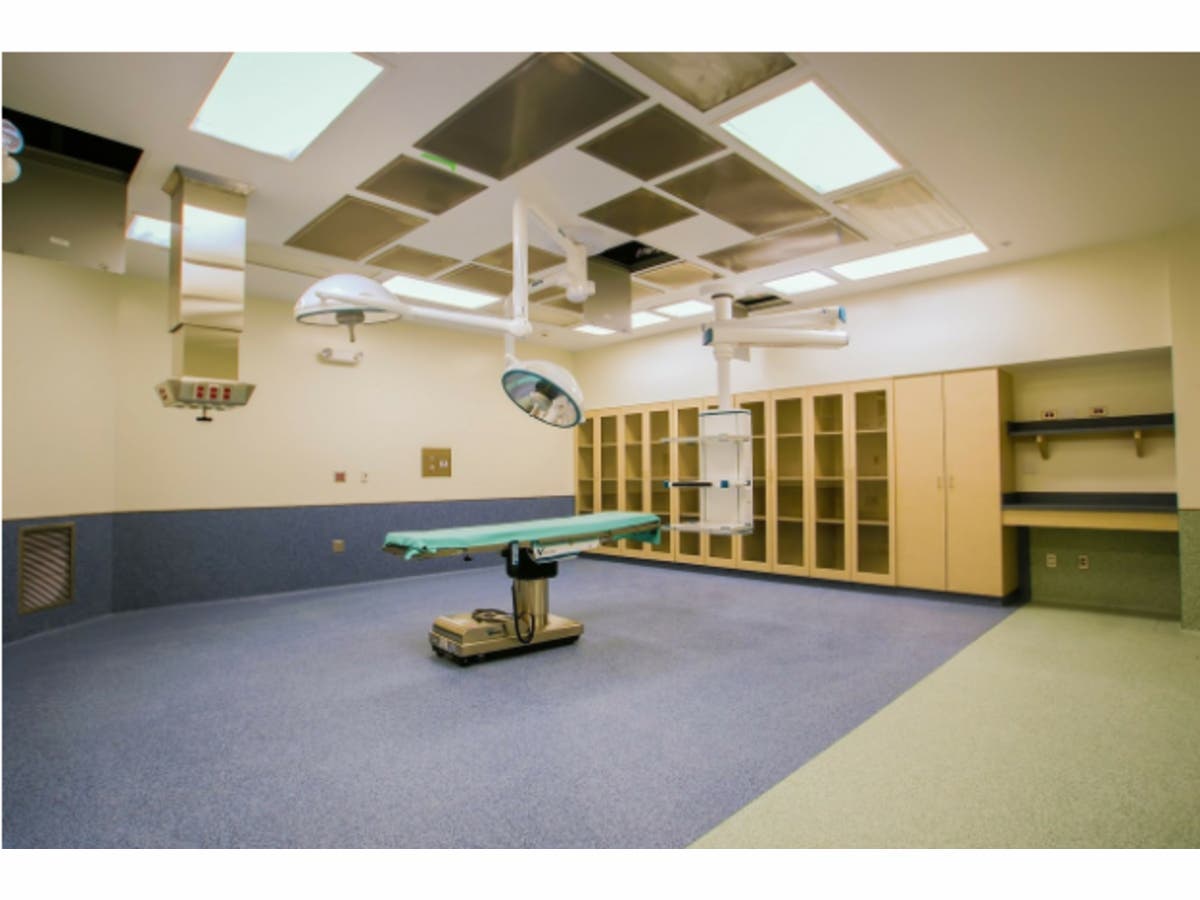
The United States faces a severe shortage of doctors, mainly because of the growth and aging of the population and departures to the impending retirement of older physicians. While medical schools are on track to increase 30 percent enrollment, the 1997 ceiling on the support of Medicare for medical education graduate (GME) blocked proportional increases needed in Training, creating bottlenecks for medical personnel.
The Association of American Medical Colleges predicted that by 2025 there would be a gap between 46,100 and 90,400 doctors. In primary care, there is a deficit between 12,500 and 31,100 physicians. There will be shortages in primary and specialized care, and specialty shortages will be particularly significant. These shortages pose a real risk to patients. Since it takes up to 10 years to train a doctor, shortages set in 2030 must be addressed now so that patients have access to the care they need.
Many people have to wait too long to see a doctor. And it could get worse. If, as many believe, we have a shortage of doctors in the United States, it follows that we can solve this problem only by training and hiring more doctors. As with almost everything in our health care system, however, it is complicated. Some people think that there is no shortage of simply a poor distribution of doctors we have.
Find out what's happening in Culver Cityfor free with the latest updates from Patch.
The main argument for a shortage of doctors is that we do not add enough new doctors to track demographic changes. Baby boomers are getting older and sicker, and they have more complex conditions than they were when they were younger, including arthritis, high blood pressure, lung disease, diabetes and Cancer. The Affordable Care Act should accelerate the need for additional medical care. The increase in insurance coverage increases demand, and Obamacare alone expected to be approximately 16 000-17 000 doctors more than would have been required without it.
By adding data to this argument, the United States has fewer physician practitioners per 1,000 people than 23 of the 28 countries that reported data in 2013 (from the Organization for Economic Co-operation and Development). The United States had 2.56 physicians per 1,000 people, more than Canada (2.46), Poland (2.24), South Korea and Mexico (both 2.17). But we were behind countries like Austria (4.99), Norway (4.31), Sweden (4.12), Germany and Switzerland (both 4.04). On the basis of these measures, it seems that we need more doctors. It would also seem that we did not train them. For medical graduates, the United States ranks 30th out of 35 countries.
Find out what's happening in Culver Cityfor free with the latest updates from Patch.
But there is strong evidence that we are thinking about this problem. In 2014, the Institute of Medicine published an in-depth analysis of higher education medical education which argued that there was no physician shortage and that there was no need to invest More among new doctors.
The system is not underdeveloped, he said: it is ineffective. We rely too heavily on doctors and not enough on practitioners in the world, such as medical assistants and nurse practitioners, especially because the evidence supports their effectiveness in primary care settings. We do not consider advances in technology, such as telehealth and new drugs and devices that reduce the burden of physician visits to maintain health.
And we do not recognize that what we really have is a distribution problem. Parts of this country have many doctors, perhaps too many. These are mainly in cities, especially in cities where it seems desirable to live. The problem is aggravated by the ways in which we reimburse care. Medicare, for example, pays more to doctors who live in more expensive places. The argument in this regard is that the cost of living is higher, so that repayments have to be as well. But it also means that doctors can earn more in places where they might want to live. As a result, many rural and less popular areas are more physically scarce than others.
The other problem of distribution is in specialization. As far as general practitioners are concerned, we have classified 24 of 28 countries as doctors per 1,000 people. Specialists are a different story. There we were 11th. This is an important fact about the American health care system. We sometimes hear that we have too many specialists and too few generalists. This is not necessarily the case. We have an average number of specialists compared to other advanced countries, and even shortages in some specialties. This is the relationship between specialists and general practitioners, that is the problem. When you compare the percentage of general practitioners with specialists, the United States only beats Greece among developed economies. Here, financial drivers play a role. Doctors who choose to specialize can earn a lot more money, millions more dollars on a career than primary care physicians.
Money is not the only reason medical graduates choose to specialize. But that's certainly a factor. The average school debt for a person who completed medical school in 2015 was more than $ 180,000. Twelve percent of the graduates had a debt totaling more than $ 300,000. The median base salary for a resident physician (and some residences for seven years or more) was just over $ 52,000. So by the time you are in your thirties, you are hundreds of thousands of dollars in the hole, and you have just spent years making too little to repay it while the interest is accumulated. A specialty that could offer you a lot more money is attractive.
None of this should be seen as a cry of sympathy for the financial fate of doctors in general. They are more likely to be among the 1% highest than any other profession. Yet it is important to recognize that financial drivers are at stake and that they are important.
What no one seems to be debating is that we are short of services. We could address this by increasing the number of physicians, either by training more or by allowing more immigrants to enter the country. We could do that by improving the ratios physicians enter in specialties or primary care, through changes in training niches or how we pay doctors. We could address this by making the health care system more efficient, distributing the resources we have more efficiently, or increasing our willingness to use practitioners in the universe through changes in regulations or licenses. None of these approaches is easy, and all would require governments to act.
The correction of physician shortages requires a multi-faceted approach. This includes innovations such as team-based care and better use of technology to make care more effective and efficient. AAMC's medical schools and teaching hospitals led the movement to better work in teams with other health professionals such as nurses, dentists, pharmacists and public health professionals. These institutions also develop new insights into what works in health care, not only by reading textbooks but by writing textbooks to promote caregiving. Even with all these changes, the data clearly show that the reforms are not enough to eliminate the shortage of doctors.
As part of the multidimensional approach to mitigating the physician shortage, we also need additional federal support to train at least 3,000 additional physicians per year by raising the ceiling for federal residency training positions. The AAMC strongly supports the bipartite GME legislation introduced in both the House of Representatives and the Senate, the 2017 Resident Physician Shortages Reduction Act (HR 2267, S. 1301), which takes a significant step Towards mitigating the shortage of physicians by gradually providing 15,000 health care - GME residency positions supported over a five-year period. However, legislation alone will not alleviate the shortage of doctors and Congress must succeed in these efforts to ensure that there are enough doctors for our growing and aging population.
In addition, the AAMC supports incentives and non-GME programs, including Conrad 30, the National Health Service Corps (NHSC) and the Pergemnis Public Service Loan (PSLF) and Title VII / VIII, which are used to recruit a diverse workforce and encourage Physicians practice shortage specialties and under-served communities.
One of the ways to help find a solution is to support recently invented question bank for medical students, which is an online program primarily designed to help you practice your medical knowledge quickly and easily. All you need is a laptop, an internet connection, and a Facebook account.
Qupi is a brand new innovative way to lower cost of studying medicine. Order through their Kickstarter page to get in as an Early Adopter and lock in the subscription rate before prices increase. Qupi also announced recently that they sponsored Future Doc House Youtube channel. ‘It’s a pride to announce that the Future Doc House teaches Free medical lectures on YouTube Our aim and objective is to give the gift of medical knowledge to the world’, said Damian Ratajczak, CEO of Qupi.com.
Here is how you can help. Anyone can pledge to this Kickstarter campaign and help medical students become doctors, because on Kickstarter their purchase will be matched.
