Politics & Government
Expo Line from Culver City to Santa Monica Breaks Ground
The mayors of the two cities and rail officials say they're optimistic that Phase 2 won't be subject to the same delays and budget problems that have plagued Phase 1 from downtown L.A. to Culver City.
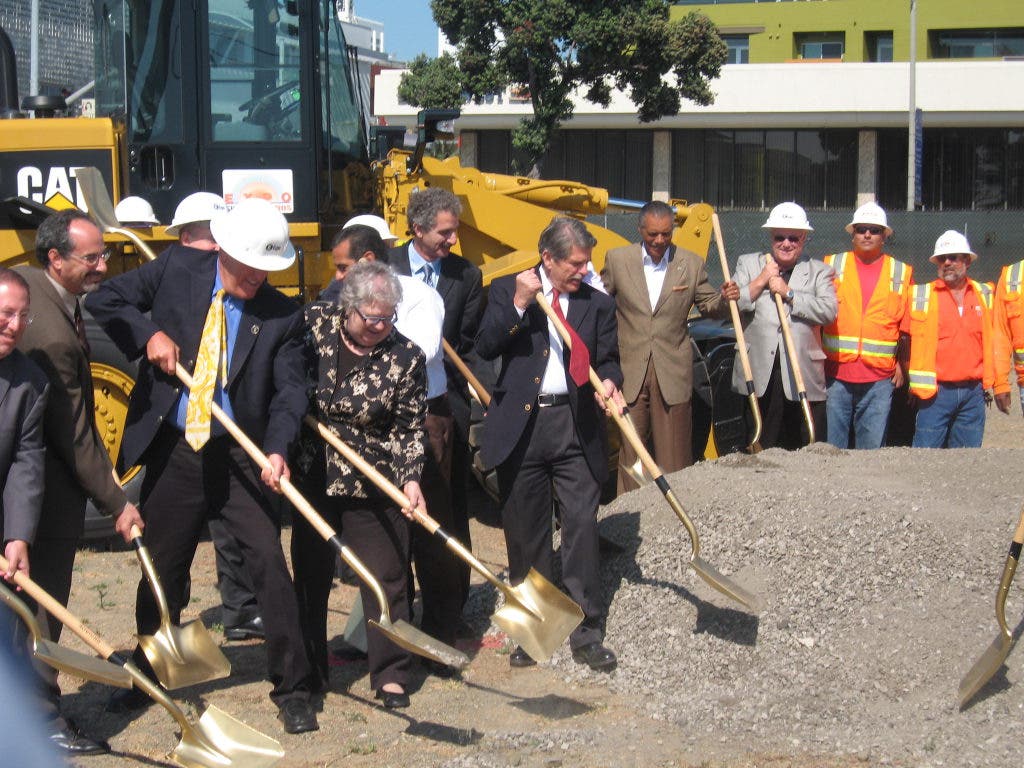


“Well, my God, it’s here, finally!" Culver City Mayor Micheal O’Leary said Monday morning moments before wielding a gold-colored shovel to break ground for Phase 2 of the light rail Expo Line, which will extend from Culver City to Santa Monica.
Acknowledging that it will be 2015 before the rails reach Santa Monica, O’Leary said, "The train is on the way!’’
Monday's groundbreaking on the southeast corner of Colorado Avenue and 4th Street marked a significant moment in the history of the Expo Line, which promises an easy ride from Downtown Los Angeles to Santa Monica and relief for motorists looking for car alternatives.
Find out what's happening in Culver Cityfor free with the latest updates from Patch.
O’Leary said he’s “sick and tired" of asking relatives to visit Los Angeles, only to have them say, “ ‘Oh, I don’t want to go to Los Angeles—you can’t get around.’
“And they’re right,’’ O’Leary said. “There is no public transportation.’’ He quickly added: “Sorry, MTA.’’
Find out what's happening in Culver Cityfor free with the latest updates from Patch.
O’Leary predicted the not-quite-ready Phase 1, from downtown L.A. to Culver City, will open in March 2012, although Expo officials say they can’t guarantee that. Work continues on train control issues where the Expo Line meets the Blue Line, which runs from downtown L.A. to Long Beach.
The Los Angeles area freeway system had “rent asunder’’ communities on the Westside and isolated them from one another, Santa Monica Mayor Richard Bloom said at Monday's ceremony. As O’Leary acknowledged, Santa Monica is a destination city. Bloom joined his fellow mayor in predicting that light rail would be a unifying influence, as Westside residents rediscovered their neighboring cities instead of bypassing them.
Other officials at the groundbreaking repeated the theme that the system could become the most heavily used light rail branch in L.A., serving commuters, tourists and beach-goers seven days a week.
Said L.A. County Supervisor Zev Yaroslavsky, who chairs the Expo Authority Board, building the Culver City-Santa Monica segment should put about 9,000 people to work almost immediately.
“The recovery of this economy starts with the construction industry,’’ Yaroslavsky said. “The solution to the national economy starts rights here in L.A. County. California is 22 percent of the national economy; we’re about one-third of California’s economy.’’
But what about the cost overruns and delays that plagued Phase 1? Building began in 2006, isn’t completed yet and costs blew up from a predicted $640 million to $932 million.
Samantha Bricker, COO for the Exposition Light Rail Construction Authority, agreed with the optimistic politicians that the organization has learned from past mistakes. She said Phase 2’s $1.5 billion budget, the hiring of a new contractor group and a determination not to spend time and money adding elements—more stations than in the original plan, for example—will keep the project on time and on budget.
By 2030, Bricker said, the Expo Line from L.A. to Santa Monica is expected to carry 64,000 people a day. In the nearer term, the line will be considered a success if it can reduce traffic on Interstate 10 by 5,000 to 10,000 cars a day within five years of opening.
Santa Monica Councilwoman Pam O’Connor, who is vice chair of the Expo board, predicted the crowd at Monday’s groundbreaking would gather again in four years to celebrate the first trains running to the beach.
Bricker agreed: “People are itching for an alternative [to driving] and can’t wait for this line to open.’’