Schools
Bay Area Intel Finalists Win Big Scholarships
Intel Science Talent Search awards top prizes to Alissa Zhang, of Saratoga and Fengning Ding of Albany, and Gunn High senior Jin Pan is in Washington D.C. for the science talent ceremony.

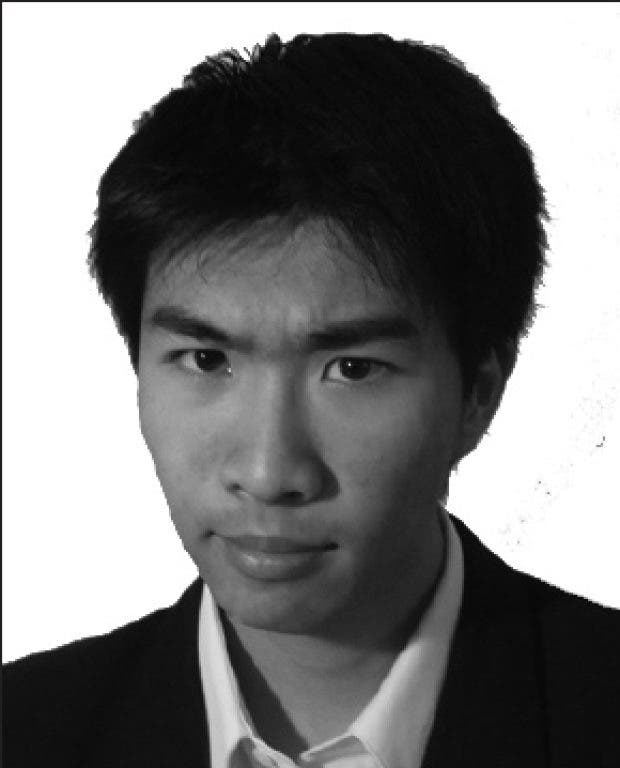


Two Bay Area teens—one from Saratoga—were among the top ten winners announced at a ceremony in Washington, D.C., for the Intel Science Talent Search contest.
They were among 40 seniors who were chosen as finalists from 1,800 students from 44 states, all of whom were competing for more than $1.25 million in scholarship prize money from the Intel Foundation.
The first-place winner, who will receive a four-year, $100,000 scholarship, is Nithin Tumma of Fort Gratiot, Mich. Tumma won for his research, which Intel officials said could lead to more effective and less toxic breast cancer treatments.
Find out what's happening in Cupertinofor free with the latest updates from Patch.
The Bay Area winners were:
- Fengning 'David' Ding, who hails from Albany, in Alameda County, and is a student of Phillips Academy in Andover, Mass., came in fourth place and received a $40,000 scholarship for his work in representation theory of infinitesimal Cherednik algebras.
- Alissa Zhang, of Saratoga High School, won a $20,000 scholarship and took ninth place in the nationwide contest.
Zhang gained a spot in the final 40 for a project that sought alternatives to finger-pricking for tests that monitor diabetes patients, Saratoga High School Principal Jeff Anderson said.
Find out what's happening in Cupertinofor free with the latest updates from Patch.
The test could address the difficulties in monitoring diabetic children who are scared of needles.
Two more Bay Area high school seniors were among the finalists at Tuesday night's ceremony and will receive a scholarship of at least $7,500.
- , of in Palo Alto, was chosen for his work in bioinformatics and genomics. His entry was titled "A Novel Protein Translation Kinetics Model Supports the Ribosomal Pause Theory."
- Saurabh Sharan, of Bellarmine College Preparatory in San Jose, was chosen for his computer science project, "Parameter Free Graph Based Nuclear Segmentation in Cellular Images Using Morphological Cues."
Jin Pan, of Gunn High School in Palo Alto, was chosen for his work in bioinformatics and genomics. His entry was titled "A Novel Protein Translation Kinetics Model Supports the Ribosomal Pause Theory." Pan did not place in the top 10, but was recognized on stage as a top-40 finalist in the talent search.
Pan's project shed light into the role that pauses play in the folding of proteins. Proteins have been shown to fold into specific shapes, but how they manage to do this successfully and efficiently remains unknown. One idea has suggested that this is fascilitated by slowing translation.
Jin decided to study this be developing a computer model that he says shows that pauses in protein formation exist to aid folding. If true, this could help researchers design better vaccines, express some proteins at higher rates to make new drugs, and refine computational models used for studying protein structures.
Jin races on Gunn's varsity track team as a sprinter, and is an active member of Match Circles, Science Olympiad and the Ultimate Frisbee team. He is also Northern California Chess Champion, and an undefeated member of Gunn's chess club during his junior year.
Jin is fluent in Mandarin, and is the son of Chiling Pan and Runhuai Yang. He also teaches a math class he designed himself at Egan Junior High School, and hopes to complete a double major in theoretical math and computer science once in college.
The contest has been held for 70 years, and Intel has sponsored it for the past 13 years.
--Bay City News contributed to this report.
Get more local news delivered straight to your inbox. Sign up for free Patch newsletters and alerts.