Politics & Government
Cupertino Wants To Stay Grouped With Cities Of Similar Interest In Redistricting
California's commission to curb gerrymandering and improve how the state draws congressional and state districts submits its final map.
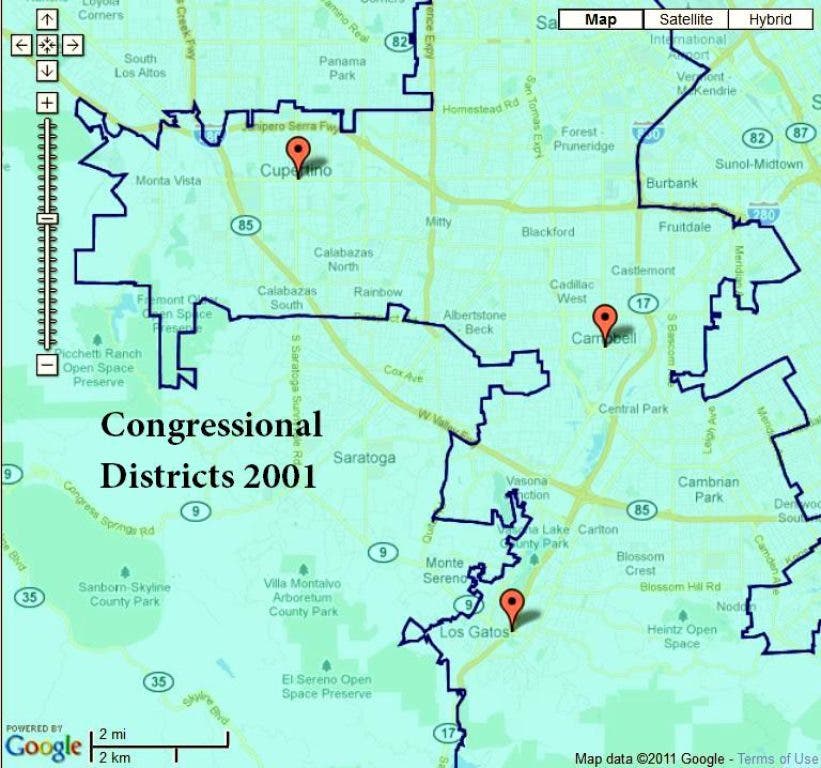

The state's bipartisan redistricting commission approved a preliminary final map of California's state and congressional districts Friday, July 29, reshaping current districts across the South Bay Area.
The Citizens Redistricting Commission, a 14-member panel composed of five Republicans and Democrats and four unaffiliated or declined-to-state members, is responsible for creating "districts of relatively equal population" to "provide fair representation for all Californians," according the commissions website.
Cupertino, Los Gatos, Campbell and Gilroy are all affected by the commission's proposed boundaries.
Find out what's happening in Cupertinofor free with the latest updates from Patch.
Cupertino would no longer be a part of the district it currently shares with Los Gatos, Campbell and Gilroy. It would move it into a much larger district with Sunnyvale, Santa Clara, Milpitas, Fremont and Newark.
"Those are communities of (similar) interests," said Cupertino City Councilman Orrin Mahoney of the move to the larger district shared by Sunnyvale and other cities.
Find out what's happening in Cupertinofor free with the latest updates from Patch.
"I don't have a problem with it," he said.
What he and other city officials will discuss at the council meeting on Aug. 2 is a small portion of Cupertino that gets split from the rest of the city on a proposed Assembly mapy.
"We're going to discuss whether it's appropriate or not," Mahoney said.
If the consensus is that it is not appropriate, and Mahoney said he anticipates the council will agree, they plan to send a letter to the commission and attend future meetings if necessary to lobby for a congruent district for Cupertino.
But before the redistricting commission finalizes the new districts for the next decade it must first hold public meetings throughout the state.
After reviewing congressional and state districting boundaries a final time, the commission will vote to approve the new boundaries. The map needs at least a two-thirds vote (nine members) for it to pass. If the commission rejects the blueprint the California Supreme Court will then have jurisdiction over redistricting.
The process of redistricting has a history of being highly politicized and was used for many years to secure both Republican and Democrat congressional seats. The Citizens Redistricting Commission, created last November as part of the 2008 Voters FIRST act, was empanelled to curb gerrymandering and improve the way California draws its congressional and state districts.