Politics & Government
Q&A with Terry Greene, City Architect
Here's a man who loves creative problem solving—and his job.
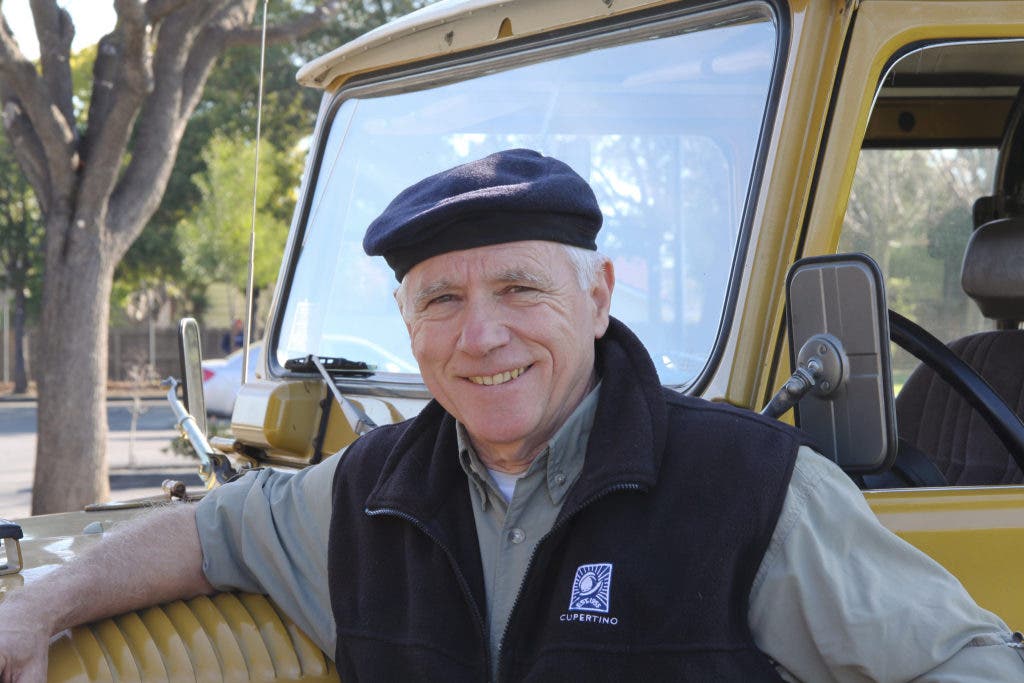


Terry Greene is the man behind the plans in Cupertino. The city architect opens up to Cupertino Patch about what it feels like to design in and around some of the most important locations in the city.
Cupertino Patch: What is your favorite thing about being Cupertino's city architect?
Terry Greene: I enjoy the design effort. Creative problem solving is always a lot of fun. It's easy to fall in love with the first solution to a problem, but that's not always the best one. I enjoy finding the best solution that solves the concerns people have. I also enjoy the end result: getting it finished, making it available so people can actually use it, seeing them use it. That's where the happiness come from.
Find out what's happening in Cupertinofor free with the latest updates from Patch.
Look at the library fountain: The best part is watching the 2- and 3-year-old kids playing in it. It took a lot of work to build it, but you could hardly walk out there now and not have a smile on your face seeing these guys playing out there. Even my kids were small enough to enjoy it when it opened in 2004.
Patch: What was it like when the new library itself was finished?
Find out what's happening in Cupertinofor free with the latest updates from Patch.
Greene: The most rewarding thing was, of course, seeing the many people admiring the spaces, the aquarium. Those of us behind the scenes are very proud and honored to have had the responsibility to deliver such an important facility to the residents of the community and to have it so well received. Libraries are one of the most important civic structures in a community—they are facilities that broaden everyone’s knowledge and tolerance for the ever-changing world we live in.
Patch: The aquarium has been such a focal point for many young patrons who are discovering the library for the first time. Was it difficult to integrate?
Greene: It was a remarkable gift that Fred Chan wanted to donate to the city. There was some serious head scratching as to where it could fit and how to make the changes without disrupting the contractor too much. Bart Fenolio of Dolphin Design in Campbell and Andy Case from Tenji in Monterey (who worked at the Monterey Bay Aquarium at the time) helped out. Sadly, Bart Fenolio passed away recently, but this aquarium was one of his favorites, and he tended to it personally for many months after it was built. Even today, it is maintained by Dolphin Design on a daily basis.
Patch: How do you feel about its reception?
Greene: I am always pleased to see the wonder and excitement that the young children express as they walk past and point to their favorite fish. I’m hopeful that many of them will grow up with an appreciation for the delicate and important marine environment on our little planet.
Patch: Do you ever struggle with the pressure of constructing things that must meet the needs (and aesthetic interpretations) of a large community?
Greene: Managing projects like this is not just a job, but a serious personal commitment of time and energy, from start to finish, and there can be no choice but to finish. The residents of Cupertino put their money into the projects and their trust in us to deliver something they really need.
Patch: You also work with a lot of sustainable designs. Do you have a background in this area?
Greene: As an architect, I was trained many years ago to consider environmentally sensitive ways to design and construct buildings. But I also grew up in a family that has taken stewardship of our national forests seriously since 1908. Oddly enough, I was recycling newspapers as a young Boy Scout in 1958. That, and other early experiences, helped me push the design team to consider many environmentally sensitive materials and systems for the library.
Patch: How big a role did sustainability play in the Cupertino Library project?
Greene: The large window walls that face to the south and east let in lots of natural light throughout the day, reducing the need for artificial lighting. The material used, Kalwall, is also constructed to reduce heat loss and heat gain. I’ve used that product on nearly every project I’ve worked on since 1977. We also provided natural ventilation with operable windows that open onto the interior courtyard. When used properly, they provide cool breezes through the space and reduce the need for conditioned air. Another example of our attempts to be sensitive was requiring all of the wood products be taken from “well-managed forests.”
Patch: What projects are you working on now?
Greene: We're working on Stevens Creek Corridor Park. We're just beginning the design phase, what we call "Phase 2," which is a continuation of the trail from where we terminated it at Phase 1 at the northern end of Blackberry Farm's parking lot. We're going to continue down to Stevens Creek Boulevard, and it's going to cross over the creek there somewhere along the course.
Patch: How long will that take?
Greene: It's probably a three-year project. We're probably going to spend 2011 in design. We're preparing a number of docs that have to go to agencies for permitting, and that process takes 10 to 12 months ... so that's 2012. We will do construction in 2013, but we can only be in the creek between June 15 and Oct. 15 for biological protection reasons.
Patch: How many other projects?
Greene: We were concentrating our efforts on Mary Avenue Bridge and the Creek Phase 1 project for quite a long time, so we weren't able to do as many smaller projects in the past as we wanted. Now we're trying to catch up and get those others done. Probably a total of more than 40 projects. Four or six at one time.
Patch: Is there anything else you think people should know about what your team does?
Greene: We're pretty dedicated to what we do; we would hope a lot of people appreciate that. But it seems pretty popular to bash the public sector these days, and I don't think it's deserved. I've worked in redevelopment in San Jose, I was in the military for six years, the National Forest Service, the Department of Interior... I've been around. And the manner in which people seem to be disgruntled and frustrated with public sector work is pretty severe.
I can understand people are frustrated; the economy's taken a pretty serious downturn. But we're trying to do the best we can under the circumstances. It's a tough environment that we're in right now—all over the world.