Politics & Government
Yellow Light for Green Building Ordinance
Concerned about added cost to residents and builders, Cupertino City Council votes 3-2 to bring the ordinance back for consideration in a year.
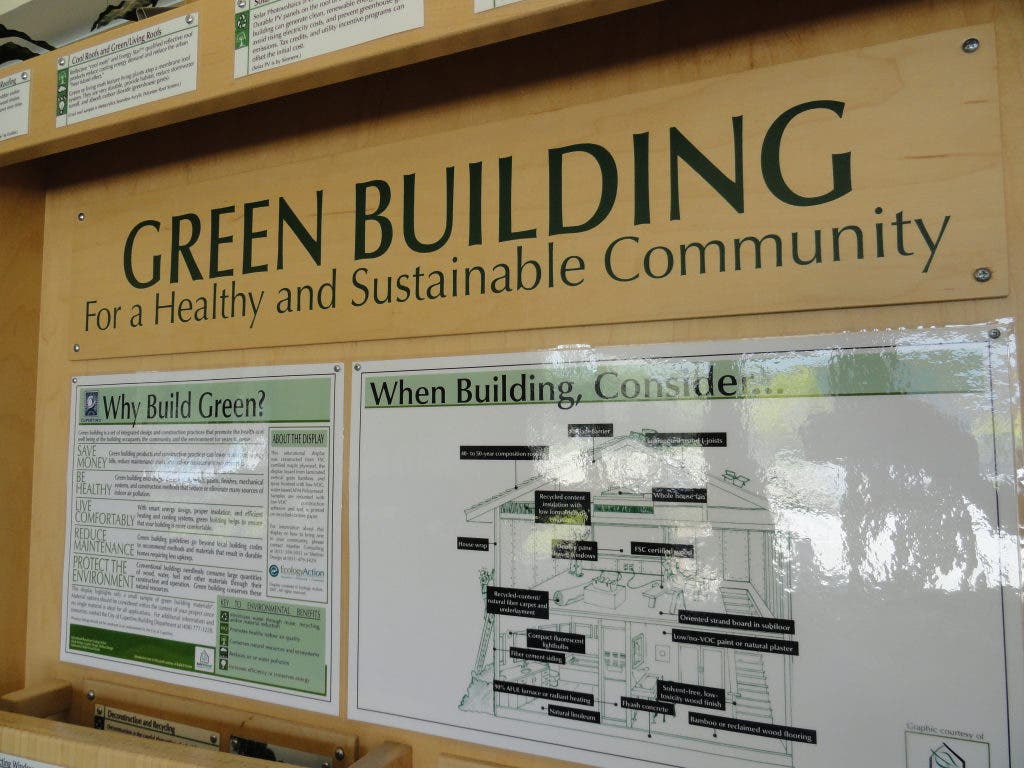
Cupertino’s Green Building Ordinance got a yellow "slow down" light instead of a green light from a majority of the City Council on Tuesday night, delaying any action by one year.
Mayor Gilbert Wong, Vice Mayor Mark Santoro and Councilwoman Kris Wang said they wanted to slow down the path to stricter green building rules to give the city time to educate the public and, perhaps, give the economy time to get a little better before imposing new fees on residents and builders.
Councilmen Barry Chang and Orrin Mahoney disagreed, saying the ordinance has been under discussion by the Planning Commission and council for more than a year already.
Find out what's happening in Cupertinofor free with the latest updates from Patch.
“By not taking action tonight, that’s a mistake,” said Chang. “A year from now, we may take no action … we were elected to take action.”
The ordinance is now scheduled to go back to the council in May 2012 for reconsideration. Had it approved the ordinance on Tuesday, it would have gone into effect Jan. 1, 2012.
Find out what's happening in Cupertinofor free with the latest updates from Patch.
Santoro reminded the council that builders are already forced to comply with the state’s Cal Green laws, which went into effect Jan. 1. The new code requires builders to use “green” materials and building methods, and promote energy, water and resource efficiency.
Cupertino’s proposed Green Building Ordinance would have gone beyond the Cal Green requirements, however, imposing even stricter standards on builders.
“Why do you feel compelled to add on additional cost to the industry again and again and again?” asked Myron Crawford of the building firm, Berg and Berg. “Stick with the California green building codes, let it do its job; let’s see how it works out within industry. Other cities have said, no, we’re not going to impose more.”
A main sticking point was the increased fees and deposits. Fees could increase 1-2.2 percent, depending on the type of project, which could mean thousands for individual single-family homes and up to hundreds of thousands for commercial developments.
A consultant for the city hired to help craft the ordinance said that while green building can cost more, over the long term the costs are balanced by increased savings in energy and water usage, as well as providing environmental benefits to the community and planet.
The new required deposits would ensure adherence to green building standards. Builders would have to show verification performed by certified consultants, in order to get the deposits back.
There are two types of verification—formal and informal. Formal verification would require seeking an official LEED (Leadership in Energy and Environmental Design) or GPR (Green Point Rated) certification. Informal verification would require a consultant to verify that a project meets certain green building standards.
For example, a single-family home project seeking formal verification would require a $2-per-square-foot deposit, up to $1,000. Informal verification would require a $500 deposit; that money would be returned once verification is made.
For commercial projects, it would cost a developer a minimum of $35,000 and maximum of $75,000 for a formal verification deposit. The deposit for informal verification would be $1,500.
The plan before the City Council on Tuesday had already been scaled back from when the ordinance was considered in . Originally the plan called for builders to acquire 85 points on the LEED or GPR rating scales, reflecting the number of green building products and practices they were using. Three local cities—Palo Alto, Sunnyvale and Morgan Hill—require 70 points; Cal Green requires 50, which is what the council said it would support.
The deposits for verification amounts were also adjusted downward. In the case of single-family homes, the verification amount was cut in half from $2,000 to $1,000.
“I think we’ve come to a good middle ground here,” Orrin Mahoney said of the scaled-back version.
It was still too much for the council majority, however. They stated they support green building standards but wanted more time for the public to get used to them.
“I think we’re all a little bit concerned about what it will cost our residents if we just drop this bomb on them,” Santoro said.
Wang added, “Don’t label that we don’t support this … I want to make sure that we’re going toward the green building, but it’s in a slow and steady way. We don’t want to increase any living cost for anybody, and that’s the whole reason.”
Chang added a parting shot before the vote, “But Council member Wang, actions are speaking louder than words.”