Schools
Getting to Know Rick Schmitt, New Superintendent of the SDUHSD
The veteran educator will start his new job Monday, July 1


Written by Kyle Lundberg
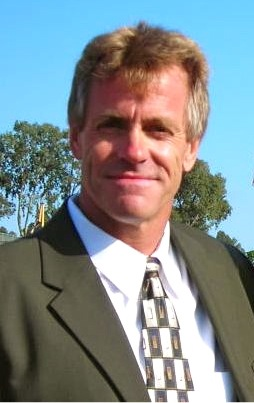
Rick Schmitt has spent more than 30 years as an educator. He has worked as a history teacher and principal of Torrey Pines and Coronado high schools before moving onto district administration roles such as deputy superintendent of San Dieguito Union High School District. Now he has been selected as the district superintendent of SDUHSD. Patch asked him a few questions about his life and career as he prepares for his new position.
Patch: What led you to a career in education? Was there a moment when you knew you wanted to be an educator?
Find out what's happening in Del Mar-Carmel Valleyfor free with the latest updates from Patch.
Rick Schmitt: A group of students asked me that this morning. When I was in school as a kid, I was always interested in teachers’ work. I became interested in the big picture: how schools worked, how they ran.
In college I taught swim lessons, and it was then that I became fascinated with how youngsters learned. It seemed natural as I worked my way through college that it was the right fit for me. To me, it didn’t even feel like work.
Find out what's happening in Del Mar-Carmel Valleyfor free with the latest updates from Patch.
Patch: As superintendent, what would you say your primary duties are?
Schmitt: The most important thing for me is to provide leadership on behalf of the students. Whether it has to do with options after high school, budgets—whatever the need is, providing that for the students is what this business is all about.
What the community expects is for us to provide the best public education for the right price. That involves balancing the resources we receive. The community and the local economy also come into play. All people in the community benefit from outstanding public schools. Especially in a community like this—where people are well informed and have pretty big dreams and aspirations—they expect a lot from their local school.
Patch: How would you describe your style of leadership?
Schmitt: I think over the years I’ve been very interested in bringing in talented and smart people, and letting them do their work, and also listening to our community, honoring our teachers and giving them creative latitude to do their work. The other challenge involves integrating the science about teaching and learning while working toward a national curriculum. The Common Core (a broad curriculum that intends to provide common, easy-to-follow educational standards across the United States), that’s a new age for us—we’re the only industrialized nation that doesn’t have a national system in place.
Patch: What would you say are some of the major issues facing American public education?
Schmitt: It’s balancing the art of teaching with each teacher working with each student; key frames our country needs and our kids need in order to be successful. You can call it what you want, but all that’s in play, to balance what we’ve always done in this country, which is give kids lots of chances; we do that really well. We give kids lots of chances to learn, to grow, to make choices, and I’m proud of that. And then to balance that with what we’ve learned from other countries; to balance creativity with rigor; I think we’ve done a good job at that in our community.
Patch: What stands out about the San Dieguito Union High School District?
Schmitt: There’s a handful of things I’m proud of. One is our record of success; we really have a community that’s highly educated. Our kids have a head start. We have been able to work our way through a difficult economy the last five years without having to have massive layoffs or difficult cutbacks. We’re proud of that. We’ve got some work to do as every district in California does over the next few years.
I also think we’ve been able to do some work with students who in some cases would be considered at risk. People think that most of our kids come from places of privilege, but that’s not true. We’ve led the county in teaching English Language Learners. We’ve done the same with our special education system. We have large numbers of students who come from poor backgrounds; they don’t get a lot of attention. Everyone doesn’t live in Del Mar or Rancho Santa Fe. We’re proud of the equity and access we’ve provided all of our kids.
Patch: What are some issues in regard to SDUHSD you hope to address in the coming years?
Schmitt: I don’t think we have any major issues. We have 2 very big categories of focus for the next few years. One is transitioning from our current model of curriculum to Common Core; it’s going to take a lot of effort and communication with parents and staff, a lot of training. It will fundamentally shift how we work.
Another big project is our voters in November approved a half million general obligation bond. We’ve approved a number of projects over the next few years, including renovated remodels and a brand new school. We’ve got schools that are as old as the 1930s. We’ve got some significant growth in Pacific Carmel Valley. Adjacent to Canyon Crest Academy, we just purchased 13.5 acres; we’ll put in a new middle school next to the high school. We’re hoping to break ground on that in 2015.
Patch: What do you like to do in your free time?
Schmitt: I’m a dad and a husband. I love my family. I’ve been in this community and lived in Carmel Valley for 14 years. My own two kids benefitted from great public schools. That is my most fun part of life outside of work. Beyond that, I just love the Southern California lifestyle: biking, running, going to the beach and living a very active lifestyle. But my favorite activity is probably reading.
Patch: So what are you reading these days?
Schmitt: I’m not the guy who reads one book at a time. I’ve got a couple in the works. There’s Unbroken, which is an historical book. I used to be a history teacher. I’m always reading different education books. One I’m in the midst of now is New York; it’s fiction, but goes back to the Dutch in the 1600s all the way up to 9/11. That tells you a bit about my personality, doing more than one thing at a time.
Patch: So I take it you’re a good multitasker?
Schmitt: I think the job calls for that.
Patch: What kind of music do you tend to listen to?
Schmitt: That’s all over the place on that as well. Singer-songwriters, folk type sound. I listen to reggae. I went through this phase in the 90s when I was into hip hop and rap, even traditional rock music. Recently, some friends began to listen to country music. It’s pretty diverse there as well
Patch: Do you have a favorite movie?
Schmitt: I’ve never been a big moviegoer. Within the last decade, I’ve gotten into some of the really smart series, crazy shows like Shameless to Mad Men. I like the smart writing and character development; they can go deeper than movies. I really like The Sopranos and Dexter. With movies, you sit for an hour and a half or two hours and then you’re done. I really like the story to continue.
Patch: If you could have dinner with any three people throughout history, who would they be and why?
Schmitt: You’re stretching me here. The first person that comes to mind is J. Edgar Hoover, because he could tell me a lot of things about a lot of people. I think I’d love to hear from Martin Luther King, Jr. I think the last person on my list… let’s go with John Lennon. I see him as being transformational in taking us from this modern world, which nobody really understood in the 60s and 70s to where we’re trying to get now. Some of the words from his song Imagine, no wars, no borders, just people; that’s fascinating to me. He’s one of the first people to really talk about that in a way people would understand and listen.
Patch: Anything else you’d like to add?
Schmitt: Thanks for the fun interview. The only thing left for me to say: I started off as a young teacher not really knowing what it meant, but I reject the bell curve [the idea that you have a few students with As and Bs, a few with Ds and Fs, and most students gravitate toward the middle]. That was always unacceptable to me. That’s important to me. We all learn in different ways and at different times. I’ve learned that through experience and in the classroom. People like to hear that because there’s hope in that. We need to honor that individuality and that commitment to opportunity and improvement for all of us.