Community Corner
Enjoying Our Mediterranean Climate in the Eastern San Gabriel Valley
We are one of five world regions sharing similar weather, topography, and plant life.
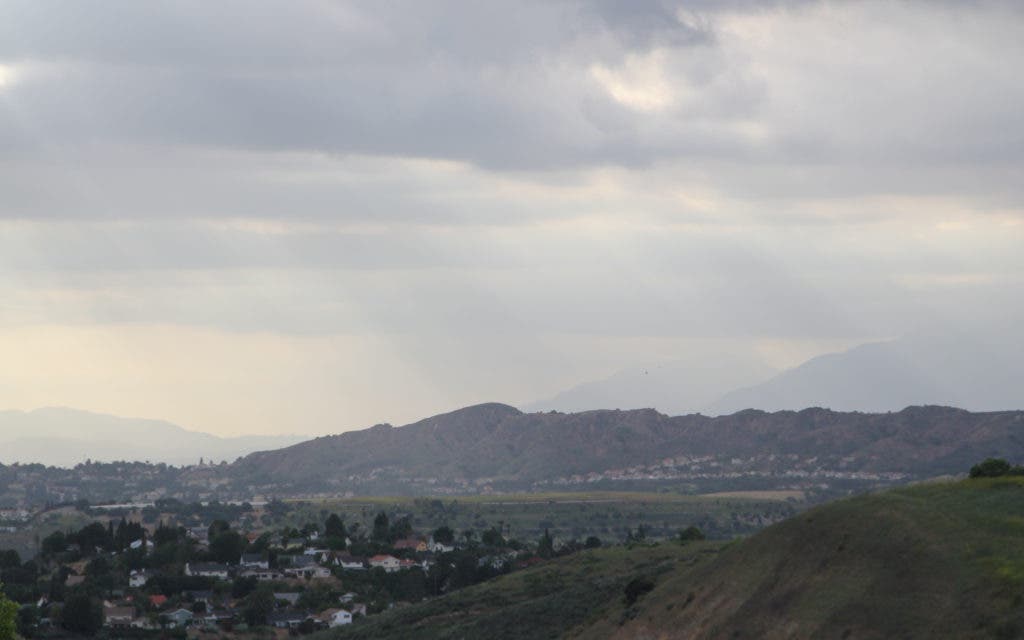
The Eastern San Gabriel Valley enjoys similar climatic conditions with four other distinct regions of the world, which means unique gardening opportunities and challenges.
In addition to California, wet winters with mild temperatures and hot, dry summers are shared with Chile, South Africa, southwestern Australia, and the Mediterranean Basin.
In these regions, annual rainfall generally averages between 10 – 40 inches with rare, light summer rain. Snow is equally as unusual, except at high elevations. Within California, the north is the wettest and the south the driest, and the parts of the region with the heaviest winter rains typically have the shortest summer dry season.
Find out what's happening in Diamond Bar-Walnutfor free with the latest updates from Patch.
The five mediterranean regions fall within 30 and 45 degrees latitude with California and the Mediterranean Basin in the northern hemisphere and Chile, South Africa, and southwestern Australia in the southern hemisphere.
Since the seasons are reversed from Northern to Southern hemispheres, July is typically the coolest month for Southern Hemisphere zones, and January the hottest summer month. All five mediterranean regions are beside an ocean or sea, and cold offshore ocean currents have a moderating effect on summer temperatures in the form of fog.
Find out what's happening in Diamond Bar-Walnutfor free with the latest updates from Patch.
The Mediterranean basin, being landlocked, with the exception of the cold Atlantic Ocean to the west, has hotter summers than the other four regions.
Other factors which influence temperature patterns and rainfall are topography, elevation, ocean exposure, and mountain/slope orientation.
Winter in the San Gabriel Valley provides a backdrop of snow-covered mountains with green valleys, ultimately resulting in dry south-facing slopes in the summer. These slopes and valleys influence microclimates with varying degrees of coastal and desert air masses.
The inland valleys have greater daily and seasonal temperature variations than along the coast.
Because drought is common during the hottest part of the year in mediterranean regions, the dense growth of trees and shrubs from the previous seasons’ rainfall is susceptible to producing increased amounts of flammable deadwood. Wildfires often are the result of a buildup of the dry fuel over the years.
The five mediterranean regions cover only 2.25 percent of the earth’s land surface yet are some of the most abundant with plant life, nurturing 20 percent of its named vascular plant species.
California alone comprises 10 percent of the world’s total mediterranean climate area, but the varied topography and elevation in California account for tremendous biodiversity within its boundaries. California plant development, adaptation, and communities, as they compare to the other mediterranean regions, will be addressed in a future issue.
Although this California winter was the wettest in decades, and our long-running drought has been declared to be officially over, experts predict that future needs will again surpass availability.
Current water rationing of Colorado River and the Sacramento Delta water along with anticipated population and industrial growth when the economy improves, emphasizes the need for continued water conservation.