Community Corner
Frontiersman, Spanish Land Grants Formed Diamond Bar's First Schools
Spanish land grants and frontiersmen formed the beginning of education in the Diamond Bar area.
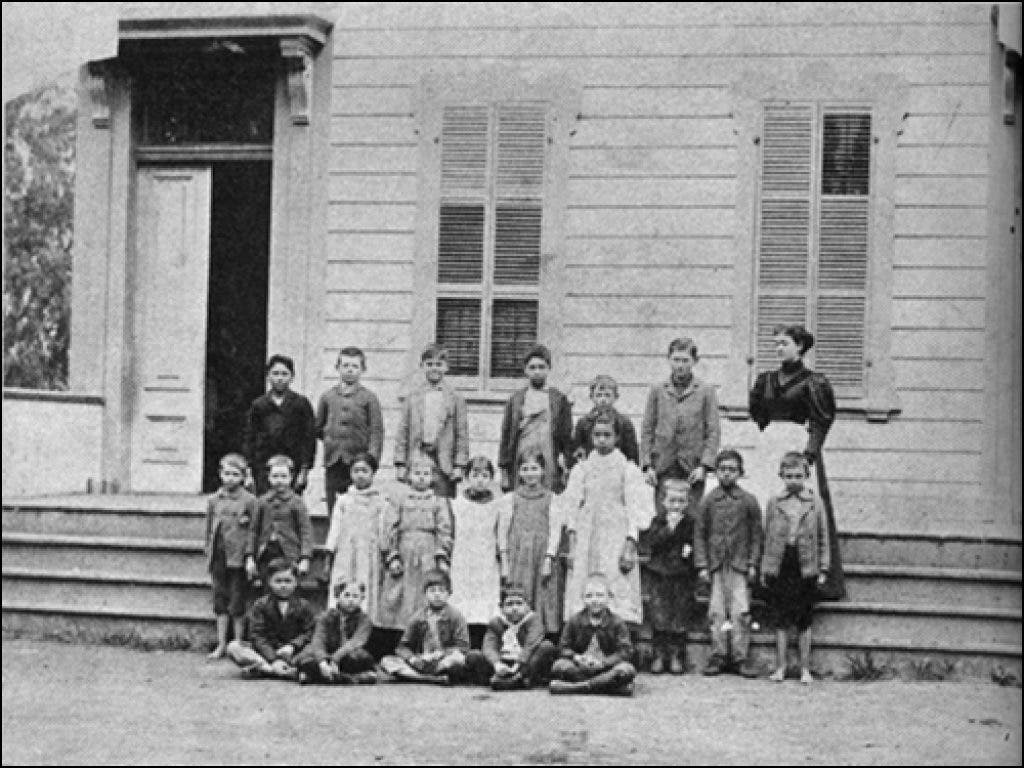


Spanish land grants and frontiersmen formed and massaged educational boundaries long before the 20th century Diamond Bar Ranch was born again as a suburb.
In February 1848, when United States military occupied Mexico City, the Mexican-American War ended. The terms of the Treaty of Guadalupe Hidalgo included ceding Alto California as a US territory.
In 1949, gold is discovered — triggering the rush to California statehood the following year. Settlers came to the “free” (no slave) state, seeking their fortunes, forming communities, particularly where transportation stops planned to promote agriculture and commerce.
Find out what's happening in Diamond Bar-Walnutfor free with the latest updates from Patch.
According to Walnut-based local historian Anne Collier, “Time stood still in the area from the 1850s-early 1870s. School sessions typically surrounded the agricultural seasons. The State Education Code of 1849 instructed under Article 9, Section 3 that “The Legislature shall provide for a system of common schools, by which a school shall be kept up and supported in each district at least three months in every year”
Anne continues,” Grade assignments were contingent upon knowledge, not age. Example, if a child did not start school until age 8, he would not start as a 2nd grader, he'd start in Kindergarten. The curriculum was basic reading/writing/arithmetic.”
Find out what's happening in Diamond Bar-Walnutfor free with the latest updates from Patch.
In modern terms, this equates with “penmanship, composition, oration, equations, etc. Students were also taught agriculture, geography and health (19th century health, not modern health, meaning more like anatomy, not sex ed, etc.). Typically, girls were educated to 6th grade, boys to the 8th grade.” However, both genders could continue on to secondary education.
According the 1860 census, the San Jose Township numbered 463, residents. It included those living and working on the ranch owned by Palomares and Vejar in what we now call by the names of Walnut, City of Industry, and the northern swath of Diamond Bar up through the Via Verde area of La Verne, adjoining Spadra and Lanterman.
One of the notable settlers was “Uncle Billy” Rubottom. An Arkansas frontiersman, Rubottom -- who had shot his own son-in-law -- was wanted for murder in a squabble that came about when slaves from Arkansas came to California on his caravan but never returned to their owner. He is reputed with introducing Opossums to California from Missouri, according to Anne, “because he missed Opossum pie. “
In 1866, Rubottom planted his seed of fortune with the purchase of land surrounding the intersection of Temple and Pomona and extending to where the LA County Sheriff substation that serves Diamond Bar is established. He opened a stage stop close to where the Spadra Landfill once did business and christened a tavern with his name. As California already recognized as the second city in California another city as San Jose, he had to pick another name. He picked Spadra (pronounced SPAY-dra), after his home town of Spadra Bluffs. Arkansas.
Things moved quickly. In 1867, the clapboard covered two-story Spadra school house closely aligned with where Carl’s Jr now sells burgers (Pomona Blvd near Temple) serving thirty-six students of the San Jose School District. With help of the Ben Truman, owner and editor of the first newspaper in Los Angeles County, he secured the Spadra Post Office, one of the first half-dozen post offices in the new state of California. As postmaster, Rubottom drew a monthly salary of two dollars.
Sadly, in April of 1870, the California legislature created legal statute that included “Unless otherwise provided by special law, shall be open for the admission of all white children between five and twenty-one years of age, residing in that district.... The education of children of African descent, and Indian children, shall be provided for in separate schools.” This law was never enforced in this region.
Just up the road from Spadra, offering classes in English and Spanish, the first public classes in Pomona were opened in 1871 at the Casa Alvarado living room on what was the 22,000-acre ranch. The settlers called the new District the Palomares District.
Demand was instant, leading to a small schoolhouse being built the same year. Four years later and 70 students-strong, the growing population required a stand-alone Central classroom to be built at Park and Holt. Palomares District changed its name to Pomona District.
Doña Theresa Palomares Vejar discovered more children lived in Lanterman area, so she moved the school to the home there that she shared with husband Ramon, The Diamond Bar Ranch Adobe. This made it more convenient to educate family, ranch hand and Indian children until the clapboard Spadra school house opened in 1876.
James Fryer, an influential resident at the time, wrote, "I became a director soon after the Spadra school district was formed, and at that time there were about 100 children in the district.” When he retired from the school district, the self-described “Father of the Spadra School” served for 42 years. His son, Roy, succeeded him.
With the railroad came progress in education. Anne Collier notes, “By the 1890s the area had grammar, high school, colleges, special schools and the education was progressive, as California tended to be around the turn of the 20th Century.”
Spadra’s fortunes as a community declined quickly when the railroad passed it by. Old-timers did not see the future well. They mocked a new town, Pomona as “Monkey town” a moniker meant to deride the intellectual capabilities of those who would settle there.
Years later, the Pomona Historical Society Booklet, "The Village That Died,” painted a bleak remembrance of the short-lived town that would have hosted perhaps only a handful of ranch children from Diamond Bar as “The village of Spadra was characterized by murder, suicide and mysterious deaths."
The tall white clapboard Spadra schoolhouse was replaced with a more modern single story structure early in the 20th Century, however declining enrollment lead to its closure in 1954 except to cover for other facilities during renovation or construction. Both students and postal activities absorbed by Pomona.
The unification of the Pomona Elementary School District, Spadra Elementary School District, and Pomona High School District created the modern day Pomona Unified School District. Talks between the PUSD and Walnut School District (WSD) to split the attendance area broke down quickly.
John Forbing relates “It was an argument between the Superintendents of the Pomona School District and the Walnut School District when Spadra closed. The Super of Walnut did not trust the Pomona Super. He walked out of the meeting and Pomona decided, “We will take the area to the power lines,’ which in 1954 was all cattle ranch.”
In 1961, voters passed by a margin of 45-4 for Spadra to annex into Pomona. The Los Angeles Times later reported, “the annexation means increased revenue from gas tax based on population, and an area for heavy manufacturing along the Union Pacific Railroad tracks. The remainder of the property is zoned for multiple residences, and the state hospital had an agricultural zone.” The vote was nullified on a technicality.
In 1964, the election was re-held. The lopsided 34-1 vote allowed Spadra/ Lanterman (where Pacific State Hospital sits), to annex into Pomona. This also created the possibility that Pomona might annex Diamond Bar in the future, an idea pooh-poohed by Diamond Bar developers.
In 1976, voters in unincorporated Diamond Bar and the cities of Pomona and Walnut went to the polls on the issue of moving all Diamond Bar public students into Walnut Valley classrooms. The measure failed.
Diamond Bar incorporated as a city in 1989, but not before a tradition of inter-district rivalry had been established on each side the power lines that bi-sect the city into two school districts.