Community Corner
Is Going Organic Necessary?
When I think about a healthier way of eating, it means going beyond picking up grapes over chips. I want to know: what are the foods that I'm feeding my kids doing to their bodies?
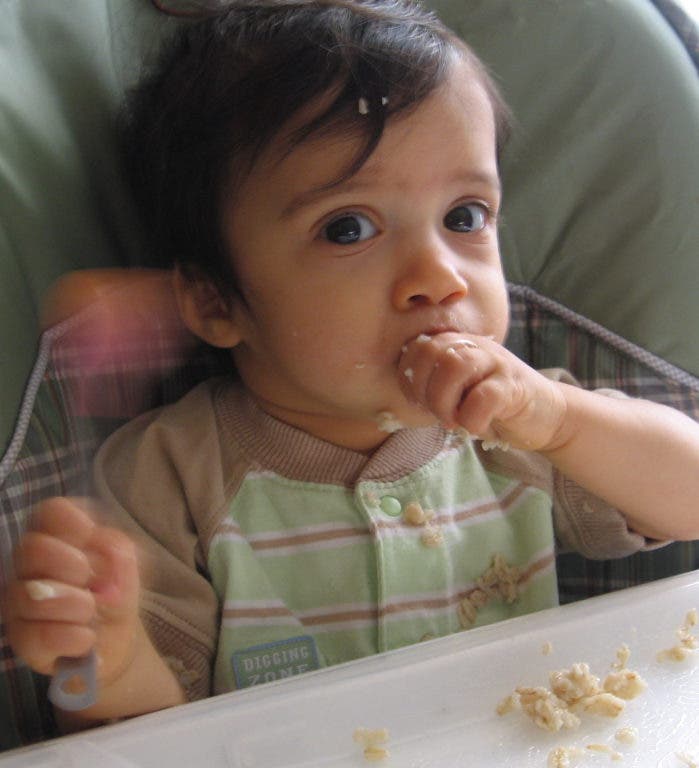
Before immigrating to the United States, my parents lived under a Communist system for about a decade, in Cuba.
They have so many stories of hardship, most of which involve hunger.
You could go knock on my parents' door today and find that, despite their advanced age and being housebound because of the frigid weather back east, there is enough food in their freezer and on their shelves to last them well over a month without having to make a single trip to the store.
Find out what's happening in Diamond Bar-Walnutfor free with the latest updates from Patch.
That is the way I remember it growing up — always having more than enough to eat. Yet, in my parents' view, the house never had enough food.
In such abundance, food was eaten for pleasure.
Find out what's happening in Diamond Bar-Walnutfor free with the latest updates from Patch.
And while eating became a pastime, any problem or any ailment imaginable could be cured with one vitamin or another, according to my parents. The idea of food as nutrition, even a cure, was never really discussed.
So, when I was trying to heal my body with herbs, supplements and other therapies, I was unprepared for the realization that the real healing could happen only when my diet changed also.
I discovered that food is medicine.
Conversely, food can also be poison. I’m not talking about the junk food, pre-processed, pre-packaged, lab food that we know is bad for our kids.
It’s the very fruits, vegetables, meat and dairy we feed our kids in good faith that may be poisoning them.
So the question I keep asking myself is: do I need to go organic to be a responsible parent and to raise healthy kids?
The first step in answering this question is to find out what is at stake.
For infants and children under 12, the need to avoid pesticides and inorganic chemicals often found on fruits and vegetables is more serious.
Since an infant’s organs are still forming and the brain is still developing through age 12, their young and immature livers and immune systems are less able to rid their bodies of contaminants.
According to an article in Bloomberg Businessweek on the virtues of buying organic and when buying organic matters most, pesticides have been shown to cross the placenta during pregnancy.
The article continues:
...a recent study by scientists at the Columbia Center for Children's Environmental Health in New York found a link between pesticide use in New York apartments and impaired fetal growth.
Another study, from the University of Washington in Seattle, found that preschoolers fed conventional diets had six times the level of certain pesticides in their urine as those who ate organic foods.
And a 2003 report from the Centers for Disease Control & Prevention detected twice the level of some pesticides in the urine of children as in that of adults.
I'll admit, I was surprised to find which foods had the highest chemical concentrations.
The list of foods that began as the Dirty Dozen has since grown to 19, including: meat, milk, coffee, celery, peaches, strawberries, apples, blueberries, nectarines, bell peppers, spinach, kale, cherries, potatoes, grapes, leafy greens, carrots, pears, and tomatoes.
Did you find your child’s favorite food on this list? I know I did.
This handy website, What’s On My Food, not only measures the amounts of pesticides and toxins in certain foods but also classifies them into categories of carcinogens, hormone disruptors, neurotoxins, developmental and reproductive toxicants.
Now, the question is: how can buying organic cut out dangerous pesticides from your family's diet?
Animals raised organically are not allowed to be fed antibiotics, the bovine human growth hormone, or other artificial drugs, according to the EPA's organic farming standards.
These animals are also not allowed to eat any genetically modified foods nor have their genes modified in any way.
In large-scale "factory farming" operations, there is a common practice of feeding cattle the ground-up remains of their same species, a practice that the Bloomberg article credits with transmitting Mad Cow disease, which destroys the central nervous system and brain of the animal, and could be given to humans if they eat the infected meat.
Animals certified organic are fed only organic feed without ground-up animal parts. Better food for them means better food for us.
Synthetic pesticides and fertilizers cannot be used on the food or on the land of animals and produce that is certified organic.
According to the Bloomberg article, the number of pesticides used on certain fruits and vegetables are leaving some thin skinned produce so dirty that eating them could pose a health risk.
Many of the chemicals used to kill insects, weeds and fungus have been found to be cancer-causing.
In animals, many persistent chemicals and pesticides concentrate in animal fat (isn’t that the best and tastiest part?). Animals raised "organically" are not fed food containing pesticides, and so, the amount of persistent pesticides in their fat is reduced.
And I found so much more. To say that all of this is overwhelming as a parent would be an understatement. I find myself frustrated, wishing I could just ignore this whole food business to begin with.
But I know that to be a responsible parent, I need to be an informed parent first.
So do I need to go organic to have healthy kids? The decision is a personal one for me.
The better question now might be, how will I ever afford it?