Health & Fitness
What's the Deal On Gluten, Raised Beds and Slogans?
What's so great about getting rid of gluten?
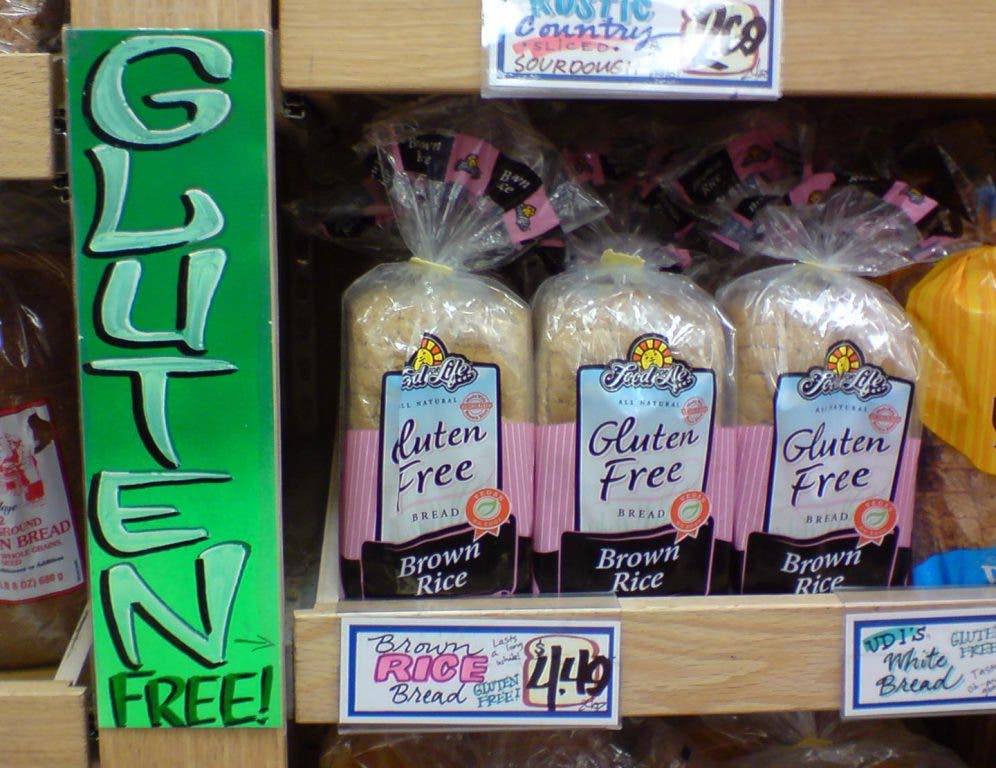


As one gets older, one gets more and more opinionated. That’s certainly what you’re going to read here: opinions – in three different subject areas.
That killer, gluten
Find out what's happening in Dixonfor free with the latest updates from Patch.
What is it about gluten? Back in the early days of the Atkins high-protein diet, many foods such as crackers were being made using a high amount of gluten. Now it seems to have become public enemy number one. Everything, it seems, is being advertised as gluten-free – even drinks! Anything to sell a product.
Gluten is most predominately found in wheat flour (but also in lesser amounts in rye and oat flour, and so on). Before the gluten scare was introduced, gluten was considered essential for breadmaking. Basically, when you knead bread dough, you develop the gluten (it’s what makes the dough stretchy and stringy). So when the bread begins rising (before baking) due to the action of the yeast, the dough won't collapse.
Find out what's happening in Dixonfor free with the latest updates from Patch.
When I’m making bread now from a variety of things – everything from soybeans to oat and rye and rice flours (in addition to wheat flour) – I still add pure gluten flour to the mixture to ensure that it will rise and bake properly. Amazingly, I haven’t developed any diseases and I’m quite healthy.
It’s true that people with celiac disease react badly to eating gluten and between 1 in 1,750 people (or 1 in 105 people, depending upon whose research you follow) have this condition.
But it’s gluten-free this, gluten-free that, and I expect that doctors are seeing patients who claim to be adversely affected by gluten who are imagining it. Well then, don’t eat it! Don’t enjoy good bread and breakfast cereal and pancakes and waffles!
Maybe the price of gluten flour will go down as more people stop using it. That’s good for me.
Raised garden beds
If you’re into gardening, you’ve heard about raised beds. No, these aren’t those bedroom beds with padded mattresses so thick you need a ladder to climb unto them. These are beds of soil raised maybe a foot above the surrounding soil in a garden. The bed is created by building a wooden (or other material) frame which is laid on the existing soil and filled with new soil.
Sure, they look pretty and orderly, but to create them takes a lot of work, and where do you come up with the soil? Buying soil can be expensive. There is a reason for them if you want to create a garden on a cement patio, that’s for sure. I once built a raised bed on a roof, but the landlord didn’t like it. They also can be used where the native soil is contaminated or of such poor quality there’s no hope of making it fertile.
When I was in Cuba recently, all the commercial veggie gardens there used raised beds. I didn’t stop to ask anyone why, but I assume that because they average a lot of rainfall in June and October, Cuban gardeners use raised beds to ensure that the soil drains properly. When soil gets too waterlogged, roots can rot. Frequent hurricanes can drop a lot of rain on Cuban fields in a hurry.
But here, not usually a problem.
I’m all in favor of taking the soil you’ve got, loosening it, improving it by adding amendments such as compost, and planting directly into it. I had my soil tested, and, following advice, added certain amendments such as minerals and gypsum.
One reason people might want raised beds is to avoid walking on garden soil and compressing it. Well, I just laid down lines of cement stones to walk on in my surface garden to avoid that problem.
The good and the bad of ad slogans
I avoid most TV ads – mostly because they’re so unoriginal and dull, and they're repeated so frequently. Occasionally, I love them – such as the current AT&T U-verse ads featuring kids sitting around a table with an adult who asks them questions. The kids can be hilarious.
In this vein, companies often use slogans in their ads. Some are quite good, and some sound like they were developed by a contest among employees, or by a committee of managers.
I’ve been writing them down and here are some lists of the beasts and the beauties:
Ten current worst:
- You and Us (UBS Bank)
- Our Prime Interest is You (Bank of the West)
- Go to a Better State (State Farm insurance)
- This is Wow (Black Oak Casino)
- This is How You Sonic (Sonic Drive-Ins)
- Advantage You (Western Health Advantage -- bad, bad, bad)
- Taste is King (Burger King)
- Let the Making Begin (Sears Craftsman tools)
- Think What We Can Do for You (Bank of America)
- Get Order. Get Ortho (Ortho lawn chemicals)
I’m sure you’ve noticed the predominance of banks in this Hall of Mediocrity. The staid, conservative approach of banks is reflected in their lackluster sloganeering. They love to say that they put their customers first.
I looked at our local bank’s (First Northern’s) slogan (“That’s my bank”) and it isn’t bad, but it isn’t great, either. It does OK in positioning the bank as locally based, rather than a behemoth.
The ten best current slogans:
- I’m Lovin’ It (McDonalds – they can afford to hire the best ad company!)
- 15 Minutes Can Save You 15% or More In Car Insurance (Geico – we’re all tired of hearing this but it works)
- Hungry? Why Wait? (Snickers)
- Live Mas (Taco Bell)
- Built Ford Tough (Ford trucks)
- Win From Within (Gatorade)
- Thrive (Kaiser Permanente)
- One Client at a Time (Morgan Stanley)
- What’s In Your Wallet? (Capitol One)
- Work Easy, Play Hard (Microsoft Windows)
For really great slogans, let’s dip into the past. Here are some that I would definitely enshrine in the slogan Hall of Fame:
- Breakfast of Champions (Wheaties cereal from General Mills – they may still be using this one)
- A Kiss Begins with Kay (Kay Jewelers – still being used)
- A Diamond Is Forever (De Beers)
- You’re in Good Hands (Allstate insurance – they’ve used many variations of this)
- Where’s the Beef? (Wendies – the funniest of the bunch)
- The Pause That Refreshes (Coca Cola)
- Think Different (Apple computer – used until 2002)
- Be All You Can Be (U.S. Army – used for 20 years)
- Can You Hear Me Now? (Verizon)