Politics & Government
Dixon Then and Now: News, Views and Life in Dixon 100 Years Ago
Goodbye horses -- technology was already impacting local lives


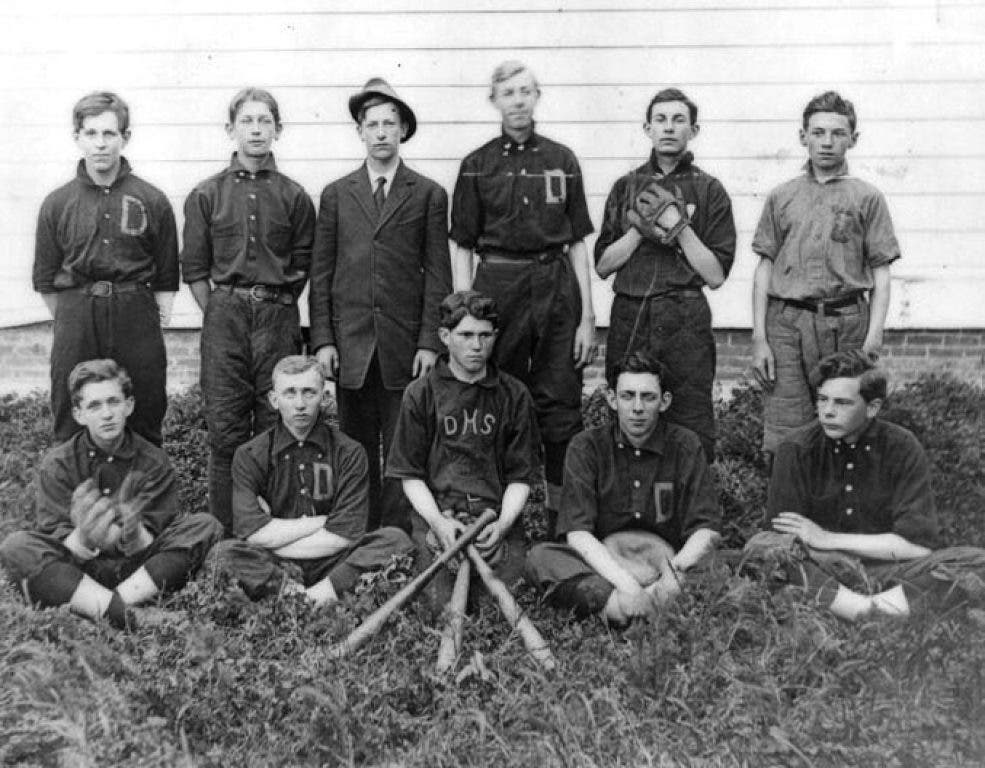


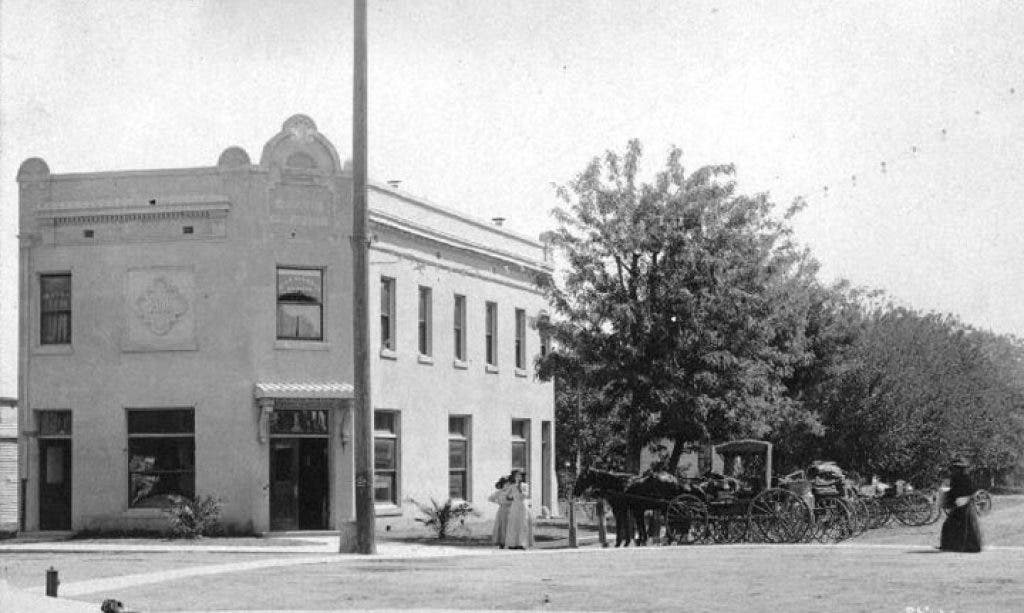


The year was 1911 and Dixon’s population was about 800. In a town of that size, just about everyone knew everyone else. The listed trips townspeople were making and the names of visitors.
It was a time of transition from horses to gasoline engines (with more horsepower). Those still using horse-drawn carriages weren’t happy when the noisy, new-fangled automobiles spooked their animals.
Dixonites must’ve been impressed with the further onset of technology: In 1910 there was an Acme movie theater downtown followed in 1911 by the Palace movie theater (where silent films were shown). Now, anyone could take pictures using early Kodak cameras, and the Wright brothers had made their first powered flights in 1903. Electricity had been gradually introduced to Dixon over the previous 20 years. Broadcast radio wasn’t available yet, but there were early, Edison-style phonographs for sale, and telephones were coming into use (where it was possible to listen in on what the neighbors were saying).
Find out what's happening in Dixonfor free with the latest updates from Patch.
Weather predictions were often unreliable.
In 1911, Californians got to say yes or no to women’s right to vote, but women didn’t get to vote for president of the U.S. until eight years later. Locally, the Women’s Improvement Club was active in agitating for a Dixon library. “It is strange more women are not interested in what this little club is trying to do,” said a Tribune article. “The few who are clinging together hoping … to see a library and reading rooms in town, are determined not to give up.” Despite this dour assessment, they did succeed and the library was built in 1912.
Find out what's happening in Dixonfor free with the latest updates from Patch.
Ping pong was becoming popular with the town’s youth, but one older man said it had a “ridiculous name.” Some in Dixon expressed concern about kids’ use of BB guns and slingshots.
An article warned of an influx of European anarchists. The U.S. is “wide open to them,” a man said, saying that “… this nation with its carelessness is admitting foreign criminals.” Labor unions were protesting “undesirable aliens” immigrating into the U.S., such as “Hindus and Chinese.” The government replied that “The immigration laws are being rigidly enforced.” Farmers were worried about a serious agricultural pest, the alfalfa weevil, sneaking in from the eastern states. Meanwhile, the Tribune noted trouble brewing along the Mexican border as the Mexican government destabilized and various revolutionary forces slugged it out. Pancho Villa was part of this, and the U.S. sent troops south of the border in 1914 and 1916.
In 1911, hams cost 20 cents per pound and the Dixon Bakery sold six loaves of bread for 25 cents.
Twenty acres of farm land two miles from Dixon sold for $2,700. Lots in town could be bought for as low as $250 (the new Mayes, Wagner and Nudd subdivisions offered them). Postage was about to be raised to one cent per letter, and taking the train to Chicago cost $33. Railroads were all the rage, and a Tribune article in May 1911 talked up the possibility of building an electric railroad from Vallejo to Sacramento via Suisun City and Dixon. I don’t understand the attraction of electric railroads over steam-locomotive railroads but it may have had something to do with being cleaner and requiring no fueling and water stops. In 1913 a spur of the electric Oakland, Antioch and Eastern Railroad was extended to Dixon, but it failed to turn a profit and didn’t last long.
As I wrote in a , fraternal organizations were very popular in Dixon around this time. In addition to the Odd Fellows, the Tribune ran ads for two masonic groups and a women’s auxiliary, the Othello Lodge of the Knights of Pythias, and the Foresters of America. The Odd Fellows and the masons had their own buildings in Dixon by this time.
In March of 1911, the Tribune noted that “farmers are becoming anxious for more rain” (that is, those who weren’t using irrigation).
Talk was beginning about the building of a bridge across the Carquinez Strait and exactly where it might be located. Also, controversy was building about the routing of the upcoming Lincoln Highway (or Highway 40) – whether it should go south from Sacramento near Rio Vista and Antioch, or follow the more northerly transcontinental railway route near Dixon (the southerly route was chosen, but after the bridge was built in 1927, the northern route was used).
1911’s May Day Festival in Dixon had a grand ball, baseball game, platform dancing, and three harness races. Leading the festival parade were decorated automobiles, followed by horsemen and horse-drawn carriages, fraternal orders, the fire department, floats and school children. The main speech was titled “American Ideals.” Oration in those days was an accomplished art, and the speeches were usually much, much longer than the Gettysburg Address.
Every issue of the Tribune in 1911 carried a prominent ad for Lydia E. Pinkham’s Vegetable Compound, “a standard remedy for women’s ills …. (by taking it) women may avoid operations.” Dr. Kilmer’s Swamp-Root medicine was also advertised. Some patent medicines began advertising that they no longer contained morphine or alcohol.
For better or for worse, California was on the verge of passing an amendment to the constitution setting up the referendum system where voters could enact or rescind laws directly.
The town’s trustees were talking about selling bonds to finance the building of Dixon’s first sewer system.
A pillar of the community, Mrs. William Rhem, was thought to have committed suicide using arsenic.
The Tribune carried an alarmist story about a woman out east who left her husband and family to follow the yoga philosophy on a South Seas island. What we consider today to be a mainstream activity was made to sound like a dangerous cult. Another article mentioned an out-of-town preacher who condemned the 1911 style of slim, thin skirts and “scant waists.” He said it was immoral to expose bare arms, necks, shoulders and ankles. The preacher quoted a woman who said that such dressing invited “the advances of evil-minded men.” Meanwhile, a 1911 sermon at was “Man and the Serpent.”
“There is only one way of reforming a wayward husband,” advised the Tribune in another article. “That way is by gaining his respect. The usual method of nagging and weeping is a worthless and obsolete system.”
A Tribune headline read, “Consumption of liquor increases in America,” a hint of the movement that led to Prohibition.
A lack of firefighting water contributed to the burning of two barns belonging to H.W. Timm. Meanwhile, there was mention of a water dowser named C.L. Caffer, who used tin tubes and was said to be quite accurate in finding the best well locations – even to the point of saying how deep the well should be dug.
This was the period when Dixon was called The Dairy City because there were so many dairies in operation. In October 1911 so much milk was shipped to the Bay Area (3,000 quarts per day) that the trains couldn’t stop long enough to load it all. There were eight trains per day stopping in Dixon – four each way.
Advertising their local services in the Tribune were one lawyer, one dentist, four doctors and a vet. Painless dentistry, seemingly a new development, was offered. There were probably more businesses in downtown Dixon in 1911 than there are today. For example, there were four businesses alone selling groceries: T.B. Duke, Ferguson and Rattenbury (they ran the largest ads), Oscar C. Schulze and E.C. Eames.
To end out 1911, the city’s new night watchman was told by merrymakers on New Year’s Eve that it was the custom to ring the fire bell at midnight, and so he allowed it. He quickly learned he’d been had, but kept his job.
Note: See my earlier column about. And check out all the photos accompanying this column to get an even deeper taste of 1911.