Neighbor News
Crowded Schools - Dublin Residents Propose Solution
Proposed Principles for DUSD Overcrowding by Bill Carey, Dublin resident

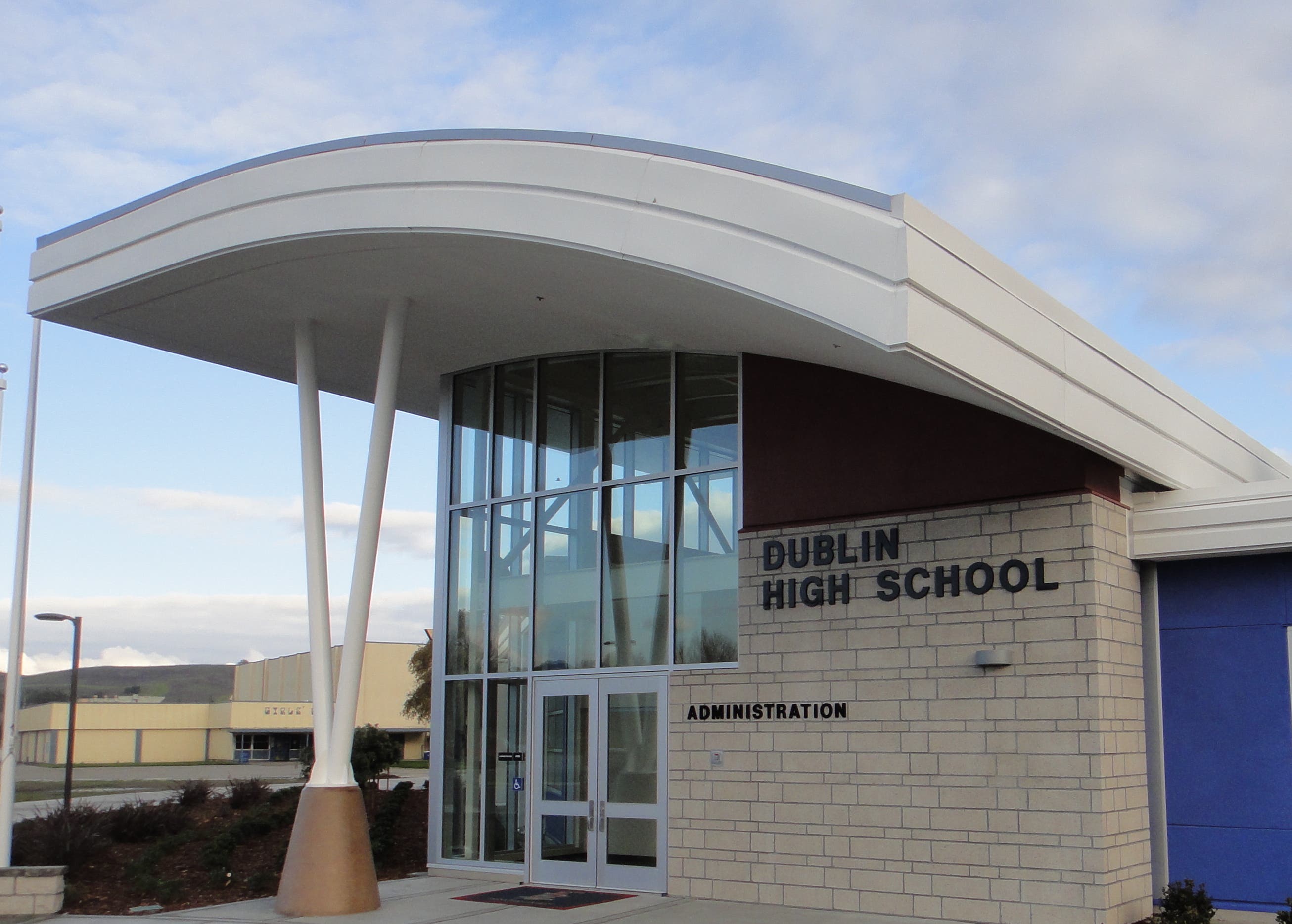


To Dublin Unified School District Board of Trustees
Dear Trustees:
Since the formation of the Boundary Committee in late 2013, Dublin Unified School District (the “District”) has orchestrated a series of activities to address issues related to growth. Throughout this process, community volunteers have actively participated in committees, participated in surveys, attended school board meetings, and met with members of Board of Trustees (the “Trustees).
Find out what's happening in Dublinfor free with the latest updates from Patch.
The intent of this letter is to provide input that may help the District define a facilities strategy and plan that best meets the needs of the community.
This letter includes the following four sections: (1) proposed principles, (2) overview of the current situation, (3) concerns with the current approach, and (4) specific actions to be implemented. We have also included an appendix with various scenarios for consideration.
Find out what's happening in Dublinfor free with the latest updates from Patch.
Proposed Principles:
Any facilities solution should be principles-based, data driven, comprehensive and transparent.
The following are proposed principles:
1. Our schools are overcrowded today and will be overcrowded for years to come - we need to recognize this and act accordingly.
2. The community’s needs are paramount, not the developers.
3. There is a limit to how big a school can be.
• Just like 1600 students at Fallon Middle School is too many, so is 5000 students at Dublin High School (DHS).
4. All funding sources should be leveraged, as opposed to just focusing on tax increases (bonds).
5. The developers can and should pay more.
6. Facility investment decisions should be prioritized and sequenced based on relative need.
7. Future administrative and operational costs should be considered when determining the number of campuses.
8. The District needs to better manage construction costs and forecasts.
9. Voluntary flexible solutions can be an effective tool to balance enrollment between different schools and meet the needs of a segment of the community.
10. We should be honest, transparent and specific with current and future residents.
Overview of the Current Situation:
In defining a solution, it is also important to assess the current situation and learn from past decisions.
Growth Forecasts
The following is a summary of the “moderate student enrollment forecast” as published by the District and communicated to the City of Dublin in December 2015. Highlights are as follows:
(See image 2)
Key takeaways include hyper-growth of middle and high school enrollment over the 4 1/2 years and a declining elementary school enrollment during the same period.
Facilities Master Plan
The District is currently developing a facilities master plan (FMP). As we understand it, the current operating plan approved in the June 2015 by the Trustees and the hybrid solution presented in January 2015 are as follows (generally in sequential order):
(See images 4,5)
This strategy would yield 4 high school, 4 middle school, and 9 elementary school campuses by 2025 or 17 in total as compared to the existing 11. Some of these campuses will be dual-located (for example K-8) but will require different administrators.
Little detail has been provided on each of the above including what “satellite” and “academy” high schools mean, where they will be located in (existing or new site, west or east), when they would open, and how attendance for the three Dublin High campuses would be determined (by boundary or other approach). Given that 40% of Dublin High capacity under this scenario would be off the main campus, it likely that every high school student in Dublin would be impacted in significant ways. It would also be expensive from an operating standpoint due to the high number of campuses.
Current Construction Projects
The District is currently working with the City to finalize a general lease agreement (GLA) with an option to buy for the Jordan Ranch site. A similar agreement is being worked on for the Dublin Crossing site. We understand that the Jordan Ranch GLA involves certain commitments to the City including “dedicating” $20 million of future developer fees for the construction of the Jordan Ranch K-8 school.
The District is also working to finalize design plans for a K-8 configuration of the Jordan Ranch school by late 2016. In January 2016, the District reviewed revised costs estimates for the Jordan Ranch school which had increased from approximately $48 million to a high of $65 million. These costs exclude the value of the land and do not include the cost of a gymnasium, which may be approved at a later date.
No other major construction plans are in process.
Demographic Estimates
The District’s demographic student enrollment estimates have been understated for years.
As an example, as recently as 2014 the District was stating that Dublin High School enrollment would never exceed 2500 students. In December 2015 the District is now reporting that student enrollment is expected to be close to 5000 by 2025.
The understated demographic estimates caused the District to:
- To charge substantially lower developer fees
- As one example, the District did not charge any developer fees for high school facilities from 1998 to 2015.
- To make misinformed facility investment decisions.
- As an example, the District expanded Dublin High to accommodate a maximum of 2500 students in an “open” campus environment. If the District had better demographic estimates, they could have built a more dense (for example three story structures) campus that could have better accommodated a larger student population.
- Also with better information, the District could have been more proactive in acquiring land for future schools.
Estimates do change, but a 100% change in high school forecasts in less than a year is extreme. It is also concerning that for years many in the community challenged the demographic forecasts, yet the District continued to defend these estimates until as late as December 2015.
Developer Fees
The current Level 2 developer fees cover less than 20% of actual costs of new schools as compared to the 50% intended by SB50. The District states that they are charging the maximum allowed, but that doesn’t make common sense given the massive change in demographic forecasts. The Level 2 fees likely can be increased dramatically by including the (a) right costs estimates and (b) projected facilities needs. The right costs include the value of the land and 32% increase in projected construction costs.
Mitigation Agreement
The District has entered into mitigation agreements with certain developers that have allowed the developers to pay even less than the current Level 2 fees. As an example, the Dublin Crossing agreement signed in 2013 requires the developer to pay no more than $5.89 per square foot regardless of the actual level of fees. This is almost 20% lower than the current fees.
Local General Obligation Bond
The District is currently spending previous approved bond money on highly paid consultants to structure and promote a $280 million plus general obligation bond for the June 2016 ballot. Pursuing a bond prior to completing a comprehensive plan seems out of sequence. It is also hard to understand why the community will be asked to pay a massive tax increase while the District continues to state that our schools are not overcrowded.
Board of Trustee Elections
Four of five Trustees are up for election in November 2016. This also seems out of sequence with the bond vote. In order to increase accountability, the school board elections and bond should be at the same time. We gain nothing by having the bond election in June vs November.
Concerns with the Current Approach:
The following are concerns with the current approach:
- Fallon Middle School and Dublin High School will be over-capacity in the Fall of 2016, and no specific plans have been provided on how the District will accommodate these students.
- The District has stated that schools are not overcrowded.
- The District continues to support new housing construction.
- Much of the focus on the Facilities Master Plan process to date has been on a new local bond versus a comprehensive facilities plan. The District needs to provide a vision and specifics on how they will effectively educate 5000 high school students.
- The District is aggressively pursuing the construction of new elementary capacity at Jordan Ranch and later at Dublin Crossing while the District published forecasts show this elementary school capacity is not needed.
- The District estimates of costs and demographic enrollment projection continue to escalate.
- The City has lost two parks over the past two years because of the GLA’s for Jordan Ranch and Dublin Crossing.
- Action Plan:
The following are suggested actions: (See image 3)
- The District needs to unequivocally and immediately communicate to the City that our schools are overcrowded. At that stage it is up to the City to react in accordance with its Charter.
- Developer fees can and should be immediately increased.
- While one high school made sense at 2500, it is hard to imagine how 5000 students can effectively be educated at DHS.
- A second site is needed.
- Possible scenarios might include (1) a new 2000+ high school, or (2) a 10-12 configuration of DHS with either junior high schools (7-9) or a stand-alone 9th grade campus.
- Regardless, any solution should be defined in sufficient details (see appendix for high level minimum level of detail).
The Jordan Ranch school should be built as a middle school and not be built as a K-8.
- We understand elementary schools help sell homes, and therefore developers lobby for these schools. However, we don’t need an elementary school at this stage.
- This approach will yield 3 comparable Dublin middle schools that will better ensure an equitable educational experience for all students.
- It also frees up resources for high school.
Thank you for your focus on this issue.
Bill Carey
On behalf of members of the community