Schools
Dublin Students Develop Robot To Help Restore Underwater Kelp Forests, Win UN Award
DHS students developed a prototype for a robot that can locate and destroy underwater invasive species like purple sea urchins.


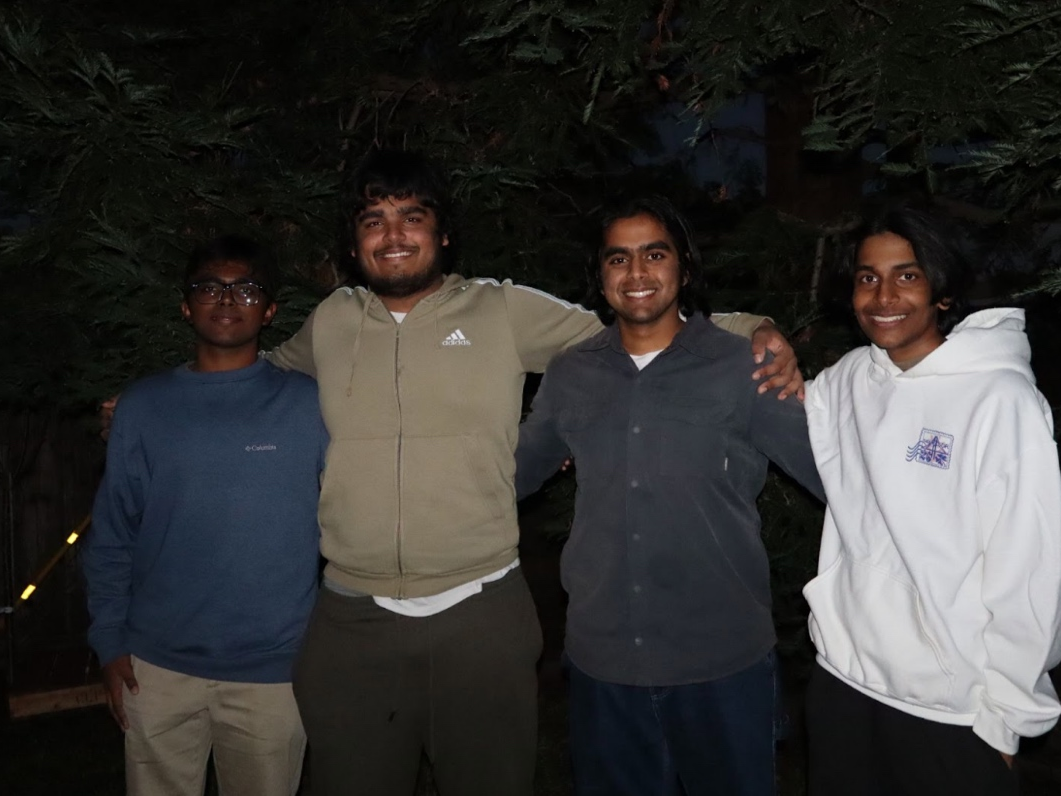

DUBLIN, CA — Five Dublin High School students won the United Nations Sustainable Development Goals Challenge for their development of a full prototype automated urchin-capturing submarine that can remove harmful purple sea urchins that are destroying California’s kelp forests. The group hopes to eventually create hundreds of autonomous robots capable of safely eliminating the urchins.
Purple sea urchins have proliferated all over the Pacific Ocean in recent years due to the lack of natural predators. They have destroyed 96% of bull kelp forests along the California coast, which are essential habitats for marine life and play a powerful role in reducing climate change by absorbing CO2. However, efforts to address this challenge have been stymied by the need for human divers and the danger of removing these sharp, venomous objects.
The “Aqua Sentinels” group of students – comprising Premang Jha, Adhi Jeyappragash, Suraj Kudrikar, Saif Jeelani, and Shikhar Jayswal – are trying to address this challenge by developing a prototype of a Blue Robotics API powered by a Raspberry Pi 5 and four thrusters for movement. The robot identifies sea urchins using an onboard camera paired with an AI image recognition model, and navigates the underwater environment using visual SLAM (Simultaneous Localization and Mapping) - a method for autonomous vehicles that can’t use GPS underwater.
Find out what's happening in Dublinfor free with the latest updates from Patch.
The robot is able to find the location of the sea urchins up to 950 meters below the water, and avoid obstacles like rocks, plants, and animals on its way to them. Eventually, the group hopes to equip the robot with the tools necessary to destroy the urchins.
The Aqua Sentinels began working on the project in May, and was awarded $200 after winning the Dublin High School Entrepreneurship Challenge. They created a parts list, trained an AI model on urchin images, and worked with a mentor from the Giant Kelp Restoration Project. By late July, the prototype was complete, and was tested in a swimming pool.
Find out what's happening in Dublinfor free with the latest updates from Patch.
They’re now hoping to test the model around the Bay Area, obtain funding, and work with agencies like the California Fish and Game Commission and nonprofits like the Atomic Fellowship and the Pollination Project. If it proves successful, they hope to mass-produce the model and use it to remove urchins and other invasive species around the world.
“While we begin with tackling sea urchin overpopulation, we aim to address other invasive species such as lionfish, European green crabs, and Asian shore crabs to protect native ecosystems,” they said. “Our goal is simple but bold: create real change and leave a lasting impact on the health and diversity of our sea planet.”
Get more local news delivered straight to your inbox. Sign up for free Patch newsletters and alerts.