Health & Fitness
Patch Blog: Q&A with Sasha Borenstein on What it Takes for Struggling Students to Succeed
Vital tips on what to do if your child needs educational testing.
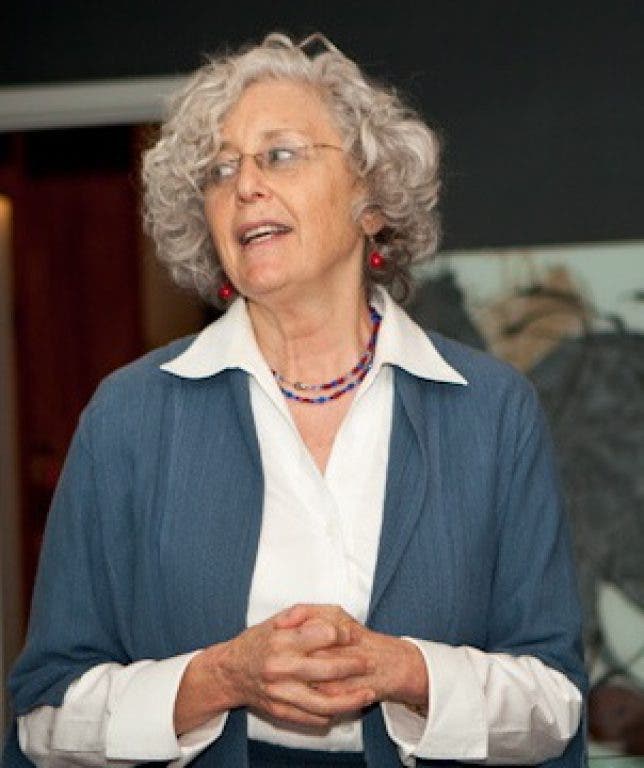

Sasha Borenstein is the founder of the Kelter Center in Los Angeles, which offers students one-on-one instruction to help them do better in the classroom. I recently interviewed her for Beyond The Brochure, my blog for parents applying to private elementary schools in Los Angeles. Excerpts from the interview:
Christina Simon: The Kelter Center has helped thousands of children “learn to learn.” I’ve read some of the parent testimonials and they express enormous gratitude for the work you’ve done with their children. You founded the Kelter Center in 1977. What motivated you to start it?
Sasha Borenstein: I grew up in a family that was very involved in special education. My father was a pediatric neurologist who worked with a range of children with learning and neurological problems. He had a social worker in his office, he was a consultant to the public school districts in Orange County, CA, and he worked frequently with children’s hospitals and speech and language therapists. This multidisciplinarian team approach appealed to me. Before founding the Kelter Center, I worked in public schools and private special education schools in the Los Angeles and Orange Counties. I was frustrated by the lack of team approaches and the lack of support that I, as a classroom teacher in special education, received. In my youthful zeal, I thought I could do it better, so I tried, and that’s how the Kelter Center got started.
Find out what's happening in Eagle Rockfor free with the latest updates from Patch.
Simon: Could you tell us a bit about what the Kelter Center does to help students?
Borenstein: The Kelter Center helps students in three main ways:
Find out what's happening in Eagle Rockfor free with the latest updates from Patch.
- Doing educational evaluations to determine the student’s skills in literacy, mathematics, and processing, and explaining the results of that testing to parents and their children in a clear manner.
- Teaching students the skills they are not proficient in using research-based, direct teaching methods that produce results, closing the gap between where the student’s skills are and where they need to be to effectively do grade appropriate school work, and learning to learn skills in literacy and mathematics.
- Using the PACE Program and the Cogmed Program, we provide opportunities for our students to be more efficient in their memory skills, their attention and speed of processing, their visual problem solving, and their auditory processing.
Simon: One very common source of stress for parents is the moment they are told by their child’s school that he/she is struggling in class and needs to be evaluated for a learning disability or other learning issue. What advice do you have for these parents?
Borenstein: I believe that we all feel stressed when faced with life’s twists and turns. Parents always want to be supportive of their children and help them to be the best learners they can possibly be. My advice to parents when they ask me about how to speak to their child about educational testing, is to speak from this point of view, telling their child that everyone has different learning abilities and challenges. The purpose of educational testing is to find out what skills they excel at, which are challenging, and how to make the strong effort that the child puts into schoolwork reap the rewards of learning and doing well at school.
Simon: Could you walk parents through the process from when the school tells them their child needs to be evaluated? What happens next? What are their options?
Borenstein: There are many different people who can help in this process. If attention is a key issue then psychiatrists and/or neuropsychologist have to be part of the team. If there are social and/or emotional problems that accompany the learning difficulties a psychologist may need to part of the evaluation process. If the school and family feel that neither of these issues is pronounced, then an educational evaluation would be the starting point. The public schools provide educational evaluations; there are many excellent neuropsychologists who provide in-depth educational, psychological, and intelligence testing; there are tutoring companies that do informal educational screening. The choice of professionals depends on the nature and depth of the educational concerns. The educational evaluations that we do at the Kelter Center are the same type of standardized tests that neuropsychologists do, but our focus is only on the educational portion of that type of testing.
Simon: If parents wants a second opinion from an expert such as you, what should they do? How should they inform their child’s school if the school has recommended a specific professional?
Borenstein: Parents are great networkers. They speak to friends and the parents of students in their school, and they rely on this social network to find professionals that their friends have had positive experiences with. I believe these types of contacts are valuable and if the parents explain to their school that they want to pursue other opinions/professionals, based upon good input from reliable sources, I am sure that the school will be amenable to “second opinions.”
Simon: What is your proudest moment since founding the Kelter Center?
Borenstein: Seeing students becoming independent, successful learners, who enjoy learning and begin to feel self-confident as a learners. When our students break through some of the habits of the mind that hold them back, when they laugh and enjoy learning, when they say, “I can” instead of “I can’t,” I am proud of the work we do. When parents stop me in the market to tell me how well their child is doing and how far they have progressed in education, I am proud.
Christina Simon is the coauthor of “Beyond The Brochure: An Insider’s Guide To Private Elementary Schools In Los Angeles.”
Sasha Borenstein is chief educational officer and the founder of the Kelter Center. She has been the educational force behind the Kelter Center for 33 years. She has taught at UCLA, Pacific Oaks College, and has been a consultant for public and private schools throughout California. Sasha is a graduate of Columbia University, Teachers’ College, where she earned her master’s degree in Special Education. She has been an educational innovator and teacher of children, adolescents and adults for over forty years. Her passion is the translation of neuropsychology, cognitive psychology and educational research into teaching programs that work. The Kelter Center is headquartered at 11340 W. Olympic Blvd. Suite 140, Los Angeles CA 90064. Phone: (310) 312-1056. www.thekeltercenter.com.