Health & Fitness
Patch Blog: Who Turned Off the Internet?
January 18, 2012 has already gone down in history as the day much of the Internet as we know it blacked out to protest what Wikipedia dared us all to imagine—'a world without free knowledge.'
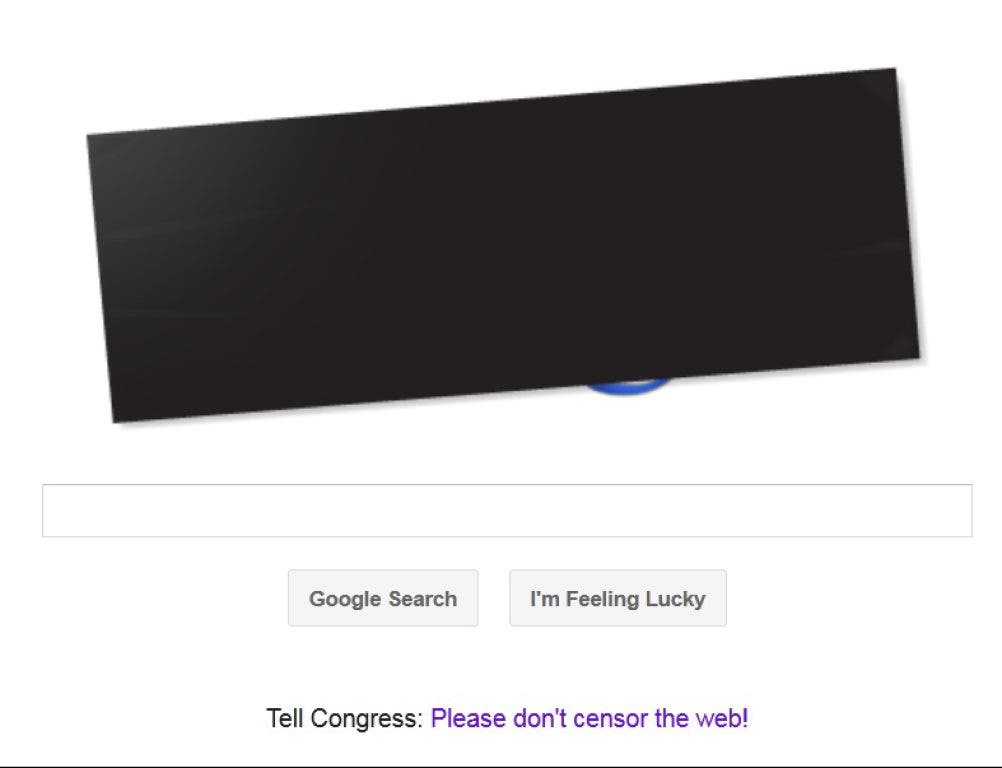


January 18—and much of the Internet is officially under SOPA Blackout. Large Internet entities, such as Wikipedia, have “blacked out” their sites in opposition to Congress and Senate bills, SOPA and PIPA, respectively. Wikipedia, which gets millions of hits a day, is hardly alone in this new protest. Sopastrike.com calls it "the largest online protest in history."
Some of the Internet's most heavy hitters are chiming in. Craigslist is among the sites that have blacked out in opposition to SOPA and PIPA. Google has dedicated a full search page, accessible by clicking their blacked out logo on their main page.
SOPA is the Stop Online Piracy Act (HR 3261) and PIPA (SB 968) is the Protect Intellectual Property Act. The bills, aimed at preventing Internet privacy, place the burden of policing copyright and intellectual property on site owners. Any site found to be in violation of the bills would be subject to having its domain commandeered by the federal government.
Find out what's happening in Eagle Rockfor free with the latest updates from Patch.
Some supporters of the bills are: News Corporation (Fox), VISA, Mastercard, RIAA, MPAA, Walmart, Tiffany, Chanel, Rolex and Sony.
Major opponents include Google, Yahoo, Wikipedia, Craigslist, Facebook, Twitter, LinkedIn, eBay, AOL, Mozilla, reddit, Tumblr, Etsy, and Zynga.
Find out what's happening in Eagle Rockfor free with the latest updates from Patch.
Many social sites are opposed to the bills because the bulk of their content is user-submitted. Entire sites are driven by such content. Sites such as Facebook, Twitter, and YouTube have already mentioned that it would be virtually impossible to function if either of the two bills were to pass. In order to uphold the law flowing from legislation, YouTube would have to go through—literally—eight years worth of video on a daily basis just to police copyright infringement.
Opponents state that the bills would also give the federal government power that is far too overreaching. A site such as YouTube could be shut down without due process. YouTube would have no say in the matter.
Monster Cable is already at work, naming Craigslist, Sears, eBay and Costco “rogue sites.” Under SOPA and PIPA, those sites could all face immediate closure—again, with no say from the site owners.
Many of the companies and politicians opposing the bill have labeled SOPA and PIPA as a “government takeover” of the Internet. Some have strongly suggested that the bills will greatly inhibit the public's ability to communicate on the Internet, as has been done uninterruptedly from the mid-1990s up until now.
All of the blackout sites encourage the public to contact their Congressional and Senatorial representatives. President Obama and the White House have officially come out opposing the bills.
Because of strong public and private backlash, SOPA and PIPA have lost some momentum. However, Congress is set to return its discussion of SOPA in early February—and PIPA discussions may resume as early as in the next two weeks.
The SOPA blackout is something entirely new. Regardless of the outcome, it is a major milestone in U.S. history. It marks the first time the Internet community has come together—as a single entity—to protest a government bill. Will this be a precedent or a swan song?