Community Corner
Nuclear Power: The Devil's in The Details
How much of a threat is nuclear power and should we be expanding it in California?

"To pretend that the world is a garden is … a turning away from the woes that keep it from being one."—Rebecca Solnit.
Like everyone else, I’m hoping that the crisis at the Fukushima nuclear power plant can be safely resolved so that Japan can focus on recovering from the recent earthquake and tsunami.
From a vantage point across the Pacific, however, I’m not much worried about the impacts of radiation plumes. I haven’t stocked up on potassium iodine. Even in Japan, public exposure to radiation has for the most part been comparable to levels we receive from medical procedures or airline flights.
Find out what's happening in Eagle Rockfor free with the latest updates from Patch.
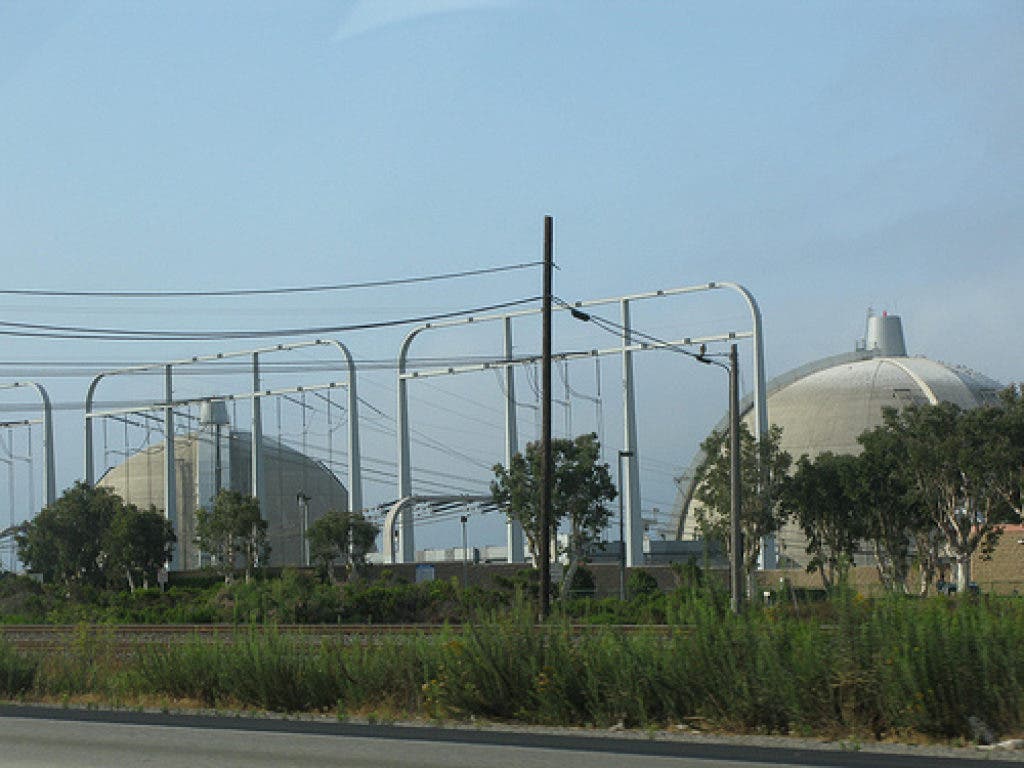
But, like many, I have thought more about nuclear energy as a result of the emergency. California’s two commercial nuclear power plants, San Onofre, near San Clemente, and Diablo Canyon, near San Luis Obispo, are 65 miles and 160 miles away from Eagle Rock. There are renewed concerns about whether they could stand up to earthquakes or tsunamis. A 2008 state report found that .
New faults have also been discovered near Diablo Canyon (“Devil Canyon” in Spanish), which wasn’t even required to include earthquake contingencies in the emergency response plan operators submitted when the plant opened 25 years ago.
Find out what's happening in Eagle Rockfor free with the latest updates from Patch.
Safety will, I hope, be upgraded at these two nuclear facilities. We should also be thankful that an earlier generation of environmentalists prevented more reactors from being built along the seismically active California coast. In the late 1950s and 1960s, utilities such as Pacific Gas & Electric planned to build more than 60 reactors up and down the state’s coastline. Local opposition to planned reactors at Bodega Bay between Sonoma and Marin counties, in Corral Canyon in Malibu, and continued protests at the Diablo Canyon facility helped build a consensus among environmental organizations and activists against nuclear power.
In 1976, voters defeated a referendum to ban new nuclear power plants in California. But that same year, legislators placed a moratorium on new nuclear facilities “until the Energy Commission finds that the federal government has approved and there exists a demonstrated technology for the permanent disposal of spent fuel from these facilities.” The U.S. Supreme Court has upheld the legality of the moratorium (Pacific Gas & Elec. v. Energy Resources Comm'n, 461 U.S. 190, 1983).
In the intervening decades, as scientists have grown increasingly concerned about climate change, some environmentalists have reevaluated nuclear power as one strategy to reducing greenhouse gas emissions. Truth is, most major sources of power generation have significant environmental downsides. Coal power plants, which account for 39 percent of the electricity generated by the Los Angles Department of Water & Power that we use in Eagle Rock, are the worst. Coal is a major contributor to climate change. Particulate pollution from power plants, primarily coal plants, are estimated to kill 13,000 people each year in this country.
Natural gas is the second biggest source of L.A.’s power, at 26 percent. While cleaner than coal when burned, gas extraction is a polluting activity. Nuclear is the third biggest source of power used in Los Angeles—11 percent of LADWP sources. Renewable sources such as wind, small hydro, and biofuel are a growing percentage, approaching 20 percent, with large hydro filling in the remaining 6 percent.
I support nuclear power—when it’s 90 million miles away—as fusion power in the sun that we can capture as solar power on earth.
Why aren’t I a convert to that great atomic power? The risk of catastrophic accidents is certainly on my mind right now, but that’s not the biggest reason. I think it’s wrong, and the opposite of sustainability, to create a poisonous byproduct that will be a problem for thousands of years to come.
I also don’t like that nuclear power requires a national security state, the secrecy that comes with it, and the large corporations that are part of it. I hope that the future of green power rests in solar and wind generation and a 21st-century electric grid that allows distributed power generation. As I mentioned in my , Eagle Rock, let’s build some solar power in 2011.