Health & Fitness
Patch Blog: The Glendale Corridor--Past AND Future
The Glendale Corridor's history should be reflected in its re-design.


The Glendale Corridor is awful in large part because traffic from State Route 2 disgorges into Glendale Boulevard and traffic races towards the maw of the 2 through the Corridor. The thoroughfare is often car-clogged. In DOT-speak, “deterioration of traffic flow has occurred as regional and local commuters increasingly converge on this location.”
It’s unlikely businesses located along Glendale Boulevard without parking can survive for long. It is noisy. It is polluted. The Corridor is the 2’s toilet.
The Los Angeles County Metropolitan Transportation Authority, in cooperation with the California Department of Transportation and the Los Angeles Department of Transportation, proposes to modify the southern terminus of the 2 from Branden Street to Oak Glen Place. None of these departments’ proposed alternatives would significantly ameliorate the problems caused by the 2.
Find out what's happening in Echo Park-Silver Lakefor free with the latest updates from Patch.
Urban planner James Rojas leads
The Corridor’s history should figure in the community’s re-design of Glendale Boulevard.
Find out what's happening in Echo Park-Silver Lakefor free with the latest updates from Patch.
This area was once municipal land. The American city government inherited it from the Mexican ayuntamiento in 1850. (See, Peter L. Reiss, "Dismantling the Pueblo: Hispanic Municipal Land Rights in California Since 1850," The American Journal of Legal History, Vol. 45, No. 4, pp 353-370.)
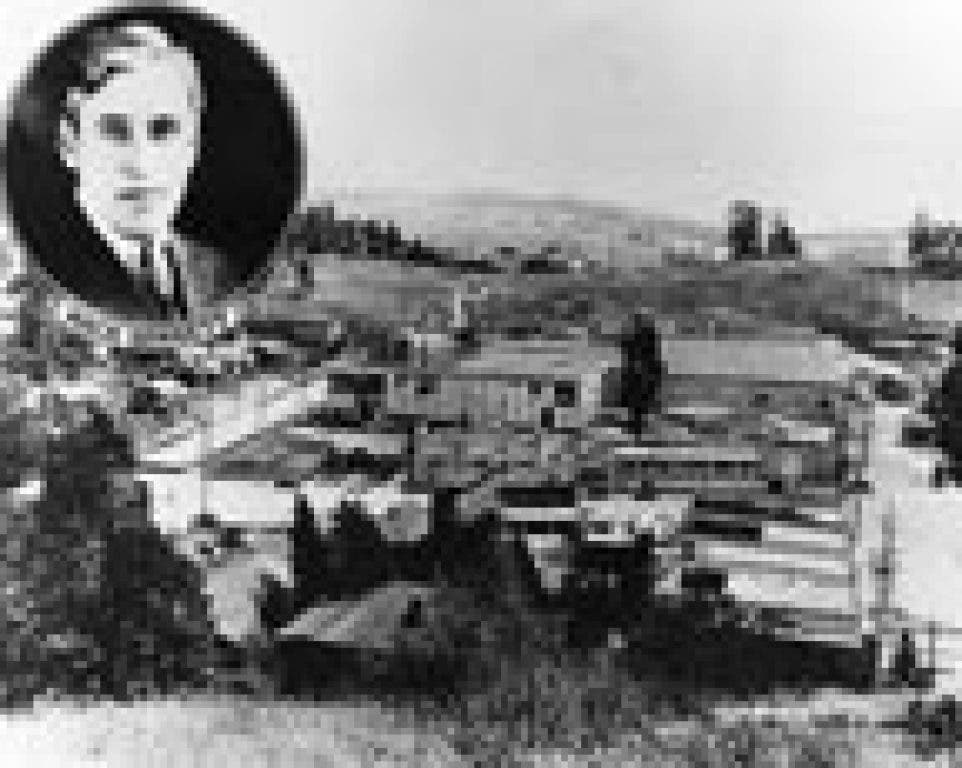
At least by the turn of the 20th century, there was a large farm that the Los Angeles Public Library identifies as having been near where Benton and Sunset are today. Photos of that farm indicate that a film studio took over ownership in about 1914, so it is likely that the farm was contiguous with one of the studios on Allesandro at one end. The attached photos of alarmed actors show a filming on the farm. The photo of tables under fruit trees, a 1901 photo of a tenant farmer in the milk shed near the zanja where she washed clothes, boys on horses, the house before it became part of the studio and was part of the agricultural land, and the man plowing, the man with a scythe in his field, all show what the area in and around the Corridor looked like before the red car (1904) and the municipal stairways made real estate development more attractive.
The Keystone Cops in “Law and Order” travel down Allesandro (and out of the Sennett Studio) and around Echo Park Lake in a YouTube video.
The Corridor is seen as it was during the heyday of the Mack Sennett studio in a YouTube. See also, . As you may see from an accompanying photo, Glendale Boulevard--then Allesandro--petered out into undeveloped area, which was up until the studios were built (beginning in 1909) grazing land for livestock, there were large houses and a large building that looks like a school.
Up at the place where Glendale meets with Fletcher, Tom Mix built Mixville. You can see one of its buildings in the opening of this YouTube with his horse Tony.
Glen Ellen author Jack London visited Glendale Boulevard ("Jack London and the Movies" by Robert S. Birchard, Indiana University Press, Film History, vol. 1, pp. 15-38, 1987). Sydney Ayres, Selig Polyscope actor, wrote to London on September 14, 1911, asking if Selig could make films of Londons' books. He wrote about the Glendale Boulevard (then Allesandro Street) studio as "Ten miles out of town on the road to nowhere with forty cowpunchers and as many Indians taking a big moving picture...."
In 1913, London and his wife Charmian drove out to see the Selig studios and the Selig Animal Zoo at Eastlake Park (Lincoln Heights). Bosworth Company Frank Garbutt brought out London's Sea Wolf as a movie in 1913 at Tally's Broadway Theater in downtown Los Angeles. Jack London appeared in the film.
By about 1920, partly along the Route the 2 now takes, the farmland had become houses, stores and empty lots. The area was no longer rural.
In 1960, excavation for State Route 2 changed this area.
The best thing to do for the Corridor and for most people who live and work around there is for the various transportation departments and the city to stop using that piece of the 2 altogether. Build a park on it. Build a swimming pool on it. Build affordable housing on it. Make State Route 2, in short, go away and replace it with public uses other than subsidizing automobiles.
Slow down traffic, don’t speed it up. Bring back the red car. Open a silent movie theater to show the films made in Edendale studios. Have the city buy property with film-related history and build a museum on it so that people may see what the farms, the studios, and the businesses were like. Recreate the Corridor as a street for people to take pleasurable walks under a canopy of tree leaves.