Crime & Safety
CHP Reminds You How To Drive In Wet Weather and What To Do If Hydroplaning
Do you know how to check if your tires and windshield wipers are still good? What to carry in your emergency kit? CHP tips.

For the second consecutive Monday, the morning rush hour was hit by heavy rain. Good for our drought, bad for getting to work on time.
The California Highway Patrol (CHP) reported accidents all over the East Bay, many rain-related. There was also spotty street flooding, especially on the outside lanes of the freeways.
Before the next storm rolls in, the CHP recommends taking these steps to be rain ready:
Find out what's happening in El Cerritofor free with the latest updates from Patch.
Wiper Blades
- Wiper blades over a year old? Consider replacing them
- If the blades don’t operate smoothly over dry or wet windshields, they aren’t doing their job.
- Top off your wiper fluid, and consider washer fluid with antifreeze properties
- Effective windshield wipers are essential to safe driving in the rain
Tires
- Tread depth should be no less than 4/32 of an inch for proper traction on wet roads
- Measuring depth is easy: put a quarter into the tire tread. If Washington’s head is covered, you are OK
- Ensure tires are evenly worn, in good condition with no metal showing
- Check tire pressure - Recommended pressure is usually shown on a label inside of the driver side door
Find out what's happening in El Cerritofor free with the latest updates from Patch.
Lights
- Check all lights to ensure they are working properly, including headlights, taillights, and turn signals
Emergency Kit
- Have an emergency kit in the vehicle, including jumper cables, equipment to change a flat tire, and a first aid kit
- Keep information handy if you have a roadside assistance service through your vehicle’s insurance company, or know your local resources if you experience a breakdown
- If you are headed to a cold location, have warm blankets or clothing available in case you are stranded. Consider an ice scraper or snow brush
Tips for Driving in the Rain
Rainy weather is blamed for hundreds of crashes, but in reality it is more a failure of the driver to adjust for wet conditions.
- Slow down in wet conditions
- Turn your headlights on whenever there’s bad weather
- Brake earlier, and leave extra following distance
- If you cannot see out of your windshield, stop and delay your trip until it is safe to drive
- If you see standing water, never drive through it! You never know how deep the water is, and you may get stuck
Hydroplaning
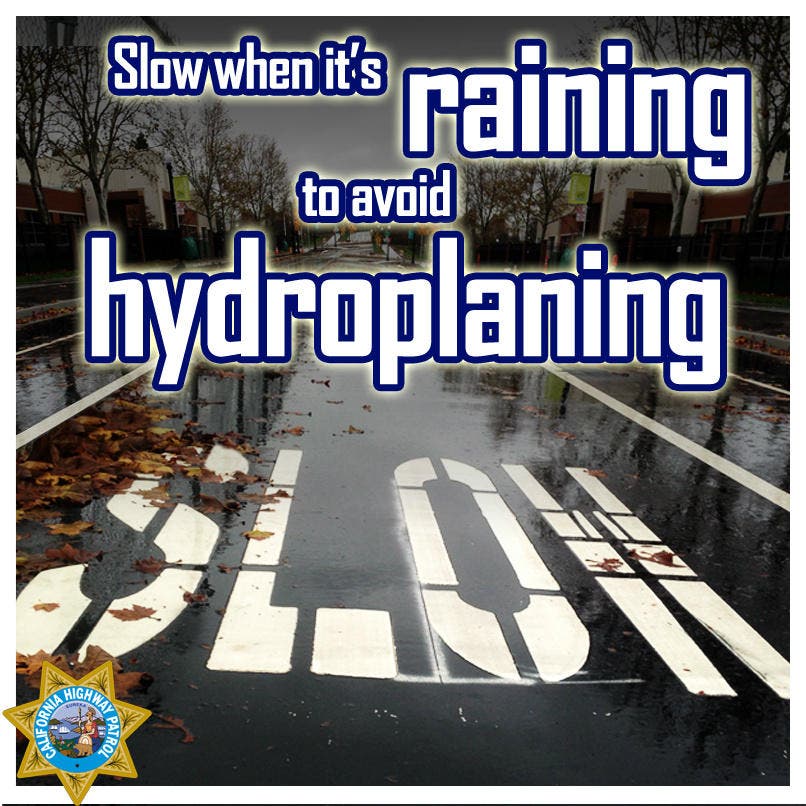
At higher speeds, water can build up between your tire and the ground, causing you to lose traction and contact with the pavement.
If you hydroplane:
- Let off the accelerator, but do not brake
- Don’t put extra input into the steering wheel. Once you regain traction, you can lose control if you turn your wheel while hydroplaning
- Slow down until you regain traction, and keep your speed slow
Get more local news delivered straight to your inbox. Sign up for free Patch newsletters and alerts.