Business & Tech
Forecast Cloudy for Local Music Landmark
A familiar storefront on San Pablo Avenue marks the home of a renowned preserver and purveyor of historic "roots music."
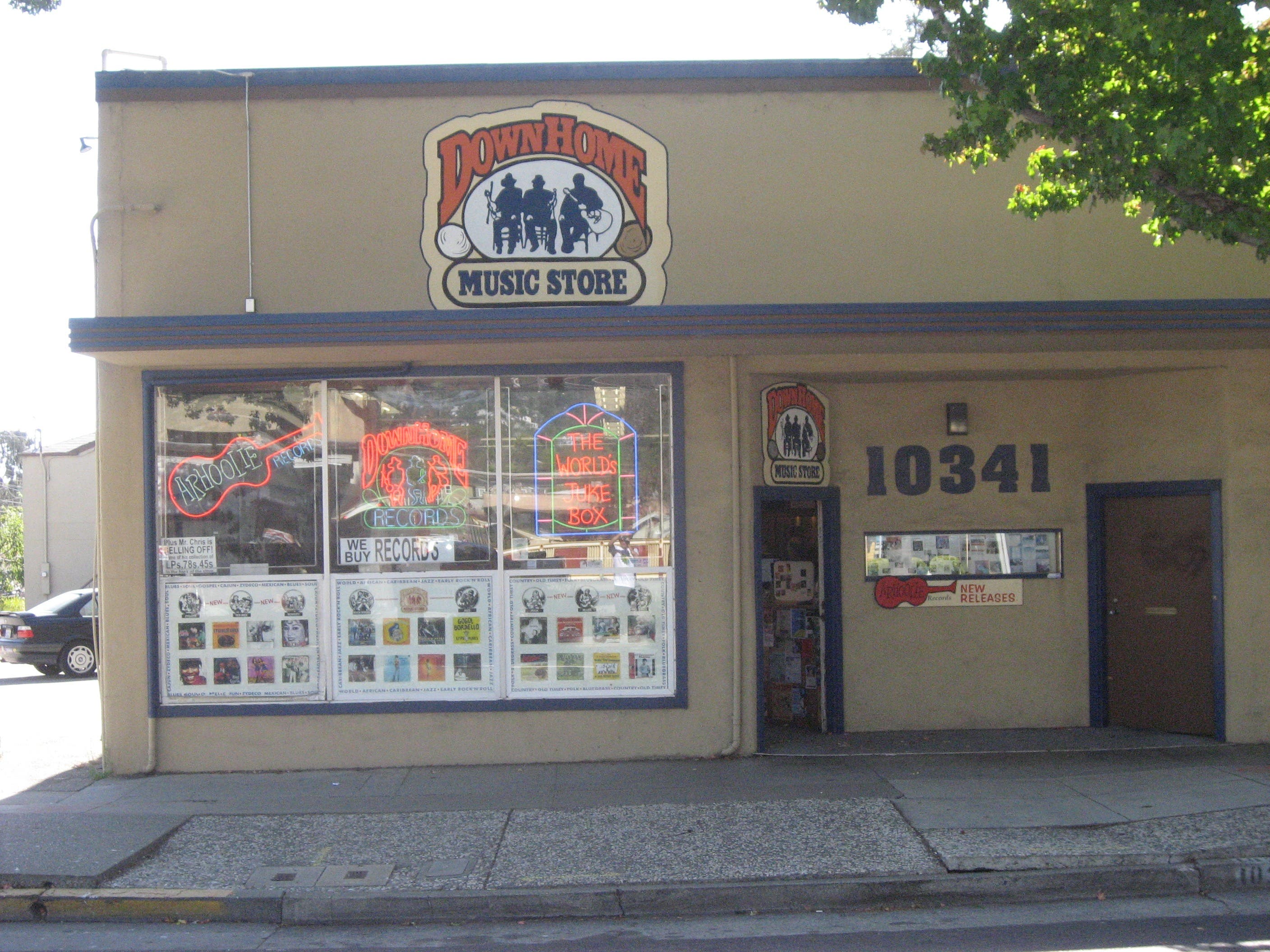


El Cerrito's venerable Down Home Music — purveryors of an incredible variety of roots music CDs, and 33 1/3, 45, and 78 rpm records — has been at 10341 San Pablo Avenue since 1976, so it's an easy storefront to take for granted. But in the current tough economic times, keeping an independent record and CD store open is a serious challenge, and Down Home is a local treasure with an uncertain future.
Competition from downloading and amazon.com and its ilk have contributed to once unstoppable chains like Virgin and Tower Records going extinct, so it takes hardy, committed individuals to keep the doors of independent music stores open.
Chris Strachwitz, proprietor of Down Home, is nothing if not committed. On a recent Saturday, I spoke to Strachwitz in Down Home's back office, surrounded by posters of blues, jazz and country greats of yesteryear.
Find out what's happening in El Cerritofor free with the latest updates from Patch.
Now pushing 80, Strachwitz is a tall, slightly stooped man still possessed of the energy and enthusiasm of someone twenty years (or more) younger.
In order to cut back on expenses, he has had to cut the store's hours to 11am-7pm, Thursday through Sunday. But he's clearly not ready to give up on making quality roots music available, as he has for decades.
Find out what's happening in El Cerritofor free with the latest updates from Patch.
He also is committed to continuing performances of free live music in the store: On Saturday, September 11 at 2 p.m., Down Home will host an Eastern European klezmer performance by Veretski Pass (the band's website describes their work as a "collage of Carpathian, Jewish, Romanian and Ottoman styles"); Cajun fiddler Joel Savoy will perform with accordionist Jesse Leger the following Saturday at 2 p.m.
Strachwitz describes himself as a "song catcher," and explained his preference for music that's spontaneous and not over-produced, saying, "I like the raw stuff."
Michael Doucet, one of the scores of musicians he has recorded for his Arhoolie label, once remarked that the common thread among all the various varieties of regional music Strachwitz has recorded is that it's all "poor people's music." Strachwitz concurs. Looking at his field and studio recording work of various artists over the years, it's clear that Strachwitz's favorites include topical songs with a social justice bent.
The Down Home owner was born in Germany, and listened to New Orleans jazz at a young age. He told me he was grabbed right away by the music's "improvising and rhythm," which were "alien to European ears." He moved to the U.S. with his parents in 1947, and not long after was rabidly collecting 78 rpm records of "low-down music."
In 1960, Strachwitz traveled to Texas, on his first trek in search of musicians to record. His first field recording was of Texas "songster" Mance Lipscomb, a previously unrecorded guitarist and singer who knew such an enormous repertoire of music that he was a bit of a human jukebox.
Strachwitz went on to record seminal blues players including Lightning Hopkins, Fred McDowell, Big Joe Williams, and Big Mama Thornton (who sang "Hound Dog" before Elvis Presley). After Hopkins steered the budding "record man" to a live gig by Hopkins's cousin Clifton Chenier, Strachwitz branched out into recording the Cajun and Zydeco of French-speaking country folk in Louisiana and Texas.
Strachwitz also reissued dozens of otherwise unavailable vintage blues numbers on several labels. Unlike many who engaged in such "liberation" of hardto-find old music (and unlike many major labels), Strachwitz went out of his way to get royalties to artists, or, if they were dead, surviving family members.
Having his own publishing company, Tradition Music, also brought in money over the years that he split with composers. Especially good paydays (as when Arhoolie artist K.C. Douglas's "Mercury Blues" was covered by country superstar Alan Douglas) led to more money being used to record obscure music.
By the late 1970s, Strachwitz felt he had made his contribution to blues preservation. In addition to continuing to record Cajun and Zydeco, he began his obsession with Mexican and Mexican-American music. The preservation of "corridos" remains such a huge area of focus for Strachwitz that he is fondly known among norteño musicians as "El Fantico."
The building which houses Down Home Music and Arhoolie Records probably contains enough records played by Mexican and "Tex-Mex" musicians to fill, and collapse the axels of, an 18-wheel truck. Strachwitz founded the non-profit Arhoolie Foundation in the mid-1990s, which, among other projects, is currently overseeing the digitizing of his "Frontera Collection." The Foundation recently received a significant grant from the National Endowment for the Humanities to digitize the Frontera 45s – all 25,000 of them.
But NEH grants aren't available to sustain a for-profit (no matter how meager) outfit like Down Home Music, which relies on support from its customers. The store's website is going through an overhaul, so the primary current method of publicizing deals (a four-CD set of music by Fats Domino caught my attention) and upcoming live music at the store is via an electronic newsletter.
Strachwitz encourages El Cerrito residents to drop by and sign up for Down Home's (less-than-monthly) email. While you're there, check out the sale of $5 Arhoolie CDs. You can find some great New Orleans brass band material, and amazing CDs of "sacred steel" gospel — African American pedal steel guitar players who play in House of God churches.
If you're an LP buyer, there is a lot to look through in the vinyl room, and 45s and 78s are still available, with listening stations for all formats. The collection of books and magazines on a wide variety of music is also impressive enough that you might want to bring some extra cash for music-beguiled readers on your Christmas list.