Arts & Entertainment
Does approaching a note on the piano in a varied way affect tone?
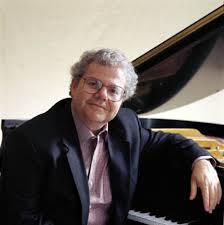
The gifted pianist Emanuel Ax weighs in on this resonating matter in a recorded interview. Comments on his opinions are included.

Embedded videos are best viewed at: https://arioso7.wordpress.com/2014/11/14/does-approaching-notes-in-different-ways-at-the-piano-affect-tone-production/
Emanuel Ax, well-known concert pianist and teacher asserts that one note struck cannot be varied by physical approach (except for volume) and I’m assuming duration (a clipped staccato release vs. a lingering sustain without pedal) Yet he didn’t provide enough specific details about duration, dynamics, and how delays into notes using supple wrist motions could affect phrasing. Therefore, I was left in a quandary about what he really meant since pianists deal with many notes in sequence.
As an aside, Ax declared woefully, that most of his pianist colleagues doubted his views.
Find out what's happening in El Cerritofor free with the latest updates from Patch.
About chords, the pianist inserted a qualification, saying that decisions circumscribing voice balance factored into tonal variance.
Yet his overall thoughts lacked an imaginative dimension about creating illusions in the course of playing. Perhaps, if he had more time to expand upon his ideas, he would have been more specific about physical motions as they relate to phrasing groups of notes.
Find out what's happening in El Cerritofor free with the latest updates from Patch.
Seymour Bernstein, pianist, teacher, and author of With Your Own Two Hands chimed in that “Emanuel misses, or perhaps doesn’t understand a serious point concerning the resultant sound of hitting a key. True, the hammer knows nothing about such an attack. But what we hear is the friction of the finger or an object as it hits the key. And because the blow is done with uncontrolled speed, the key is propelled down to the key bed producing an added percussive sound...The truth is these things have been measured scientifically. There is no difference whatsoever in tone production whether you lower a key with your finger or a pencil, and whether your wrist is supple or not. We recognize sound or tone changes when two or more tones are played.”
In one of his teaching videos (“You and the Piano,” Part 4), Bernstein demonstrates an “upper arm roll” with an “undulating wrist” that together produce an enviable singing tone.
Irina Gorin, piano teacher and Tales of a Musical Journey creator uses “weeping willow” arms as her imaginative springboard for imbuing awareness of the singing tone in her youngest students. Here she partners relaxed breathing with flowing supple wrists:
Here’s her dead weight arm/wrist drop approach using a hairband with a pupil:
In my demonstration, I extract a few measures from J.S. Bach’s Sarabande, French Suite in G, BWV 816 to model supple wrist delays into notes that create tonal nuances or differences that a pencil point cannot produce.
Irina Morozova, pianist and faculty member at the Special School/Kaufman Center, and the Mannes College of Music, noted the use of “illusions” when playing the piano, making reference in her comments, to “chords.”
“What about ‘”impersonating”’ orchestral instruments on piano? There is a simple way to make a chord sound differently depending on whether or not one is trying to play a beautiful “piano” chord or an “orchestral” chord.
Here she begins a lesson with a six-year old, demonstrating a fluid wrist approach to playing a chord that’s allied to a relaxed breath. (no pencils in sight!)
Morozova also asserts, “that a most important concept to teach, is weight distribution, or a feeling of a “grouded” sound.”
Rebecca Bogart, a local East Bay area pianist/teacher added the following to the mix of opinions:
“One of my greatest pleasures as a pianist is manipulating the color of the sound through subtle adjustments in key depression, so I guess I would have to say that I totally disagree with Ax. Personally I do experience that how a pianist relates to the key from the key at rest (level with all the other keys) to the bottom of the key stroke makes a HUGE difference in sound. For me, many of today’s performers have very high key speeds, especially in louder dynamics, which result in a very bright, almost harsh, sound.
“How you interact with the key determines volume and duration of the sound you produce. Variations in key speed and weight are how you make dynamics and tonal changes. Otherwise, why not play the harpsichord or the organ???
“Of course Ax is correct that the relationships between notes are also very very important. And I realized after watching his video that possibly dynamic interrelationships (voicing) and agogic expression are a bigger percentage of the pianist’s toolkit than they are for other instrumentalists.
“In terms of posture for playing the piano, I think that there is a posture which is most efficient .i.e. gives the maximum results for the minimum amount of muscular effort. An efficient posture is one which allows the fingers and hands to be in the midrange of motion when playing the keys. More specifically, the bottom of the elbow (the part closest to the floor) should be level with the top of the white keys. Also, the wrist needs to be in a place where the kinetic energy and mass of the arm can be transmitted to the key.
“Of course determined and skilled people can play amazingly well with all sorts of postures - it’s just my opinion that their experience and/or results would be even better if they adopted the posture I just described. But hey - to each their own!”
Rami Bar-Niv, pianist, teacher and author of The Art of Piano Fingering, agrees with Ax on the unwavering sound produced by a single note key depression:
“I agree 100% with what Ax says and I said it many times on various groups.
A single note can be only louder or softer (+ the duration factor that happens after it’s being struck) --- nothing else!
“Everything else in the magical hands of a pianist happens between the notes, due to balancing them, the relation between them, and timing. All other ideas are just untrue illusions and beliefs.
“Correct wrist motions and other correct techniques are there to produce good sound and protect your hands.But producing one sound can only be louder or softer, however good techniques help you match the next sound(s) according to your desires.
“We talk only about a single note because the next note already brings in the relativity aspect (which makes the music).”
***
While it’s instructive to gather opinions far and wide about an individual note approach, it’s the gestalt of many notes played in sequence that’s of prime importance to pianists as they explore an expressive tonal universe.
Links:
Seymour Bernstein’s Official Website:
Rebecca Bogart’s website
Rami Bar-Niv’s You Tube Channel
https://www.youtube.com/user/barniv
Learning from Our Colleagues
https://arioso7.wordpress.com/2011/06/28/piano-instruction-learning-from-our-colleagues/