Politics & Government
Another El Cerrito First – Those Electronic Bike Lockers
BART added hundreds of new electronic bike lockers in recent months to many stations, including El Cerrito del Norte, marking a significant expansion of a successful bike-parking system that originated in El Cerrito.


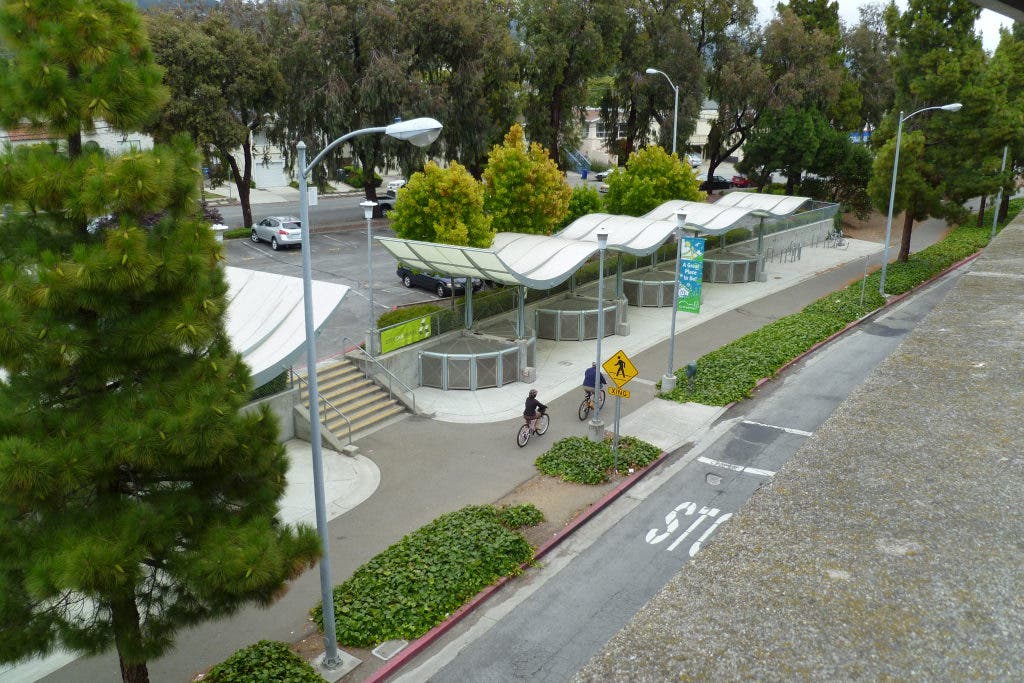


Many people know about the increasingly popular electronic bike-locker system that is being widely deployed by BART and is spreading to other parts of country.
Far fewer people know that it originated in El Cerrito.
You may have noticed the new metal-mesh bike cages recently installed at the del Norte BART station in El Cerrito. They replaced old plastic, opaque lockers and offer an important advantage.
Find out what's happening in El Cerritofor free with the latest updates from Patch.
The new lockers are accessed by electronic cards and are shared-use – like parking meters (except there's no time limit). The old plastic cages had keyed locks and were rented by one user for three months or a year, meaning that they often sat empty.
BART still has the old keyed, rental lockers at several stations, but they are giving way to the electronic BikeLink system, which now has been installed in about 500 lockers at 25 BART stations, according to Steve Beroldo, manager of access programs for the transit agency.
Find out what's happening in El Cerritofor free with the latest updates from Patch.
El Cerrito origin
"El Cerrito Plaza and the city of El Cerrito was the birthplace of the technology," said Steven Grover, head of Berkeley-based eLock Technologies, the company that developed the BikeLink system now installed at 100 locations in the Bay Area and beyond, including Santa Cruz, San Diego, Portland, OR, Washington, DC, and soon the Seattle area.
The 48 lockers at the El Cerrito Plaza BART station began operation in June 2004 and sit under a distinctive wavy green roof on the east side of the station. They are wedge-shaped and arranged in pods, each shaped like a half a pie sliced into eight pieces.
The 24 recently added to del Norte station are rectangular and sit under the elevated station.
Users obtain an electronic card from BikeLink that costs $20 and has $20 of value on it. The card is both a refillable cash card and the key to open the locker. The rental or parking fee for the locker is 3-5 cents an hour.
"We've gotten tremendous feedback," said El Cerrito's manager of environmental services, Melanie Mintz. The users report that the system has "changed their commute patterns completely," she said. "If they didn't have them, they wouldn't be biking to work."
The lockers overcome the chief obstacle for commuters who would like to bike to BART – theft.
"If you ride your bike to BART with any consistency, it will either get stripped or stolen," Grover said, referring to those who park at the open bike racks.
What about the bikes in the lockers?
"I don't think we've ever lost a bike from El Cerrito, except when somebody forgot to close the door all the way."
Japan – where the inspiration began
Grover credits Steve Price of El Cerrito as the chief source of the idea. Price, who has served on the El Cerrito Planning Commission and Design Review Board, said he got the idea from Japan.
"I've always been impressed with the huge number of bicycles at train stations in Japan," said Price, who travels to that nation periodically to visit his wife's family. He said he saw many secured lots with attendants that "hold thousands of bicycles."
"I come back and see the BART station in El Cerrito, and I go, 'Wow,'" he said. "It just struck me – hardly any effort is being made to accommodate bike access. We just said, 'Gosh, what's the lesson to be learned from Japan?'"
Price said he began working with Ed Phillips, El Cerrito city planner, seeking grant funds for secure bike parking at the BART station.
The city succeeded in securing funding for the architecture and infrastructure for a secure bike area. The winning bid came from Steven Grover's architectural firm, Steven Grover and Associates, which he also still operates in addition to eLock Technologies.
Grover's contract included the roof that now covers the bike lockers at El Cerrito Plaza but not the lockers. He developed those simultaneously on his own, he said.
"I carefully studied all the secure bike-parking technologies that were on the market at the time," Grover said. "It became pretty clear that the solution that works in Japan may not work here."
"The project inspired me to invent a new technology and new solution to the problem of bike parking at transit (stations)," he said.
Jill Keimach, then director of community development in El Cerrito, also deserves credit for steering the project to success, Grover said. "Without her, the project wouldn't have succeeded, I don't think."
And BART's subsequent embrace of the lockers became the main launching pad. "BART has been such an important part of this program," Grover said.
"We like them," said BART's Beroldo, "and more importantly the bicyclists like them."
BART likes them so much that the agency will add 200 more lockers in the coming months, including 24 more at El Cerrito Plaza, Beroldo said.
Correction: The original version of this article misspelled Jill Keimach's last name. It's been corrected.
Get more local news delivered straight to your inbox. Sign up for free Patch newsletters and alerts.